• 文献检索
  • 文档翻译
  • 深度研究
  • 学术资讯
  • Suppr Zotero 插件Zotero 插件
  • 邀请有礼
  • 套餐&价格
  • 历史记录
应用&插件
Suppr Zotero 插件Zotero 插件浏览器插件Mac 客户端Windows 客户端微信小程序
定价
高级版会员购买积分包购买API积分包
服务
文献检索文档翻译深度研究API 文档MCP 服务
关于我们
关于 Suppr公司介绍联系我们用户协议隐私条款
关注我们

Suppr 超能文献

核心技术专利:CN118964589B侵权必究
粤ICP备2023148730 号-1Suppr @ 2026

文献检索

告别复杂PubMed语法,用中文像聊天一样搜索,搜遍4000万医学文献。AI智能推荐,让科研检索更轻松。

立即免费搜索

文件翻译

保留排版,准确专业,支持PDF/Word/PPT等文件格式,支持 12+语言互译。

免费翻译文档

深度研究

AI帮你快速写综述,25分钟生成高质量综述,智能提取关键信息,辅助科研写作。

立即免费体验

利用数字标本数字对象标识符(DOIs)和纳米出版物,对这些属进行了重新审视并描述了一个新物种(蜘蛛目,跳蛛科)。

The genera and revisited with the description of a new species (Araneae, Salticidae) using digital specimen DOIs and nanopublications.

作者信息

Deeleman-Reinhold Christa L, Addink Wouter, Miller Jeremy A

机构信息

Naturalis Biodiversity Center, Leiden, Netherlands Naturalis Biodiversity Center Leiden Netherlands.

Sparrenlaan 8, 4641 GA, Ossendrecht, Netherlands Sparrenlaan 8, 4641 GA Ossendrecht Netherlands.

出版信息

Biodivers Data J. 2024 Sep 3;12:e129438. doi: 10.3897/BDJ.12.e129438. eCollection 2024.

DOI:10.3897/BDJ.12.e129438
PMID:39263387
原文链接:https://pmc.ncbi.nlm.nih.gov/articles/PMC11387838/
Abstract

BACKGROUND

Two Southeast Asian spider collections: that of Frances and John Murphy, now in the Manchester University Museum and the Deeleman collection, now at the Naturalis Biodiversity Center in Leiden constituted the basis of this analysis of Thorell, 1887 and related genera. The latter collection also includes many thousands of spiders obtained by canopy fogging for an ecological project in Borneo by A. Floren.

NEW INFORMATION

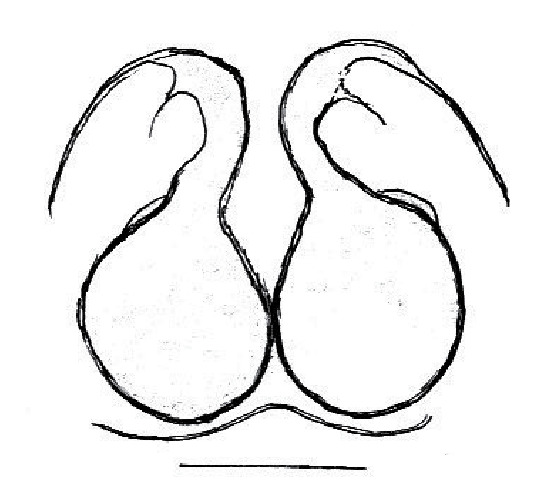
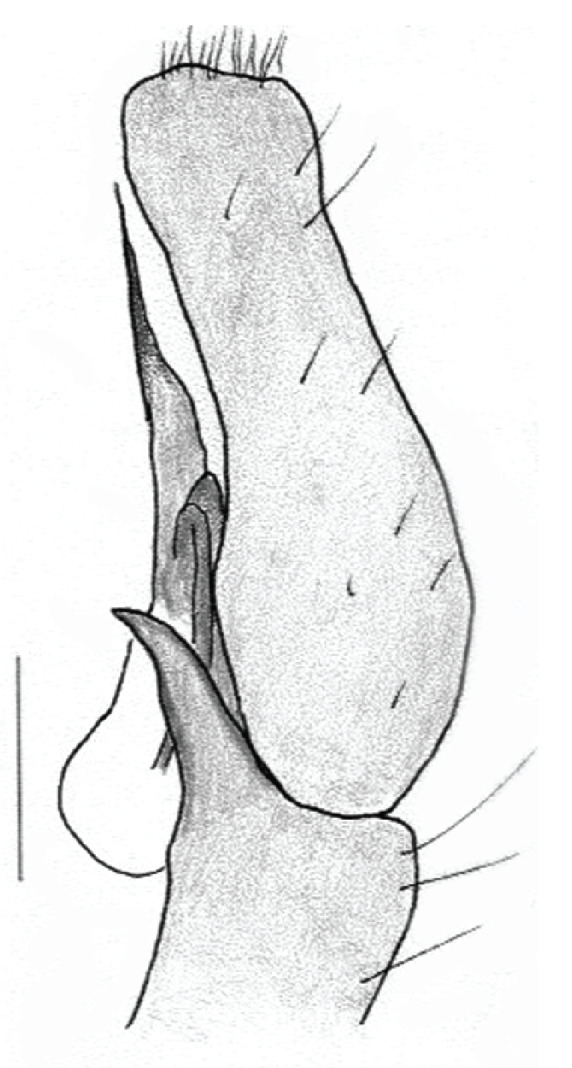
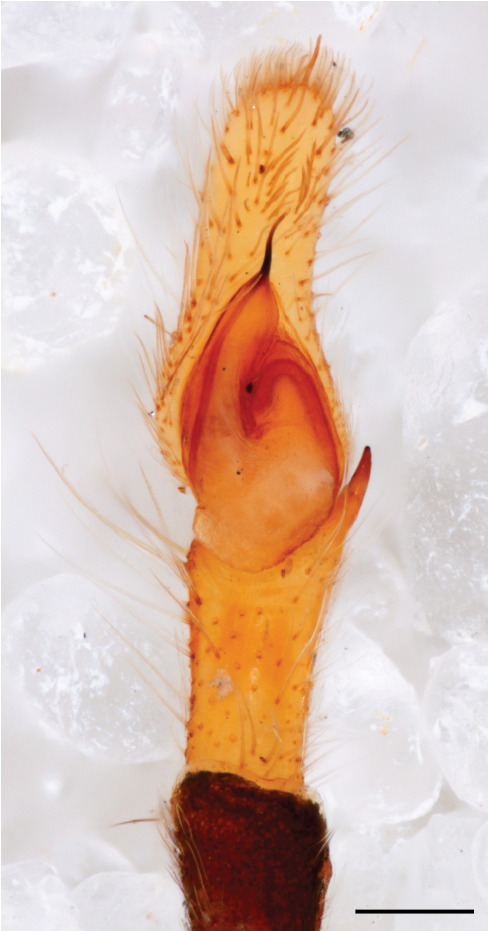
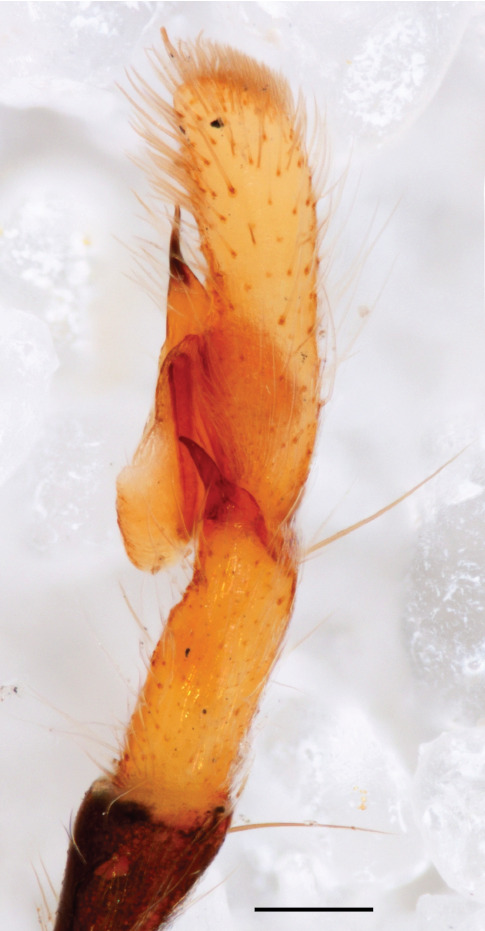
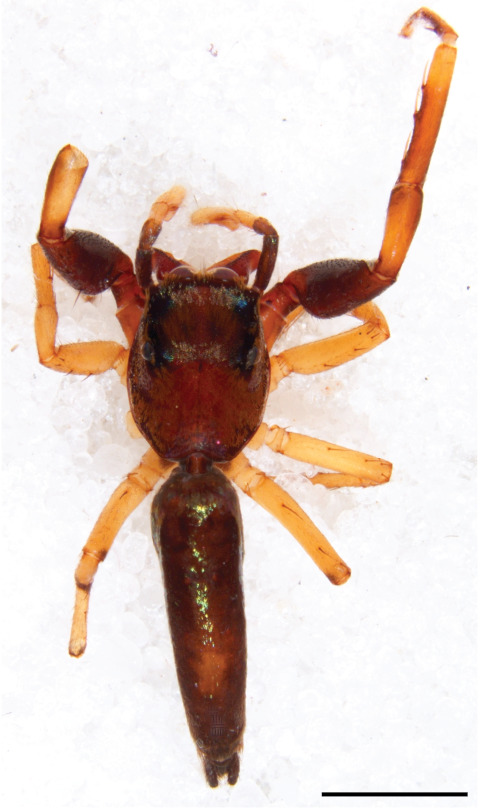
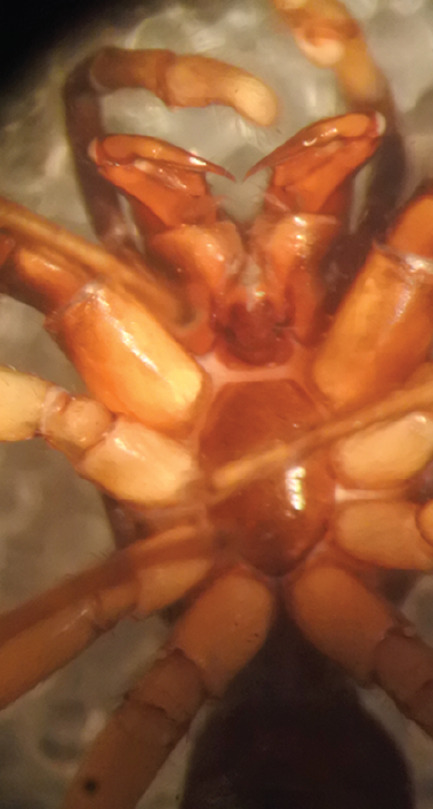
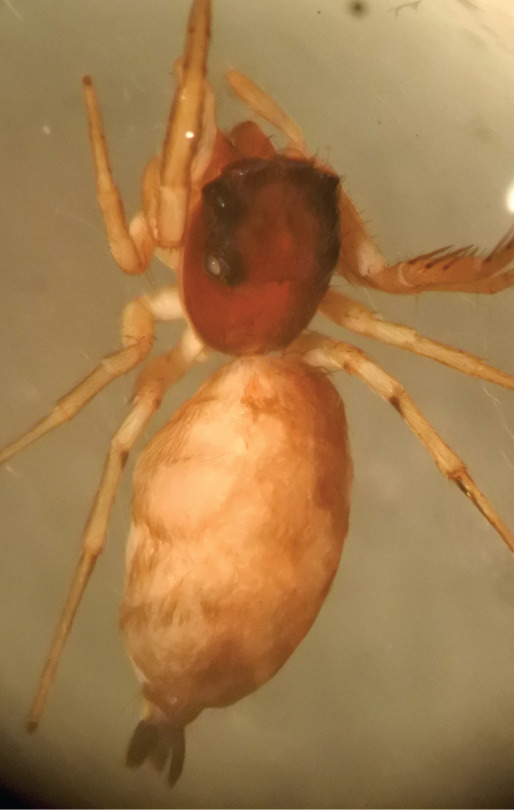
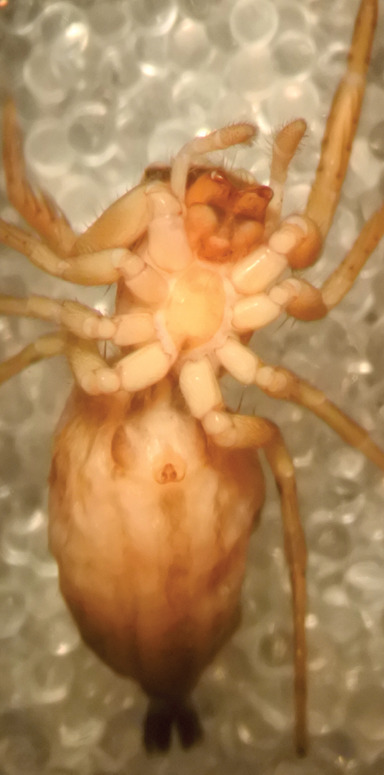
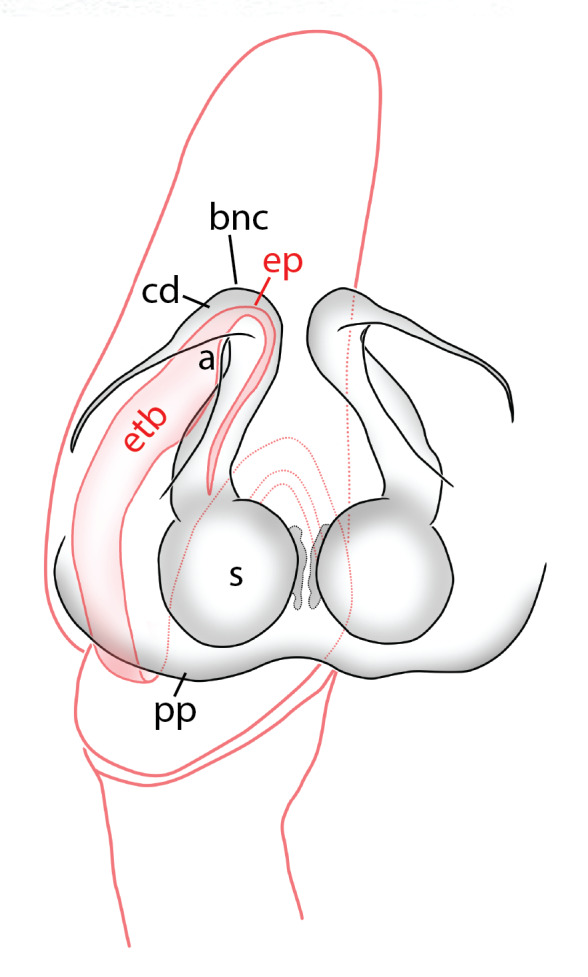
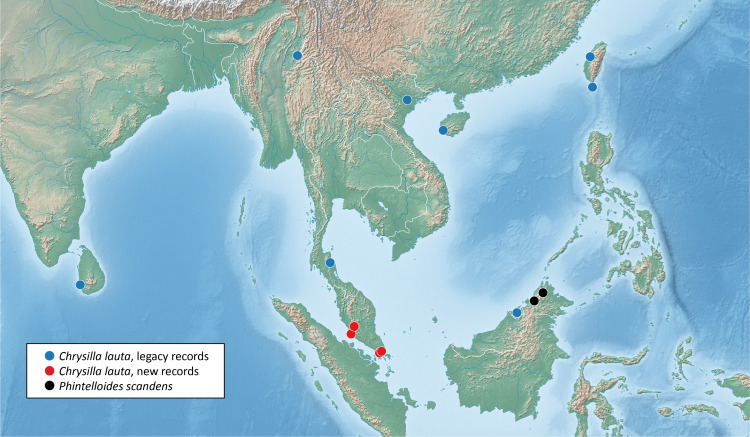
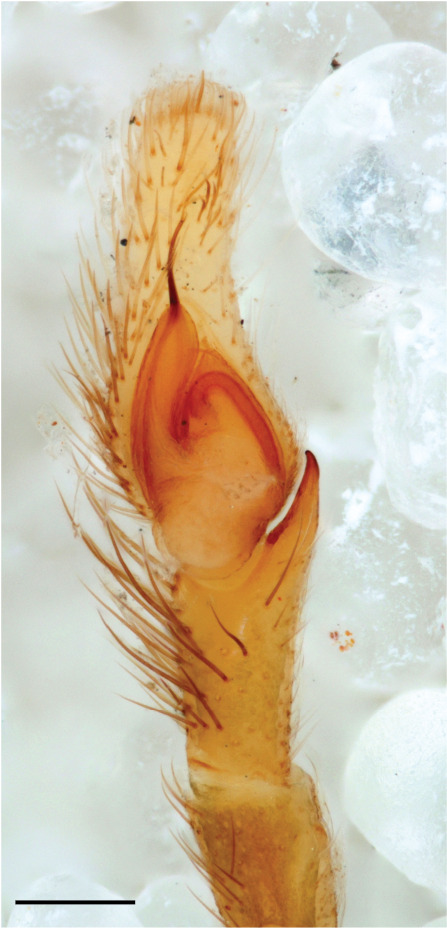
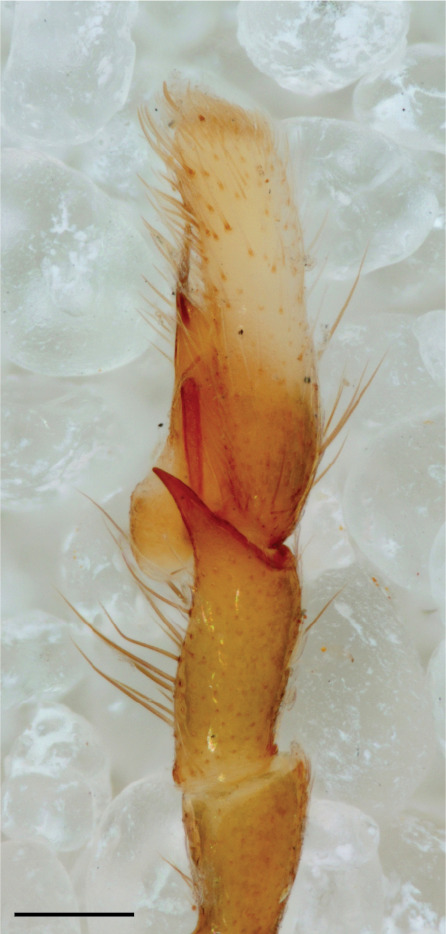
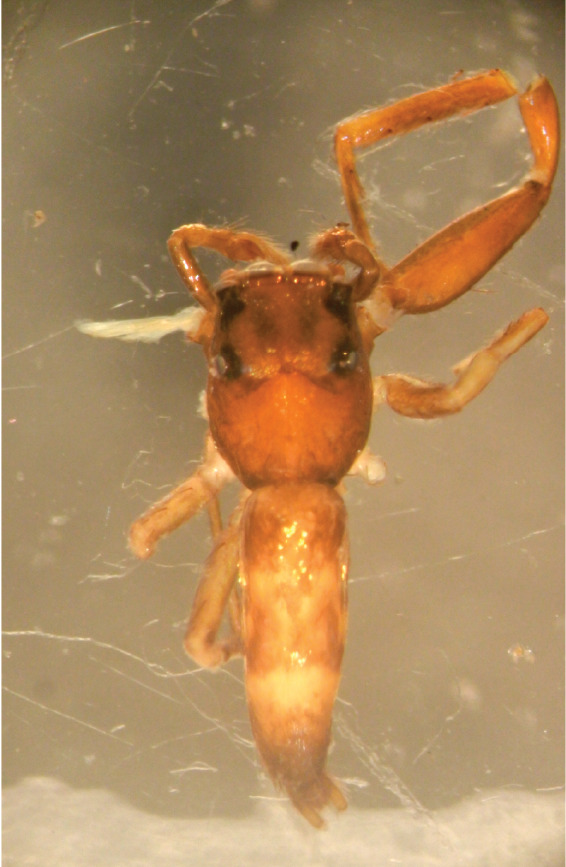
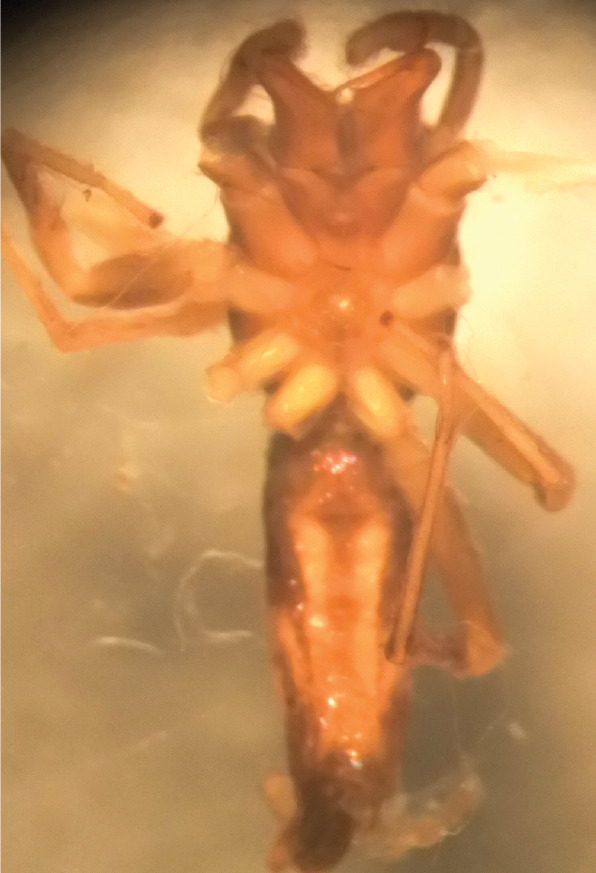
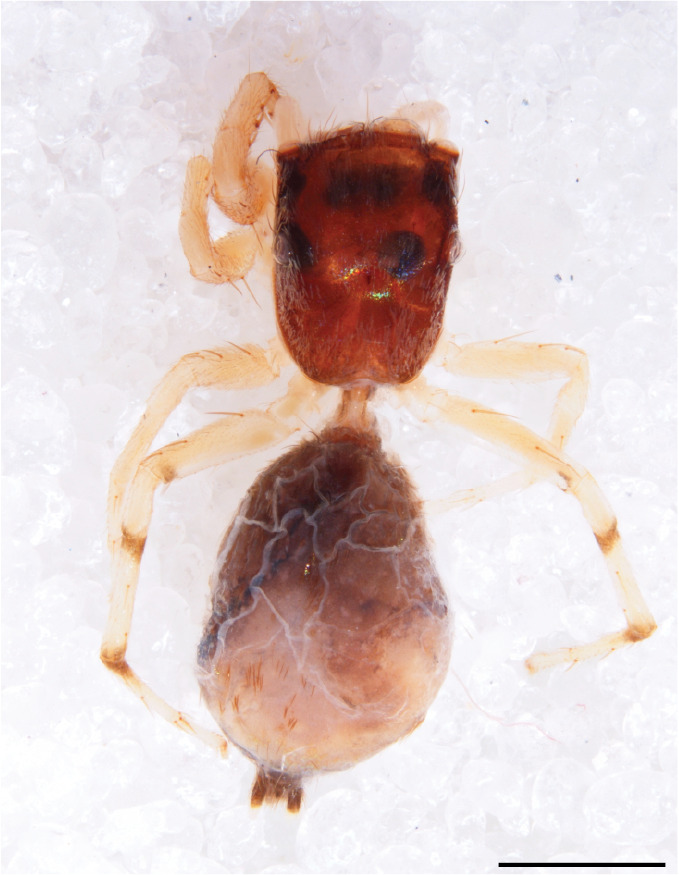
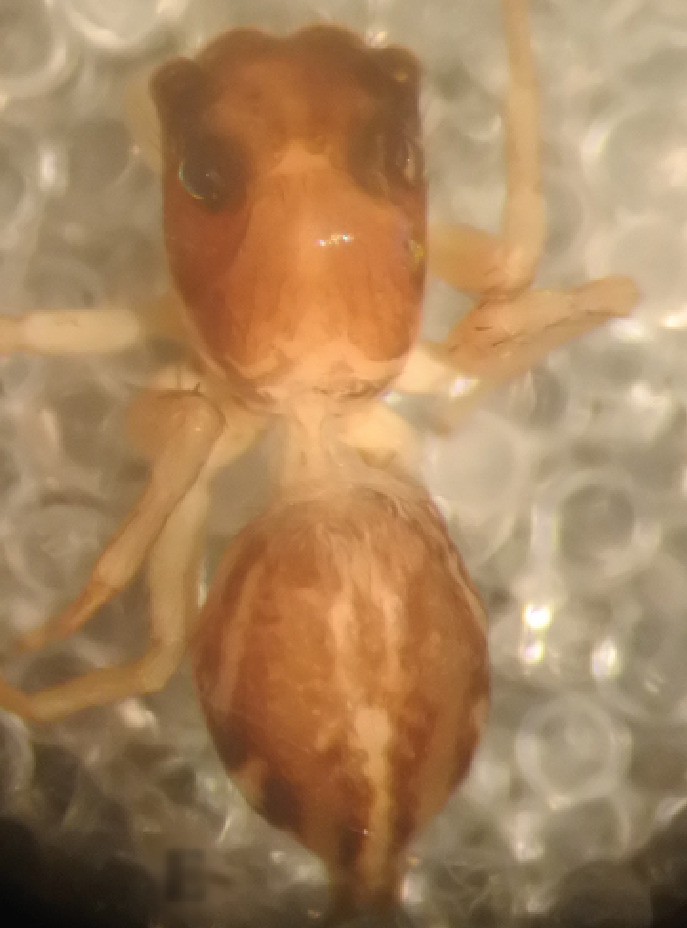
Some incongruences within the genera of the tribe Chrysillini are disentangled. The transfer of Caleb & Mathai, 2014 from as type species of Kanesharatnam & Benjamin, 2019, based on analysis of molecular data is validated by morphology. An interesting new species known only from the forest canopy in Borneo, sp. nov, is described based on both male and female specimens. Distinguishing chrysilline genera is mostly based on traditional somatic characters, e.g., habitus, carapace and abdomen patterns, mouthparts, and genital organs. The utility of two character systems for distinguishing chrysilline genera is highlighted: 1) the presence of a flexible, articulating embolic tegular branch (etb) in combination with the conformation of the characteristic construction of the epigyne in and ; 2) presence of red colour on carapace and abdomen of live males and females, in combination with abundant blue/violet/white iridescent scales such as in and . The red colour usually gets lost in alcohol, hampering species identification of alcohol material. The genera andare redefined. Specimens of the heretofore unknown female of Prószyński & Deeleman-Reinhold, 2010 are described. The male and female of and male of are redescribed. The genus is diagnosed and discriminated from Bösenberg & Strand, 1906, Simon, 1889 Kanesharatnam & Benjamin, 2019 andKanesharatnam & Benjamin, 2019 The structure of the female genital organ of Kanesharatnam & Benjamin, 2019 is scrutinized and the generic placement of is discussed. Males and females of one of the most variable species (C. L. Koch, 1846) are redescribed.(Bösenberg & Strand, 1906) is removed from synonymy with Simon 1903 (male, Sumatra) is synonymized with.Biodiversity data are increasingly reliant on digital infrastructure. By linking physical specimens to digital representations of their associated data, we can lower barriers to information flow. Here we demonstrate a workflow whereby persistent identifiers (PIDs) in the form of DOIs issued by DataCite are assigned to specimens. Recognized taxa are identified by their catalog of life identifier, or by registration in ZooBank where no catalog of life identifier is available. We demonstrate the use of nanopublications, creating a series of machine readable, scientifically meaningful assertions regarding the provenance and identification of cited specimens. All human agents associated with the specimen data are linked to a persistent identifier issued by either ORCiD or Wikidata.

摘要

背景

两个东南亚蜘蛛藏品:现藏于曼彻斯特大学博物馆的弗朗西斯和约翰·墨菲的藏品,以及现藏于莱顿自然生物多样性中心的迪勒曼藏品,构成了此次对1887年的托雷尔及相关属进行分析的基础。后一个藏品还包括A. 弗洛伦为婆罗洲一个生态项目通过树冠喷雾采集到的数千只蜘蛛。

新信息

厘清了金蛛族各属之间的一些不一致之处。基于分子数据分析,2014年的卡莱布和马泰从2019年的卡内沙拉特纳姆和本杰明中转移出来作为模式种,这一转移通过形态学得到了验证。基于雄性和雌性标本描述了一个仅在婆罗洲树冠层发现的有趣新物种,新种。区分金蛛属主要基于传统的躯体特征,如体型、头胸甲和腹部图案、口器以及生殖器官。强调了两种用于区分金蛛属的特征系统的效用:1)存在一个灵活的、可活动的栓状 tegular 分支(etb),并结合在和中雌器特征结构的形态;2)活体雄性和雌性的头胸甲和腹部有红色,同时伴有丰富的蓝/紫/白虹彩鳞片,如在和中。红色通常在酒精中褪去,这妨碍了对酒精保存标本的物种鉴定。对和属进行了重新定义。描述了2010年普罗斯津斯基和迪勒曼 - 莱因霍尔德所描述的此前未知雌性的标本。重新描述了和的雄性和雌性以及的雄性。对属进行了诊断,并与1906年的博森伯格和施特兰德、1889年的西蒙、2019年的卡内沙拉特纳姆和本杰明以及2019年的卡内沙拉特纳姆和本杰明进行了区分。仔细研究了2019年卡内沙拉特纳姆和本杰明的雌性生殖器官结构,并讨论了的属级归属。重新描述了最具变异性的物种之一(1846年的C. L. 科赫)的雄性和雌性。(1906年的博森伯格和施特兰德)从与1903年西蒙的同义关系中移除(雄性,苏门答腊)与同义。生物多样性数据越来越依赖数字基础设施。通过将实物标本与其相关数据的数字表示相链接,我们可以降低信息流的障碍。在此我们展示了一个工作流程,通过该流程,由DataCite发布的数字对象标识符(DOI)形式的永久标识符(PID)被分配给标本。已识别的分类单元通过其生命目录标识符来识别,或者在没有生命目录标识符的情况下通过在动物名录中注册来识别。我们展示了纳米出版物的使用,创建了一系列关于所引用标本的来源和鉴定的机器可读、科学上有意义的断言。与标本数据相关的所有人员都与由ORCiD或维基数据发布的永久标识符相链接。
https://cdn.ncbi.nlm.nih.gov/pmc/blobs/edc4/11387838/461ddad6c77e/bdj-12-e129438-g013_c.jpg
https://cdn.ncbi.nlm.nih.gov/pmc/blobs/edc4/11387838/3622d47c0096/bdj-12-e129438-g001_a.jpg
https://cdn.ncbi.nlm.nih.gov/pmc/blobs/edc4/11387838/dfd1f8ed0c50/bdj-12-e129438-g001_b.jpg
https://cdn.ncbi.nlm.nih.gov/pmc/blobs/edc4/11387838/aeccd9b3c4fb/bdj-12-e129438-g001_c.jpg
https://cdn.ncbi.nlm.nih.gov/pmc/blobs/edc4/11387838/a48b60e7e8f6/bdj-12-e129438-g001_d.jpg
https://cdn.ncbi.nlm.nih.gov/pmc/blobs/edc4/11387838/80b56943207f/bdj-12-e129438-g002_a.jpg
https://cdn.ncbi.nlm.nih.gov/pmc/blobs/edc4/11387838/f32910f6f383/bdj-12-e129438-g002_b.jpg
https://cdn.ncbi.nlm.nih.gov/pmc/blobs/edc4/11387838/d815794a0a0d/bdj-12-e129438-g002_c.jpg
https://cdn.ncbi.nlm.nih.gov/pmc/blobs/edc4/11387838/cbf2b8aa8fb1/bdj-12-e129438-g002_d.jpg
https://cdn.ncbi.nlm.nih.gov/pmc/blobs/edc4/11387838/5f9a78052b0d/bdj-12-e129438-g003_a.jpg
https://cdn.ncbi.nlm.nih.gov/pmc/blobs/edc4/11387838/0ec9ead7cf46/bdj-12-e129438-g003_b.jpg
https://cdn.ncbi.nlm.nih.gov/pmc/blobs/edc4/11387838/4ff4a66c051d/bdj-12-e129438-g003_c.jpg
https://cdn.ncbi.nlm.nih.gov/pmc/blobs/edc4/11387838/0940d4ff6821/bdj-12-e129438-g003_d.jpg
https://cdn.ncbi.nlm.nih.gov/pmc/blobs/edc4/11387838/e21a20c4c71d/bdj-12-e129438-g004_a.jpg
https://cdn.ncbi.nlm.nih.gov/pmc/blobs/edc4/11387838/f630f7cb9f45/bdj-12-e129438-g004_b.jpg
https://cdn.ncbi.nlm.nih.gov/pmc/blobs/edc4/11387838/18a1c8d67593/bdj-12-e129438-g004_c.jpg
https://cdn.ncbi.nlm.nih.gov/pmc/blobs/edc4/11387838/7ceeffdad3e9/bdj-12-e129438-g004_d.jpg
https://cdn.ncbi.nlm.nih.gov/pmc/blobs/edc4/11387838/94ba27969d13/bdj-12-e129438-g005.jpg
https://cdn.ncbi.nlm.nih.gov/pmc/blobs/edc4/11387838/68e5c600a951/bdj-12-e129438-g006.jpg
https://cdn.ncbi.nlm.nih.gov/pmc/blobs/edc4/11387838/c5f267346632/bdj-12-e129438-g007_a.jpg
https://cdn.ncbi.nlm.nih.gov/pmc/blobs/edc4/11387838/4c912cd1cb09/bdj-12-e129438-g007_b.jpg
https://cdn.ncbi.nlm.nih.gov/pmc/blobs/edc4/11387838/f1e637307d74/bdj-12-e129438-g008_a.jpg
https://cdn.ncbi.nlm.nih.gov/pmc/blobs/edc4/11387838/86fadf81d8cd/bdj-12-e129438-g008_b.jpg
https://cdn.ncbi.nlm.nih.gov/pmc/blobs/edc4/11387838/33f63138cfaa/bdj-12-e129438-g008_c.jpg
https://cdn.ncbi.nlm.nih.gov/pmc/blobs/edc4/11387838/3bc6a3e5c139/bdj-12-e129438-g008_d.jpg
https://cdn.ncbi.nlm.nih.gov/pmc/blobs/edc4/11387838/0a5e9869cc7f/bdj-12-e129438-g009_a.jpg
https://cdn.ncbi.nlm.nih.gov/pmc/blobs/edc4/11387838/0ed38b854118/bdj-12-e129438-g009_b.jpg
https://cdn.ncbi.nlm.nih.gov/pmc/blobs/edc4/11387838/f9c9206cf3b2/bdj-12-e129438-g009_c.jpg
https://cdn.ncbi.nlm.nih.gov/pmc/blobs/edc4/11387838/042212088863/bdj-12-e129438-g009_d.jpg
https://cdn.ncbi.nlm.nih.gov/pmc/blobs/edc4/11387838/ca9cbcf47097/bdj-12-e129438-g010_a.jpg
https://cdn.ncbi.nlm.nih.gov/pmc/blobs/edc4/11387838/518fd7577fba/bdj-12-e129438-g010_c.jpg
https://cdn.ncbi.nlm.nih.gov/pmc/blobs/edc4/11387838/417f1b2dab29/bdj-12-e129438-g010_d.jpg
https://cdn.ncbi.nlm.nih.gov/pmc/blobs/edc4/11387838/93abf9a2ee49/bdj-12-e129438-g011_b.jpg
https://cdn.ncbi.nlm.nih.gov/pmc/blobs/edc4/11387838/e9c8f43ae538/bdj-12-e129438-g012_a.jpg
https://cdn.ncbi.nlm.nih.gov/pmc/blobs/edc4/11387838/72392156b52c/bdj-12-e129438-g012_b.jpg
https://cdn.ncbi.nlm.nih.gov/pmc/blobs/edc4/11387838/d0caaaa42dcc/bdj-12-e129438-g012_d.jpg
https://cdn.ncbi.nlm.nih.gov/pmc/blobs/edc4/11387838/461ddad6c77e/bdj-12-e129438-g013_c.jpg
https://cdn.ncbi.nlm.nih.gov/pmc/blobs/edc4/11387838/3622d47c0096/bdj-12-e129438-g001_a.jpg
https://cdn.ncbi.nlm.nih.gov/pmc/blobs/edc4/11387838/dfd1f8ed0c50/bdj-12-e129438-g001_b.jpg
https://cdn.ncbi.nlm.nih.gov/pmc/blobs/edc4/11387838/aeccd9b3c4fb/bdj-12-e129438-g001_c.jpg
https://cdn.ncbi.nlm.nih.gov/pmc/blobs/edc4/11387838/a48b60e7e8f6/bdj-12-e129438-g001_d.jpg
https://cdn.ncbi.nlm.nih.gov/pmc/blobs/edc4/11387838/80b56943207f/bdj-12-e129438-g002_a.jpg
https://cdn.ncbi.nlm.nih.gov/pmc/blobs/edc4/11387838/f32910f6f383/bdj-12-e129438-g002_b.jpg
https://cdn.ncbi.nlm.nih.gov/pmc/blobs/edc4/11387838/d815794a0a0d/bdj-12-e129438-g002_c.jpg
https://cdn.ncbi.nlm.nih.gov/pmc/blobs/edc4/11387838/cbf2b8aa8fb1/bdj-12-e129438-g002_d.jpg
https://cdn.ncbi.nlm.nih.gov/pmc/blobs/edc4/11387838/5f9a78052b0d/bdj-12-e129438-g003_a.jpg
https://cdn.ncbi.nlm.nih.gov/pmc/blobs/edc4/11387838/0ec9ead7cf46/bdj-12-e129438-g003_b.jpg
https://cdn.ncbi.nlm.nih.gov/pmc/blobs/edc4/11387838/4ff4a66c051d/bdj-12-e129438-g003_c.jpg
https://cdn.ncbi.nlm.nih.gov/pmc/blobs/edc4/11387838/0940d4ff6821/bdj-12-e129438-g003_d.jpg
https://cdn.ncbi.nlm.nih.gov/pmc/blobs/edc4/11387838/e21a20c4c71d/bdj-12-e129438-g004_a.jpg
https://cdn.ncbi.nlm.nih.gov/pmc/blobs/edc4/11387838/f630f7cb9f45/bdj-12-e129438-g004_b.jpg
https://cdn.ncbi.nlm.nih.gov/pmc/blobs/edc4/11387838/18a1c8d67593/bdj-12-e129438-g004_c.jpg
https://cdn.ncbi.nlm.nih.gov/pmc/blobs/edc4/11387838/7ceeffdad3e9/bdj-12-e129438-g004_d.jpg
https://cdn.ncbi.nlm.nih.gov/pmc/blobs/edc4/11387838/94ba27969d13/bdj-12-e129438-g005.jpg
https://cdn.ncbi.nlm.nih.gov/pmc/blobs/edc4/11387838/68e5c600a951/bdj-12-e129438-g006.jpg
https://cdn.ncbi.nlm.nih.gov/pmc/blobs/edc4/11387838/c5f267346632/bdj-12-e129438-g007_a.jpg
https://cdn.ncbi.nlm.nih.gov/pmc/blobs/edc4/11387838/4c912cd1cb09/bdj-12-e129438-g007_b.jpg
https://cdn.ncbi.nlm.nih.gov/pmc/blobs/edc4/11387838/f1e637307d74/bdj-12-e129438-g008_a.jpg
https://cdn.ncbi.nlm.nih.gov/pmc/blobs/edc4/11387838/86fadf81d8cd/bdj-12-e129438-g008_b.jpg
https://cdn.ncbi.nlm.nih.gov/pmc/blobs/edc4/11387838/33f63138cfaa/bdj-12-e129438-g008_c.jpg
https://cdn.ncbi.nlm.nih.gov/pmc/blobs/edc4/11387838/3bc6a3e5c139/bdj-12-e129438-g008_d.jpg
https://cdn.ncbi.nlm.nih.gov/pmc/blobs/edc4/11387838/0a5e9869cc7f/bdj-12-e129438-g009_a.jpg
https://cdn.ncbi.nlm.nih.gov/pmc/blobs/edc4/11387838/0ed38b854118/bdj-12-e129438-g009_b.jpg
https://cdn.ncbi.nlm.nih.gov/pmc/blobs/edc4/11387838/f9c9206cf3b2/bdj-12-e129438-g009_c.jpg
https://cdn.ncbi.nlm.nih.gov/pmc/blobs/edc4/11387838/042212088863/bdj-12-e129438-g009_d.jpg
https://cdn.ncbi.nlm.nih.gov/pmc/blobs/edc4/11387838/ca9cbcf47097/bdj-12-e129438-g010_a.jpg
https://cdn.ncbi.nlm.nih.gov/pmc/blobs/edc4/11387838/518fd7577fba/bdj-12-e129438-g010_c.jpg
https://cdn.ncbi.nlm.nih.gov/pmc/blobs/edc4/11387838/417f1b2dab29/bdj-12-e129438-g010_d.jpg
https://cdn.ncbi.nlm.nih.gov/pmc/blobs/edc4/11387838/93abf9a2ee49/bdj-12-e129438-g011_b.jpg
https://cdn.ncbi.nlm.nih.gov/pmc/blobs/edc4/11387838/e9c8f43ae538/bdj-12-e129438-g012_a.jpg
https://cdn.ncbi.nlm.nih.gov/pmc/blobs/edc4/11387838/72392156b52c/bdj-12-e129438-g012_b.jpg
https://cdn.ncbi.nlm.nih.gov/pmc/blobs/edc4/11387838/d0caaaa42dcc/bdj-12-e129438-g012_d.jpg
https://cdn.ncbi.nlm.nih.gov/pmc/blobs/edc4/11387838/461ddad6c77e/bdj-12-e129438-g013_c.jpg

相似文献

1
The genera and revisited with the description of a new species (Araneae, Salticidae) using digital specimen DOIs and nanopublications.利用数字标本数字对象标识符(DOIs)和纳米出版物,对这些属进行了重新审视并描述了一个新物种(蜘蛛目,跳蛛科)。
Biodivers Data J. 2024 Sep 3;12:e129438. doi: 10.3897/BDJ.12.e129438. eCollection 2024.
2
A phylogenetic and taxonomic review of baviine jumping spiders (Araneae, Salticidae, Baviini).巴维跳蛛(蜘蛛目,跳蛛科,巴维族)的系统发育与分类学综述。
Zookeys. 2020 Dec 16;1004:27-97. doi: 10.3897/zookeys.1004.57526. eCollection 2020.
3
Multilocus genetic and morphological phylogenetic analysis reveals a radiation of shiny South Asian jumping spiders (Araneae, Salticidae).多位点遗传和形态系统发育分析揭示了南亚闪亮跳蛛(蜘蛛目,跳蛛科)的辐射演化。
Zookeys. 2019 Jan 16;839:1-81. doi: 10.3897/zookeys.839.28312. eCollection 2019.
4
Revision of the Oriental subfamily Heteropteryginae Kirby, 1896, with a re-arrangement of the family Heteropterygidae and the descriptions of five new species of Haaniella Kirby, 1904. (Phasmatodea: Areolatae: Heteropterygidae).1896年东方异翅螳亚科(Heteropteryginae Kirby)的修订,兼异翅螳科(Heteropterygidae)的重新分类及1904年柯氏瘤螳属(Haaniella Kirby)五个新物种的描述。(竹节虫目:有翅亚目:异翅螳科)
Zootaxa. 2016 Sep 1;4159(1):1-219. doi: 10.11646/zootaxa.4159.1.1.
5
Depreissia decipiens, an enigmatic canopy spider from Borneo revisited (Araneae, Salticidae), with remarks on the distribution and diversity of canopy spiders in Sabah, Borneo.再探婆罗洲神秘的树冠层蜘蛛——欺骗德普雷蛛(蜘蛛目,跳蛛科),兼论婆罗洲沙巴树冠层蜘蛛的分布与多样性
Zookeys. 2016 Jan 21(556):1-17. doi: 10.3897/zookeys.556.6174. eCollection 2016.
6
Salticidae (Arachnida, Araneae) of Thailand: new species and records of Peckham & Peckham, 1886 and Simon, 1885.泰国的跳蛛科(蛛形纲,蜘蛛目):1886年佩克汉姆与佩克汉姆及1885年西蒙所描述的新物种与记录
PeerJ. 2020 Jun 22;8:e9352. doi: 10.7717/peerj.9352. eCollection 2020.
7
Bowie gen. nov., a diverse lineage of ground-dwelling spiders occurring from the Himalayas to Papua New Guinea and northern Australia (Araneae: Ctenidae: Cteninae).鲍威氏属,一个多样的穴居蜘蛛谱系,分布于喜马拉雅山脉至巴布亚新几内亚和澳大利亚北部(蜘蛛目:球蛛科:栉足蛛亚科)。
Zootaxa. 2022 Aug 4;5170(1):1-200. doi: 10.11646/zootaxa.5170.1.1.
8
Partial revision of the Afrotropical Ballini, with the description of seven new genera (Araneae: Salticidae).部分修订的非洲球蛛,描述了七个新属(蜘蛛目:跳蛛科)。
Zootaxa. 2020 Dec 30;4899(1):zootaxa.4899.1.4. doi: 10.11646/zootaxa.4899.1.4.
9
Revision of the Australian Union-Jack wolf spiders, genus (Araneae, Lycosidae, Lycosinae).澳大利亚米字狼蛛属(蜘蛛目,狼蛛科,狼蛛亚科)的修订
Zootaxa. 2016 Dec 23;4213(1):zootaxa.4213.1.1. doi: 10.11646/zootaxa.4213.1.1.
10
The spider genus Olios Walckenaer, 1837 (Araneae: Sparassidae)-Part 1: species groups, diagnoses, identification keys, distribution maps and revision of the argelasius-, coenobitus- and auricomis-groups.蜘蛛属奥氏蛛属(Olios Walckenaer,1837年)(蜘蛛目:巨蟹蛛科)-第1部分:物种组、诊断、鉴定检索表、分布图以及阿尔盖拉修斯组、群居组和耳状组的修订
Zootaxa. 2020 Oct 22;4866(1):zootaxa.4866.1.1. doi: 10.11646/zootaxa.4866.1.1.

本文引用的文献

1
Review of 43 spider species from Hainan Island, China (Arachnida, Araneae).中国海南岛 43 种蜘蛛物种述评(蛛形纲,蜘蛛目)。
Zootaxa. 2023 Sep 29;5351(5):501-533. doi: 10.11646/zootaxa.5351.5.1.
2
Digital Extended Specimens: Enabling an Extensible Network of Biodiversity Data Records as Integrated Digital Objects on the Internet.数字扩展标本:在互联网上构建一个可扩展的生物多样性数据记录网络,使其成为集成数字对象。
Bioscience. 2022 Aug 3;72(10):978-987. doi: 10.1093/biosci/biac060. eCollection 2022 Oct.
3
Multilocus genetic and morphological phylogenetic analysis reveals a radiation of shiny South Asian jumping spiders (Araneae, Salticidae).
多位点遗传和形态系统发育分析揭示了南亚闪亮跳蛛(蜘蛛目,跳蛛科)的辐射演化。
Zookeys. 2019 Jan 16;839:1-81. doi: 10.3897/zookeys.839.28312. eCollection 2019.
4
Depreissia decipiens, an enigmatic canopy spider from Borneo revisited (Araneae, Salticidae), with remarks on the distribution and diversity of canopy spiders in Sabah, Borneo.再探婆罗洲神秘的树冠层蜘蛛——欺骗德普雷蛛(蜘蛛目,跳蛛科),兼论婆罗洲沙巴树冠层蜘蛛的分布与多样性
Zookeys. 2016 Jan 21(556):1-17. doi: 10.3897/zookeys.556.6174. eCollection 2016.
5
Integrating and visualizing primary data from prospective and legacy taxonomic literature.整合并可视化来自前瞻性和传统分类学文献的原始数据。
Biodivers Data J. 2015 May 12(3):e5063. doi: 10.3897/BDJ.3.e5063. eCollection 2015.
6
Taxonomic information exchange and copyright: the Plazi approach.分类信息交换与版权:普拉齐方法
BMC Res Notes. 2009 Mar 30;2:53. doi: 10.1186/1756-0500-2-53.