Mahidol Oxford Tropical Medicine Research Unit, Faculty of Tropical Medicine, Mahidol University, Bangkok, Thailand.
Centre for Tropical Medicine and Global Health, Nuffield Department of Medicine, University of Oxford, Oxford, United Kingdom.
PLoS Med. 2024 Sep 12;21(9):e1004428. doi: 10.1371/journal.pmed.1004428. eCollection 2024 Sep.
Hydroxychloroquine (HCQ) has proved ineffective in treating patients hospitalised with Coronavirus Disease 2019 (COVID-19), but uncertainty remains over its safety and efficacy in chemoprevention. Previous chemoprevention randomised controlled trials (RCTs) did not individually show benefit of HCQ against COVID-19 and, although meta-analysis did suggest clinical benefit, guidelines recommend against its use.
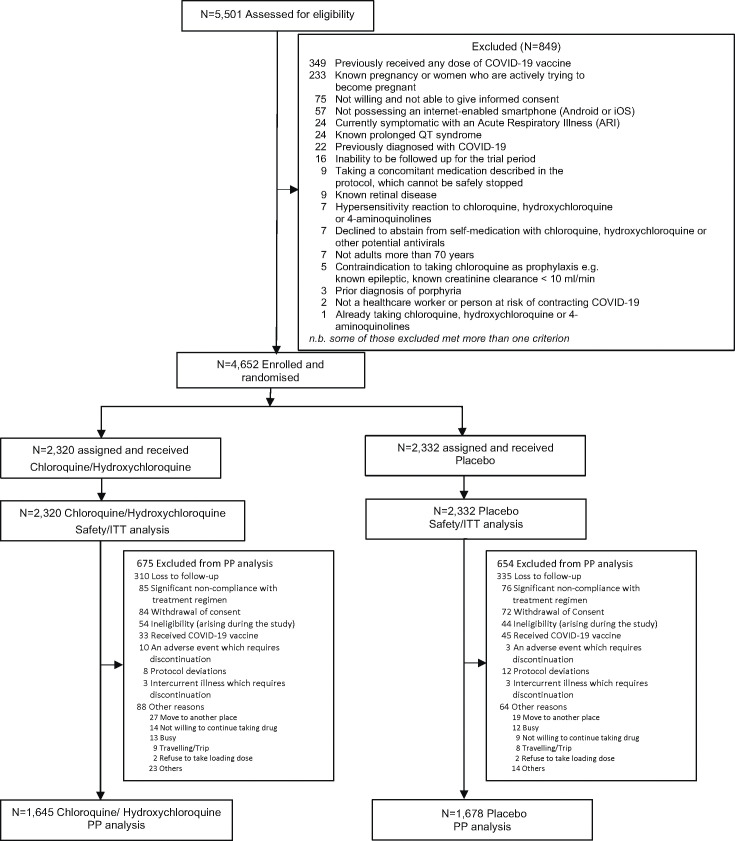
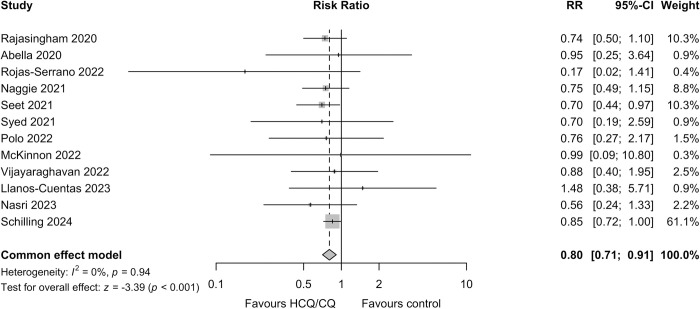
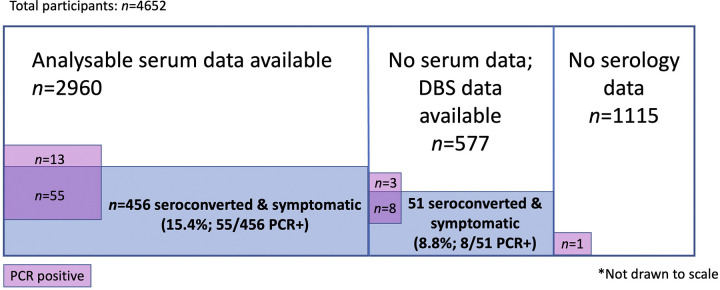
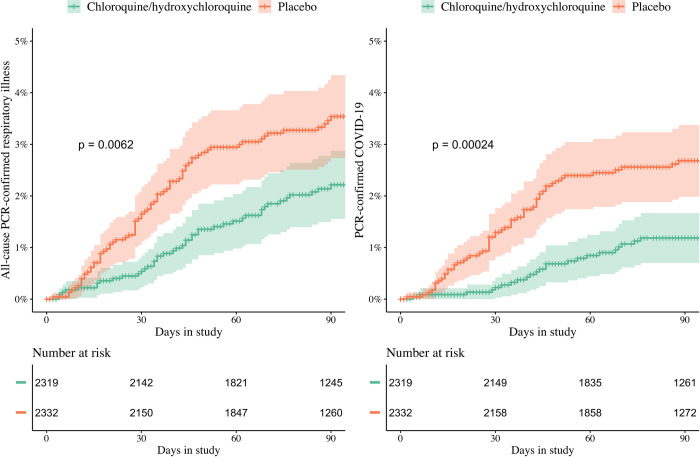
Healthy adult participants from the healthcare setting, and later from the community, were enrolled in 26 centres in 11 countries to a double-blind, placebo-controlled, randomised trial of COVID-19 chemoprevention. HCQ was evaluated in Europe and Africa, and chloroquine (CQ) was evaluated in Asia, (both base equivalent of 155 mg once daily). The primary endpoint was symptomatic COVID-19, confirmed by PCR or seroconversion during the 3-month follow-up period. The secondary and tertiary endpoints were: asymptomatic laboratory-confirmed Severe Acute Respiratory Syndrome Coronavirus 2 (SARS-CoV-2) infection; severity of COVID-19 symptoms; all-cause PCR-confirmed symptomatic acute respiratory illness (including SARS-CoV-2 infection); participant reported number of workdays lost; genetic and baseline biochemical markers associated with symptomatic COVID-19, respiratory illness and disease severity (not reported here); and health economic analyses of HCQ and CQ prophylaxis on costs and quality of life measures (not reported here). The primary and safety analyses were conducted in the intention-to-treat (ITT) population. Recruitment of 40,000 (20,000 HCQ arm, 20,000 CQ arm) participants was planned but was not possible because of protracted delays resulting from controversies over efficacy and adverse events with HCQ use, vaccine rollout in some countries, and other factors. Between 29 April 2020 and 10 March 2022, 4,652 participants (46% females) were enrolled (HCQ/CQ n = 2,320; placebo n = 2,332). The median (IQR) age was 29 (23 to 39) years. SARS-CoV-2 infections (symptomatic and asymptomatic) occurred in 1,071 (23%) participants. For the primary endpoint the incidence of symptomatic COVID-19 was 240/2,320 in the HCQ/CQ versus 284/2,332 in the placebo arms (risk ratio (RR) 0.85 [95% confidence interval, 0.72 to 1.00; p = 0.05]). For the secondary and tertiary outcomes asymptomatic SARS-CoV-2 infections occurred in 11.5% of HCQ/CQ recipients and 12.0% of placebo recipients: RR: 0.96 (95% CI, 0.82 to 1.12; p = 0.6). There were no differences in the severity of symptoms between the groups and no severe illnesses. HCQ/CQ chemoprevention was associated with fewer PCR-confirmed all-cause respiratory infections (predominantly SARS-CoV-2): RR 0.61 (95% CI, 0.42 to 0.88; p = 0.009) and fewer days lost to work because of illness: 104 days per 1,000 participants over 90 days (95% CI, 12 to 199 days; p < 0.001). The prespecified meta-analysis of all published pre-exposure RCTs indicates that HCQ/CQ prophylaxis provided a moderate protective benefit against symptomatic COVID-19: RR 0.80 (95% CI, 0.71 to 0.91). Both drugs were well tolerated with no drug-related serious adverse events (SAEs). Study limitations include the smaller than planned study size, the relatively low number of PCR-confirmed infections, and the lower comparative accuracy of serology endpoints (in particular, the adapted dried blood spot method) compared to the PCR endpoint. The COPCOV trial was registered with ClinicalTrials.gov; number NCT04303507.
In this large placebo-controlled, double-blind randomised trial, HCQ and CQ were safe and well tolerated in COVID-19 chemoprevention, and there was evidence of moderate protective benefit in a meta-analysis including this trial and similar RCTs.
ClinicalTrials.gov NCT04303507; ISRCTN Registry ISRCTN10207947.
羟氯喹(HCQ)已被证明在治疗 COVID-19 住院患者方面无效,但在化学预防方面的安全性和疗效仍存在不确定性。以前的化学预防随机对照试验(RCT)并未单独显示 HCQ 对 COVID-19 的益处,尽管荟萃分析确实表明存在临床益处,但指南建议不要使用。
从医疗保健环境,后来从社区招募了来自 11 个国家 26 个中心的健康成年参与者,参与 COVID-19 化学预防的双盲、安慰剂对照、随机试验。在欧洲和非洲评估 HCQ,在亚洲评估氯喹(CQ)(两者的碱基当量均为每天 155mg)。主要终点是通过 PCR 或血清转换在 3 个月随访期间确认的有症状 COVID-19。次要和次要终点是:无症状实验室确认的严重急性呼吸综合征冠状病毒 2(SARS-CoV-2)感染;COVID-19 症状的严重程度;所有原因的 PCR 确诊有症状的急性呼吸道疾病(包括 SARS-CoV-2 感染);参与者报告的工作日损失数;与有症状 COVID-19、呼吸道疾病和疾病严重程度相关的遗传和基线生化标志物(此处未报告);以及 HCQ 和 CQ 预防措施的健康经济学分析,包括成本和生活质量措施(此处未报告)。主要和安全性分析在意向治疗(ITT)人群中进行。计划招募 40,000 名(HCQ 臂 20,000 名,CQ 臂 20,000 名)参与者,但由于疗效和 HCQ 使用不良事件的争议、一些国家的疫苗推出以及其他因素,招募工作拖延,无法完成。在 2020 年 4 月 29 日至 2022 年 3 月 10 日期间,共招募了 4652 名参与者(46%为女性)(HCQ/CQ n=2320;安慰剂 n=2332)。中位(IQR)年龄为 29(23 至 39)岁。SARS-CoV-2 感染(有症状和无症状)发生在 1071 名(23%)参与者中。对于主要终点,HCQ/CQ 与安慰剂组的有症状 COVID-19 发生率分别为 240/2320 和 284/2332(风险比(RR)0.85 [95%置信区间,0.72 至 1.00;p=0.05])。对于次要和次要终点,HCQ/CQ 组无症状 SARS-CoV-2 感染发生率为 11.5%,安慰剂组为 12.0%:RR:0.96(95%CI,0.82 至 1.12;p=0.6)。两组之间症状严重程度无差异,也无严重疾病。HCQ/CQ 化学预防与较少的 PCR 确诊全因呼吸道感染(主要是 SARS-CoV-2)有关:RR 0.61(95%CI,0.42 至 0.88;p=0.009),因病缺勤天数减少:每 1000 名参与者在 90 天内缺勤 104 天(95%CI,12 至 199 天;p<0.001)。所有已发表的预先暴露 RCT 的荟萃分析表明,HCQ/CQ 预防对有症状 COVID-19 有中度保护作用:RR 0.80(95%CI,0.71 至 0.91)。两种药物均耐受良好,无药物相关严重不良事件(SAE)。研究局限性包括计划研究规模较小、PCR 确诊感染数量相对较少,以及与 PCR 终点相比,血清学终点(特别是改良的干血斑法)的比较准确性较低。COPCOV 试验在 ClinicalTrials.gov 上注册;编号 NCT04303507;ISRCTN 登记处 ISRCTN10207947。
在这项大型安慰剂对照、双盲随机试验中,HCQ 和 CQ 在 COVID-19 化学预防中安全且耐受性良好,荟萃分析包括该试验和类似 RCT 在内,表明有中度保护益处。
ClinicalTrials.gov NCT04303507;ISRCTN 登记处 ISRCTN10207947。