Department of Public Health and Community Medicine, Tufts University School of Medicine, 136 Harrison Avenue, Boston, MA, 02111, USA.
Office of Research, University of MA Chan Medical School - Baystate and Baystate Health, Springfield, MA, USA.
Addict Sci Clin Pract. 2024 Sep 12;19(1):68. doi: 10.1186/s13722-024-00486-2.
Incarceration provides an opportunity for health interventions, including opioid use disorder (OUD) treatment and prevention of opioid-related overdoses post-release. All FDA-approved forms of medication for OUD (MOUD) treatment were mandated in several Massachusetts jails in 2019, with some jails offering extended-release buprenorphine (XR-Bup). Little is known about patient perspectives on and experiences with XR-Bup in carceral settings.
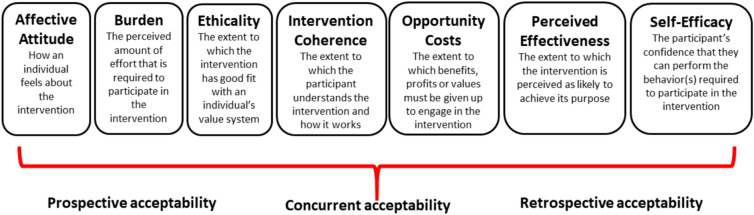
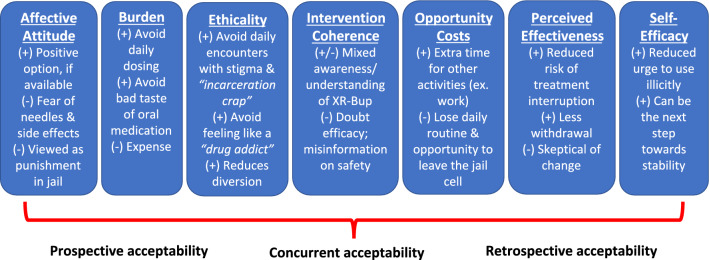
We conducted semi-structured interviews in 2022 with community-dwelling people who received MOUD during a recent incarceration in a Massachusetts jail. We asked participants about their experiences with and perspectives on XR-Bup while in jail. Qualitative data were double-coded deductively and reviewed inductively to identify emergent themes, which were structured using the Theoretical Framework of Acceptability (TFA).
Participants (n = 38) had a mean age of 41.5 years, were 86% male, 84% White, 24% Hispanic, and 95% continued to receive MOUD at the time of their interview, including 11% receiving XR-Bup. Participants who viewed XR-Bup favorably appreciated avoiding the taste of sublingual buprenorphine; avoiding procedural difficulties and indignities associated with daily dosing in carceral settings (e.g., mouth checks, stigmatizing treatment from correctional staff); avoiding daily reminders of their addiction; experiencing less withdrawal; having extra time for other activities, such as work; and reduction of diversion of MOUD within the jail setting. Participants who viewed XR-Bup less favorably preferred to maintain their daily dosing routine; liked daily time out of their housing unit; wanted to know what was "going into my body everyday"; and feared needles and adverse events. Participants also reported that jail clinicians used XR-Bup for patients who were previously caught diverting sublingual buprenorphine, suggesting limited patient participation in decision-making around XR-Bup initiation in some jails.
People who received MOUD in Massachusetts jails had both favorable and unfavorable views and experiences with XR-Bup. Understanding these preferences can inform protocols in jails that are considering implementation of XR-Bup treatment.
监禁为健康干预提供了机会,包括阿片类药物使用障碍(OUD)治疗和预防释放后与阿片类药物相关的过量。2019 年,马萨诸塞州的几家监狱强制要求使用所有 FDA 批准的 OUD 治疗药物(MOUD),其中一些监狱提供了丁丙诺啡缓释剂(XR-Bup)。在监禁环境中,人们对 XR-Bup 的看法和体验知之甚少。
我们在 2022 年对在马萨诸塞州监狱最近监禁期间接受 MOUD 的社区居民进行了半结构式访谈。我们询问了参与者在监狱期间对 XR-Bup 的体验和看法。定性数据采用双重编码演绎法进行编码,并采用归纳法进行审查,以确定出现的主题,这些主题使用可接受性理论框架(TFA)进行组织。
参与者(n=38)的平均年龄为 41.5 岁,86%为男性,84%为白人,24%为西班牙裔,95%在接受采访时仍在接受 MOUD 治疗,其中 11%接受 XR-Bup。对 XR-Bup 持积极态度的参与者欣赏避免舌下丁丙诺啡的味道;避免在监禁环境中进行日常剂量治疗的程序困难和耻辱(例如,口腔检查、矫正人员的污名化治疗);避免每日提醒他们上瘾;经历较少的戒断;有额外的时间进行其他活动,例如工作;减少监狱内 MOUD 的转移。对 XR-Bup 持消极态度的参与者更喜欢维持他们的日常剂量常规;喜欢每天离开他们的住房单元;想知道“每天进入我身体的是什么”;并担心针头和不良事件。参与者还报告说,监狱临床医生将 XR-Bup 用于以前被发现转移舌下丁丙诺啡的患者,这表明在一些监狱中,患者在决定启动 XR-Bup 治疗方面的参与有限。
在马萨诸塞州监狱接受 MOUD 治疗的人对 XR-Bup 有不同的看法和体验。了解这些偏好可以为正在考虑实施 XR-Bup 治疗的监狱提供协议信息。