Department of Applied Cell Sciences, Faculty of Basic Sciences and Advanced Medical Technologies, Royan Institute, ACECR, Tehran, Iran.
Department of Stem Cells and Developmental Biology, Cell Science Research Center, Royan Institute for Stem Cell Biology and Technology, ACECR, Tehran, Iran.
Stem Cell Res Ther. 2024 Sep 12;15(1):298. doi: 10.1186/s13287-024-03919-6.
Cardiovascular progenitor cells (CPCs) derived from human embryonic stem cells (hESCs) are considered valuable cell sources for investigating cardiovascular physiology in vitro. Meeting the diverse needs of this application requires the large-scale production of CPCs in an in vitro environment. This study aimed to use an effective culture system utilizing signaling factors for the large-scale expansion of hESC-derived CPCs with the potential to differentiate into functional cardiac lineage cells.
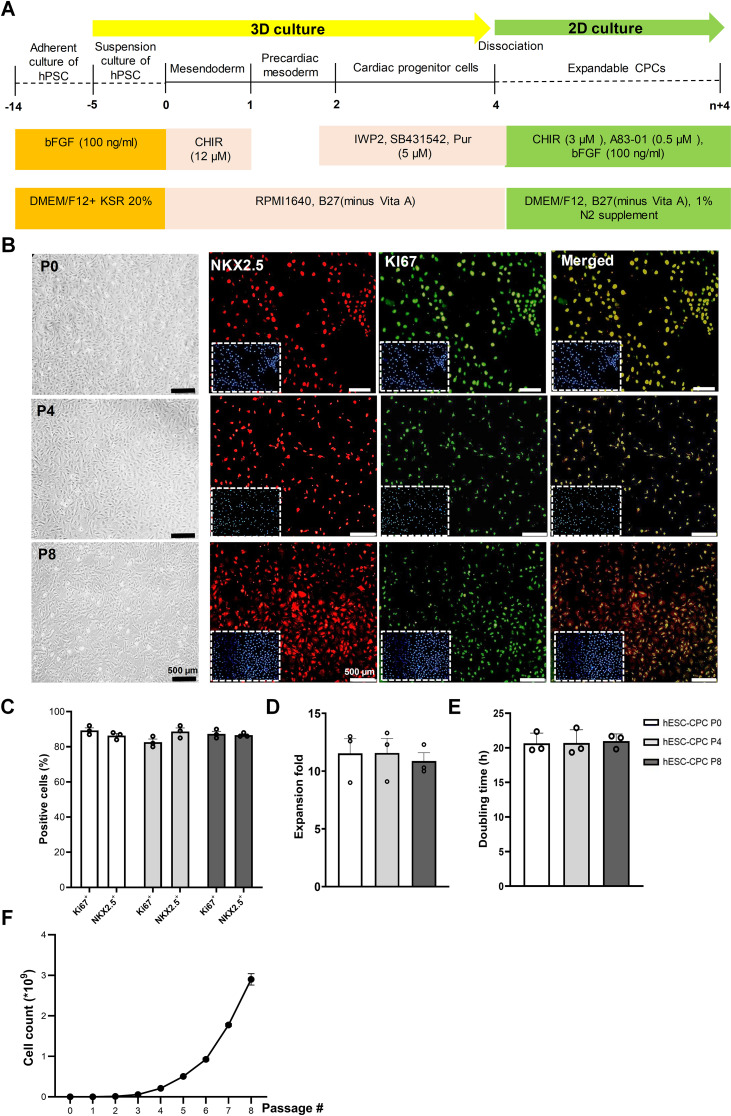
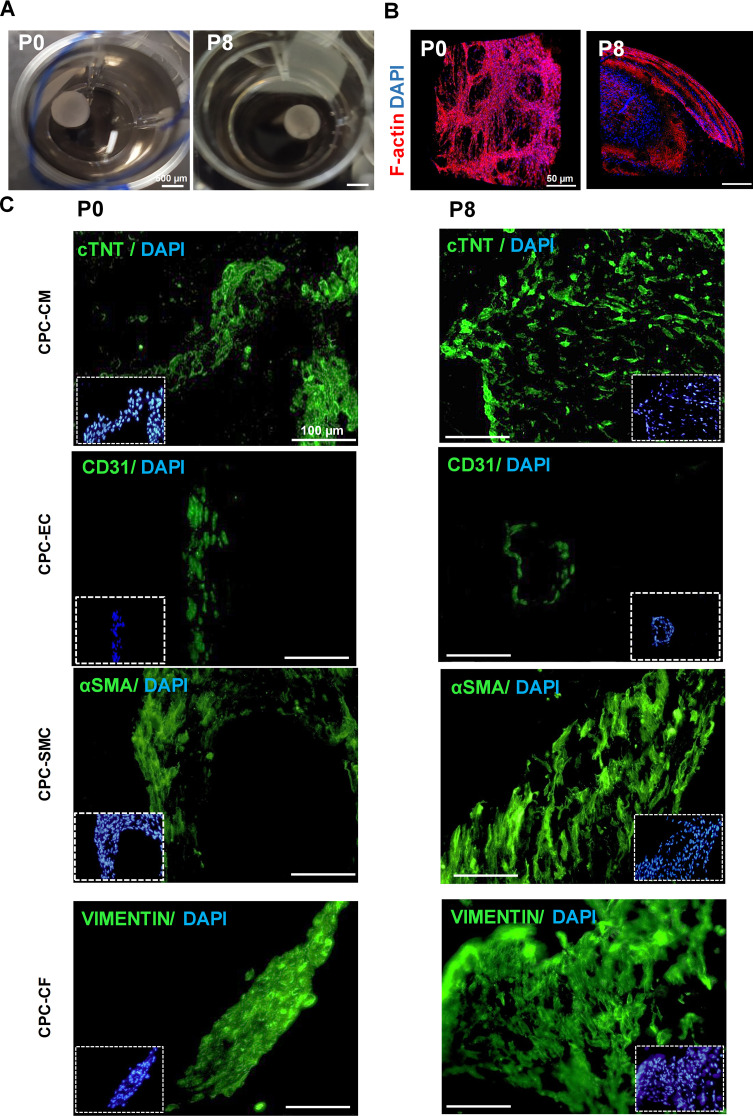
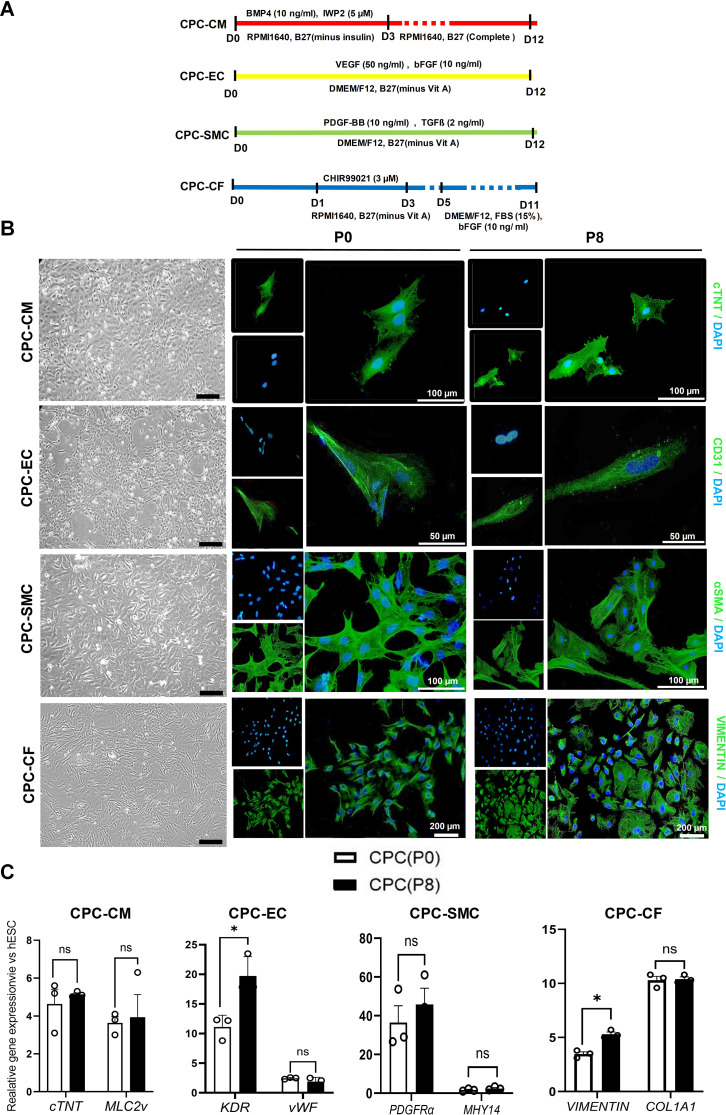
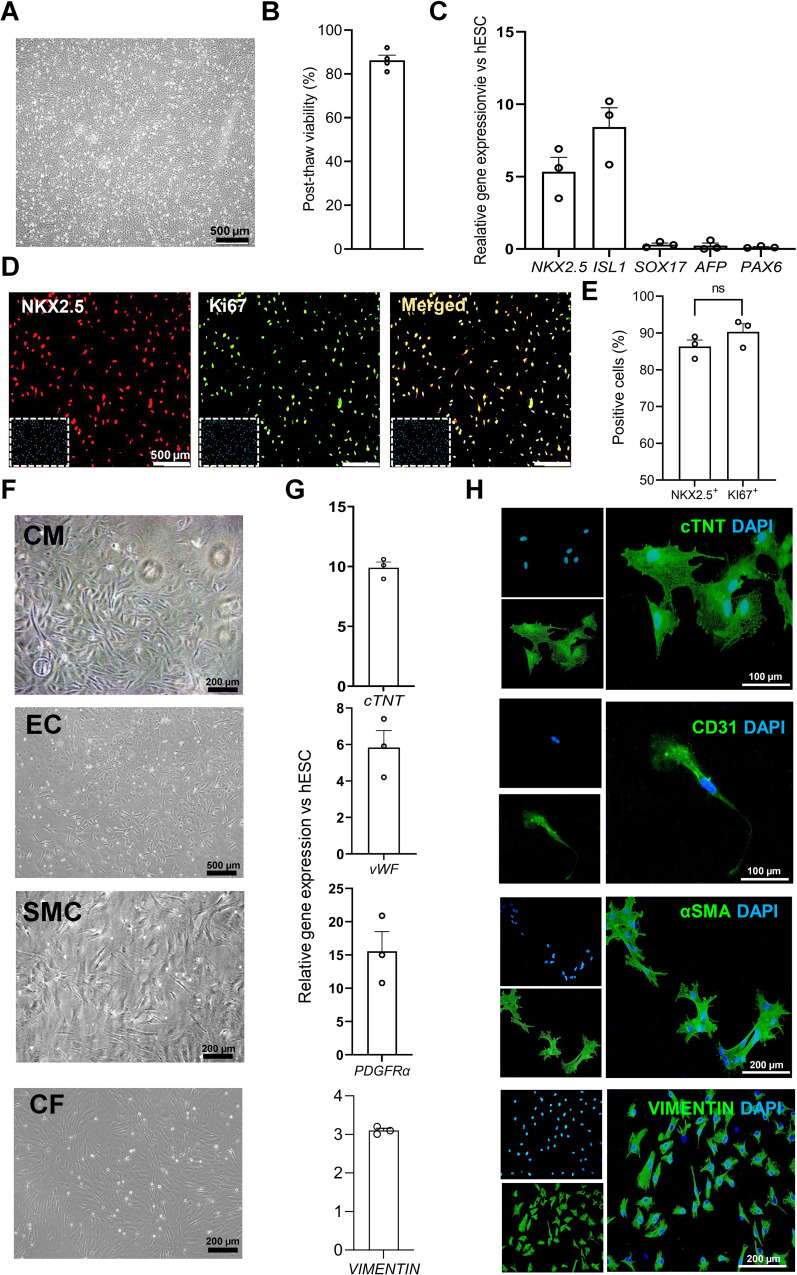
Initially, CPCs were generated from hESCs using a 4-day differentiation protocol with a combination of four small molecules (CHIR99021, IWP2, SB-431542, and purmorphamine). These CPCs were then expanded and maintained in a medium containing three factors (bFGF, CHIR, and A83-01), resulting in a > 6,000-fold increase after 8 passages. These CPCs were successfully cryopreserved for an extended period in late passages. The expanded CPCs maintained their gene and protein expression signatures as well as their differentiation capacity through eight passages. Additionally, these CPCs could differentiate into four types of cardiac lineage cells: cardiomyocytes, endothelial cells, smooth muscle cells, and fibroblasts, demonstrating appropriate functionality. Furthermore, the coculture of these CPC-derived cardiovascular lineage cells in rat tail collagen resulted in cardiac microtissue formation, highlighting the potential of this 3D platform for studying cardiovascular physiology in vitro.
In conclusion, expandable hESC-derived CPCs demonstrated the ability to self-renewal and differentiation into functional cardiovascular lineage cells consistently across passages, which may apply as potential cell sources for in vitro cardiovascular studies.
源自人类胚胎干细胞(hESC)的心血管祖细胞(CPC)被认为是体外研究心血管生理学的有价值的细胞来源。满足这一应用的多样化需求需要在体外环境中大规模生产 CPC。本研究旨在使用一种有效的信号因子培养系统,大规模扩增具有分化为功能性心脏谱系细胞潜力的 hESC 衍生 CPC。
最初,使用包含四种小分子(CHIR99021、IWP2、SB-431542 和 purmorphamine)的 4 天分化方案从 hESC 中生成 CPC。然后,将这些 CPC 在含有三种因子(bFGF、CHIR 和 A83-01)的培养基中进行扩增和维持,在 8 个传代后增加了>6000 倍。这些 CPC 可以在后期传代中长时间冷冻保存。经过 8 个传代,扩增的 CPC 保持其基因和蛋白表达特征以及分化能力。此外,这些 CPC 可以分化为四种类型的心脏谱系细胞:心肌细胞、内皮细胞、平滑肌细胞和成纤维细胞,表现出适当的功能。此外,这些 CPC 衍生的心血管谱系细胞在大鼠尾胶原中的共培养导致心脏微组织的形成,突出了该 3D 平台在体外心血管生理学研究中的潜力。
总之,可扩增的 hESC 衍生 CPC 表现出持续跨代自我更新和分化为功能性心血管谱系细胞的能力,这可能作为体外心血管研究的潜在细胞来源。