Churqui Marianela Patzi, Ghaleb Margarita, Tunovic Timur, Frankal Miriam, Enache Lucica, Nyström Kristina, Lagging Martin, Wang Hao
Institute of Biomedicine, Department of Infectious Diseases, University of Gothenburg, Gothenburg, Sweden.
Sahlgrenska University Hospital, Department of Clinical Microbiology, Region Västra Götaland, Gothenburg, Sweden.
One Health. 2024 Aug 22;19:100882. doi: 10.1016/j.onehlt.2024.100882. eCollection 2024 Dec.
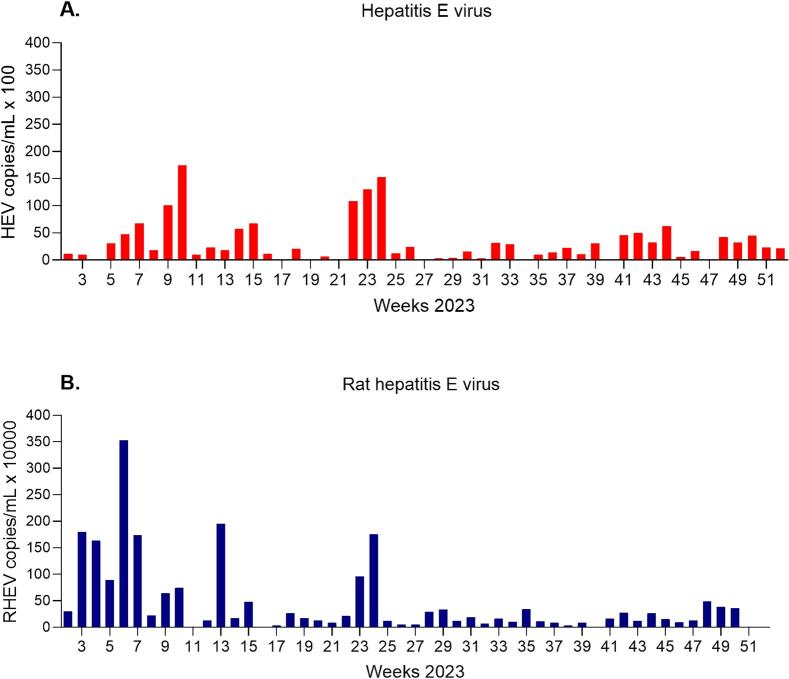
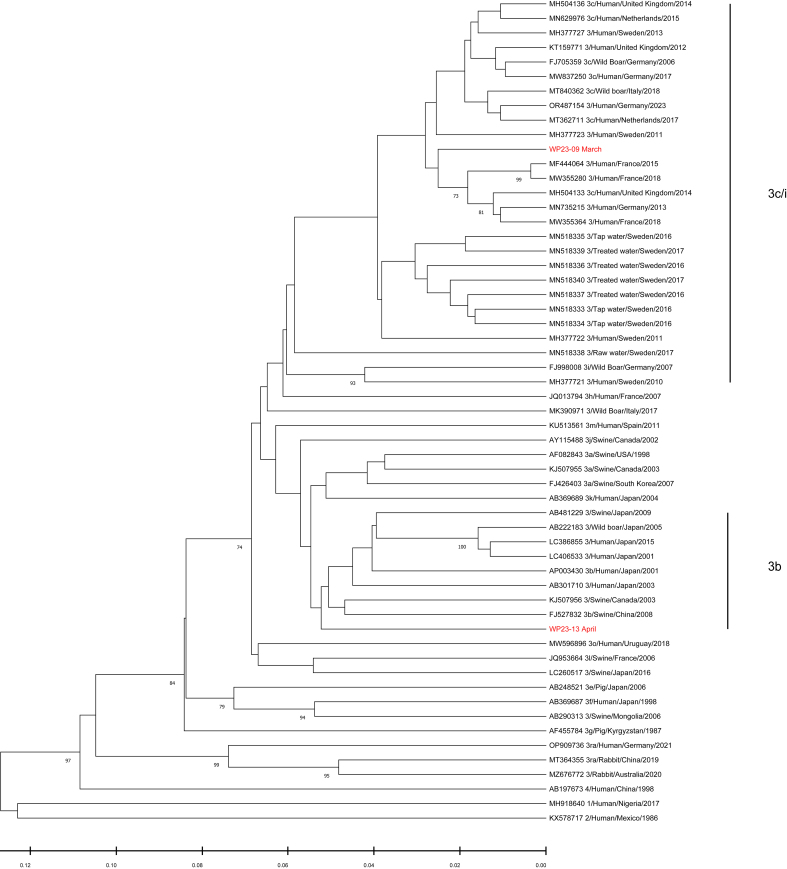
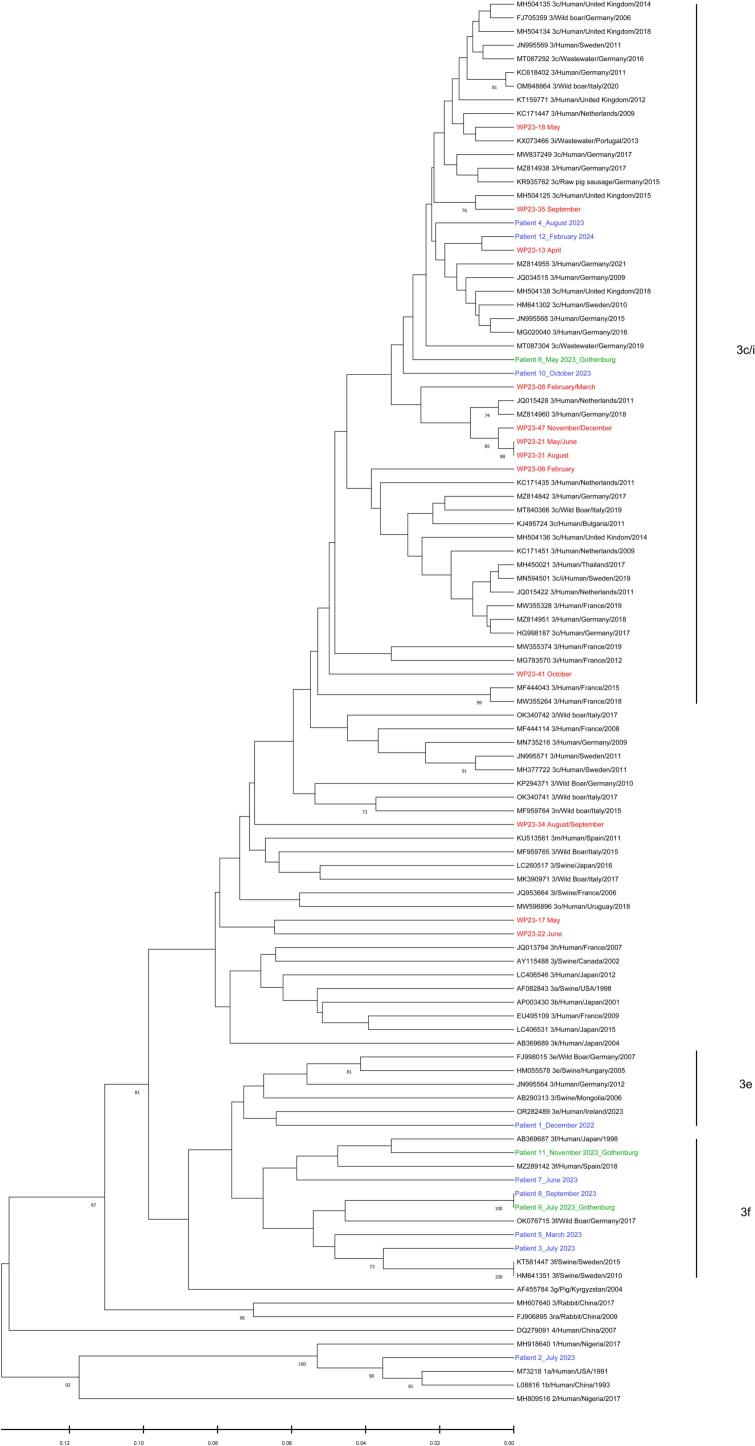
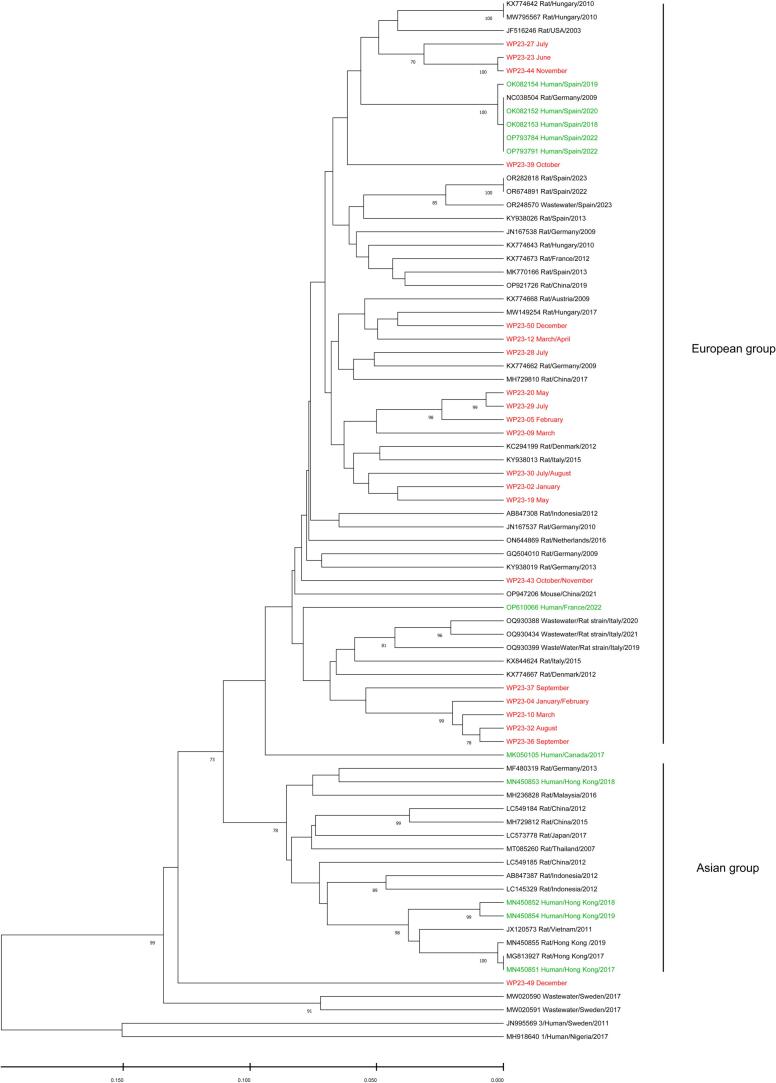
Hepatitis E virus (HEV) and Rat Hepatitis E virus (RHEV), recognized for their zoonotic potential, pose significant public health concerns. Our previous research identified both viruses in effluent wastewater in Gothenburg, Sweden. However, there are lingering inquiries regarding the prevalence and genetic diversity of these viruses in influent wastewater, as well as the utility of wastewater surveillance in elucidating their community circulation dynamics. To address these knowledge gaps, we conducted weekly collection of wastewater samples at the Rya wastewater treatment plant in Gothenburg throughout 2023. The concentrations of HEV and RHEV were quantified using quantitative polymerase chain reaction (qPCR). Additionally, two semi/nested-PCR were utilized to amplify viral strains. Furthermore, HEV strains from patients within the same region, as well as other regions in Sweden in 2023, were incorporated into the analysis. Remarkably, we observed a high prevalence of HEV (86%) and RHEV (98%) in wastewater samples, with the majority of HEV sequences identified as subtype 3c/i (9/12). In contrast, HEV subtype 3f was the most sequenced among clinical patient samples (6/12). Notably, previously unreported HEV-3b and unclassified strains were detected in wastewater. Almost all RHEV strains (20/21) were clustered into European groups, with none of the RHEV genetically close to strains previously found in human cases. The notable discordance in prevalence and identified subtypes of HEV-3 in wastewater compared to clinical samples suggests either a significant underdiagnosis of HEV infections or differences in viral loads and shedding durations among humans between HEV-3 subtypes. This underscores the urgent need for improved diagnostic techniques and heightened awareness of HEV transmission dynamics. Furthermore, the consistent detection of RHEV in wastewater underscores the necessity for further investigations to assess the potential role of RHEV in hepatitis cases of unknown etiology, given that most currently available clinical diagnostic assays fail to detect RHEV.
戊型肝炎病毒(HEV)和大鼠戊型肝炎病毒(RHEV)因其人畜共患病潜力而受到关注,对公共卫生构成重大威胁。我们之前的研究在瑞典哥德堡的污水中发现了这两种病毒。然而,关于这些病毒在进水污水中的流行情况和基因多样性,以及污水监测在阐明其社区传播动态方面的作用,仍存在一些疑问。为了填补这些知识空白,我们于2023年全年在哥德堡的Rya污水处理厂每周采集污水样本。使用定量聚合酶链反应(qPCR)对HEV和RHEV的浓度进行定量。此外,还使用了两种半/巢式PCR来扩增病毒株。此外,2023年来自同一地区以及瑞典其他地区患者的HEV株也被纳入分析。值得注意的是,我们在污水样本中观察到HEV(86%)和RHEV(98%)的高流行率,大多数HEV序列被鉴定为3c/i亚型(9/12)。相比之下,HEV 3f亚型是临床患者样本中测序最多的(6/12)。值得注意的是,在污水中检测到了以前未报告过的HEV-3b和未分类的毒株。几乎所有的RHEV毒株(20/21)都聚集在欧洲组中,没有一个RHEV在基因上与之前在人类病例中发现的毒株接近。与临床样本相比,污水中HEV-3的流行率和鉴定出的亚型存在显著差异,这表明要么HEV感染存在严重漏诊,要么HEV-3亚型之间人类的病毒载量和排毒持续时间存在差异。这凸显了改进诊断技术和提高对HEV传播动态认识的迫切需求。此外,在污水中持续检测到RHEV,凸显了进一步调查的必要性,以评估RHEV在病因不明的肝炎病例中的潜在作用,因为目前大多数临床诊断检测方法无法检测到RHEV。