Kisley Michael A, Chung Esther J, Levitt Hannah
Department of Psychology, University of Colorado, Colorado Springs, CO 80918, USA.
Animals (Basel). 2024 Sep 7;14(17):2606. doi: 10.3390/ani14172606.
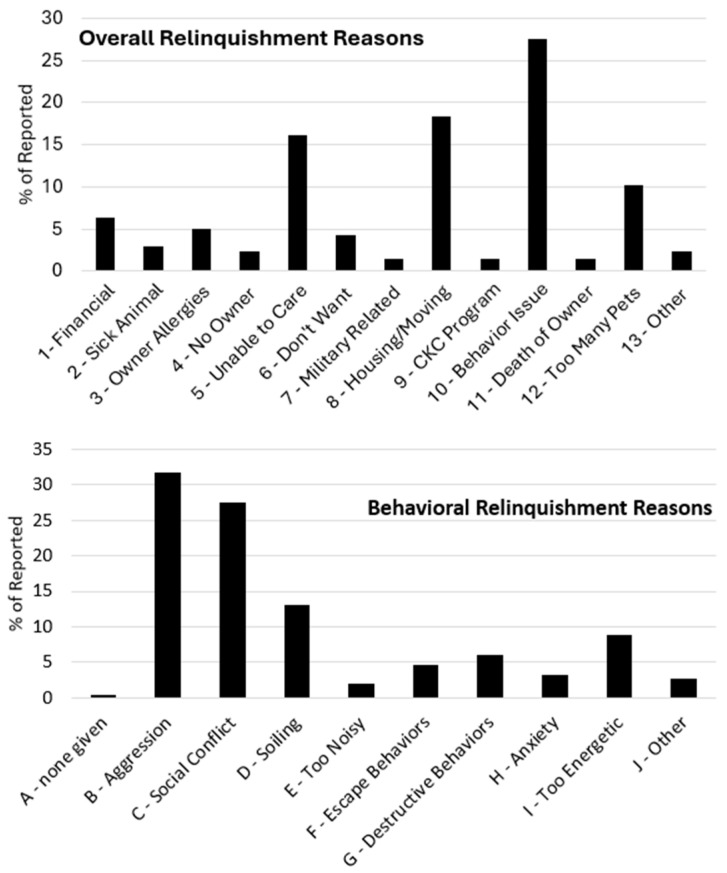
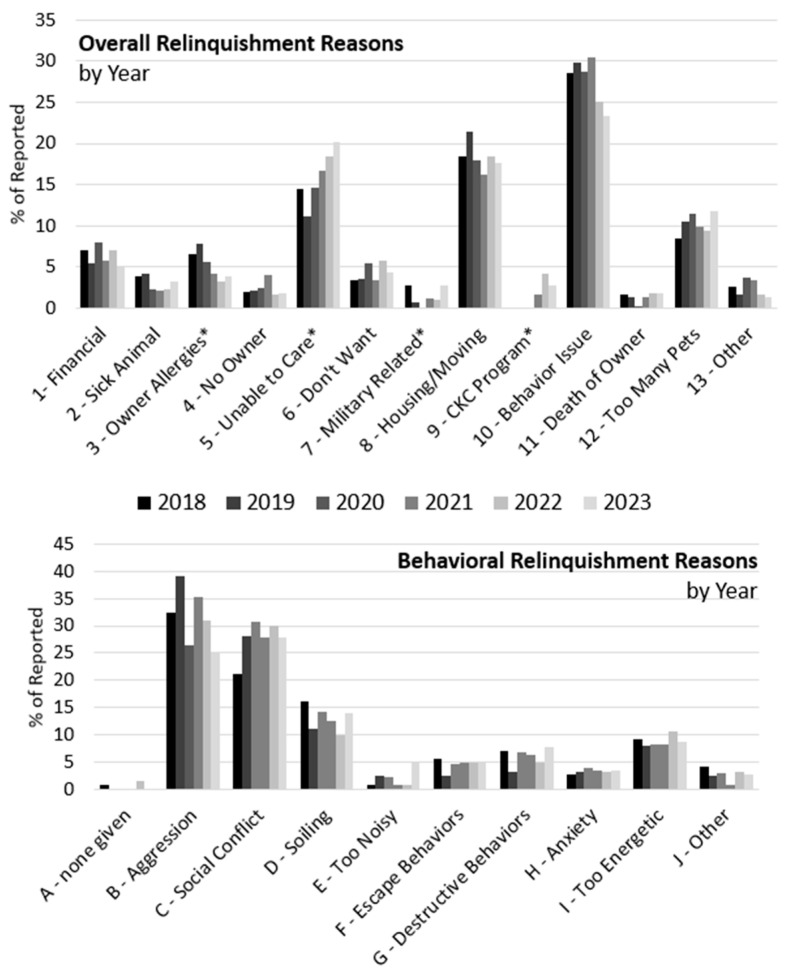
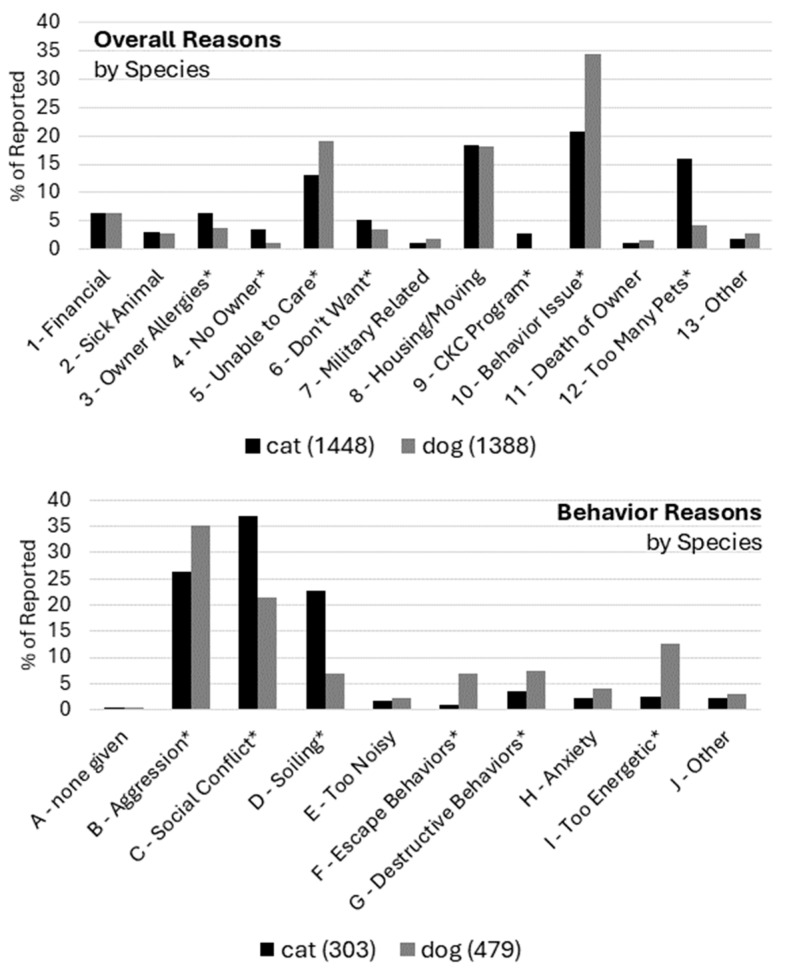
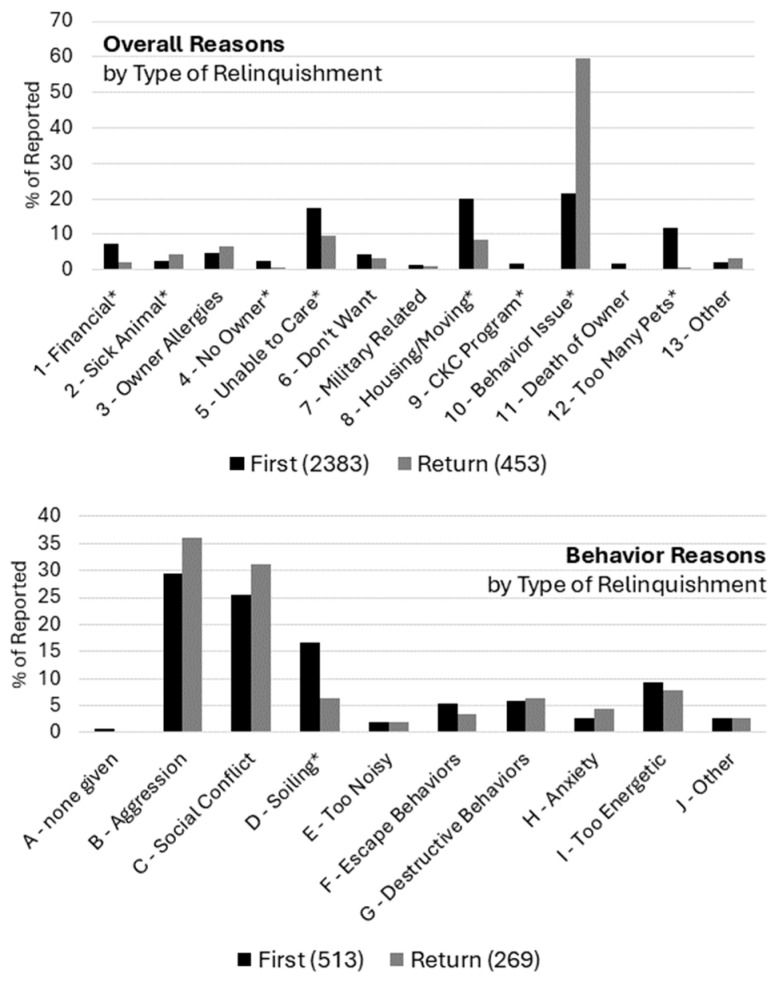
The relinquishment of companion animals to shelters presents significant challenges for animal welfare organizations and has substantial implications for the well-being of both the animals and their owners. This study aims to investigate the reasons for voluntarily relinquishing animals to shelters, to examine species-specific differences (cats and dogs), to compare initial relinquishments to returns (re-relinquishments or readmissions), and to identify potential changes over a 6-year period framing the onset of the COVID-19 pandemic. A retrospective analysis of owner relinquishment records from an open admission shelter in the US was conducted using content analysis, a novel approach in this area of research. A total of 13 relinquishment reason categories were identified, as well as 9 separate categories for specific behavioral issues. Among 2836 randomly selected records, the most frequent reasons cited were Behavior Issues (28%), Housing/Moving (18%), Unable to Care (16%), Too Many Pets (10%), Financial (6%), and Owner Allergies (5%). The most common behavioral reasons reported were Aggression (32% of behavioral surrenders), Social Conflict (28%), and Soiling (13%). However, differences were observed in the pattern of relinquishment reasons based on statistical analyses of species, type of relinquishment, and year. Regarding temporal trends, Housing/Moving and Financial reasons were not found to have changed significantly since the pandemic, but the relative frequency of the category Unable to Care increased significantly in 2022 and 2023. Collectively, these findings partially replicate those from research spanning the past several decades in this area that has employed less systematic methodology and can further be used to help identify and understand the primary drivers of owner relinquishments.
将伴侣动物送到收容所对动物福利组织来说是巨大挑战,对动物及其主人的福祉也有重大影响。本研究旨在调查动物被主人自愿送到收容所的原因,研究特定物种差异(猫和狗),比较初次送养与退回(再次送养或重新收容)情况,并确定在以新冠疫情爆发为背景的6年期间可能出现的变化。采用内容分析法对美国一家开放式收容所的主人送养记录进行回顾性分析,这在该研究领域是一种新方法。共确定了13个送养原因类别,以及9个关于特定行为问题的单独类别。在随机抽取的2836条记录中,最常被提及的原因是行为问题(28%)、住房/搬家(18%)、无力照顾(16%)、宠物太多(10%)、经济问题(6%)和主人过敏(5%)。报告的最常见行为原因是攻击性(行为放弃案例中的32%)、社交冲突(28%)和弄脏(13%)。然而,基于物种、送养类型和年份的统计分析,送养原因模式存在差异。关于时间趋势,自疫情以来,住房/搬家和经济原因没有显著变化,但无力照顾类别的相对频率在2022年和2023年显著增加。总体而言,这些发现部分重复了过去几十年该领域研究的结果,以往研究采用的方法系统性较差,这些发现可进一步用于帮助识别和理解主人送养的主要驱动因素。