Department of Hematology and Oncology, Buddhist Tzu Chi General Hospital, Hualien 970, Taiwan.
Center of Stem Cell & Precision Medicine, Hualien Tzu Chi Hospital, Hualien 970, Taiwan.
Int J Mol Sci. 2024 Aug 30;25(17):9432. doi: 10.3390/ijms25179432.
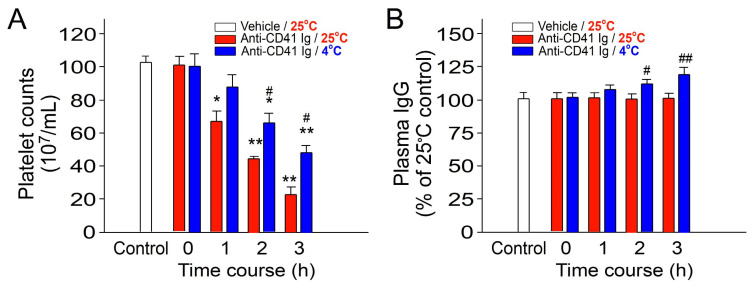
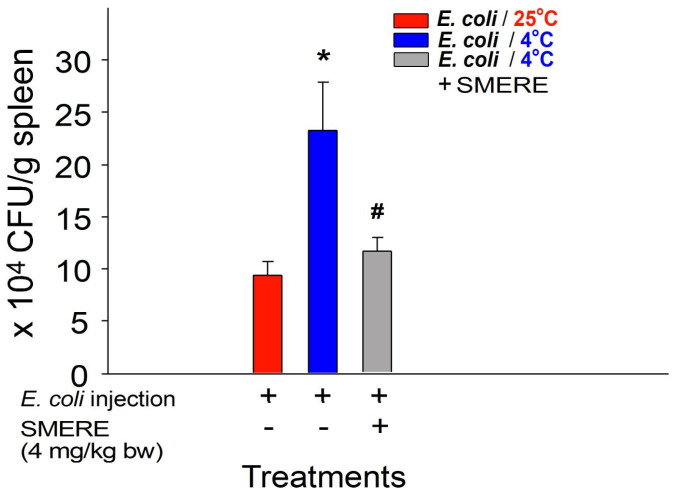
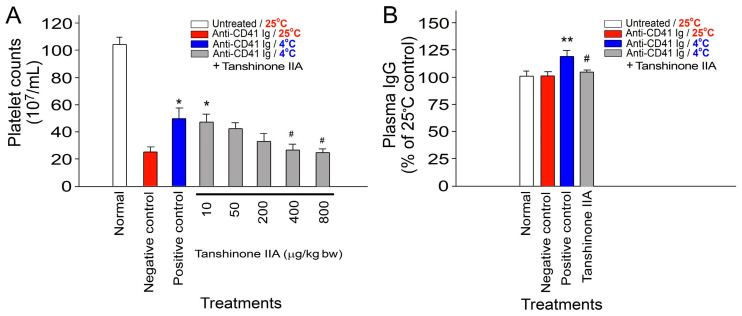
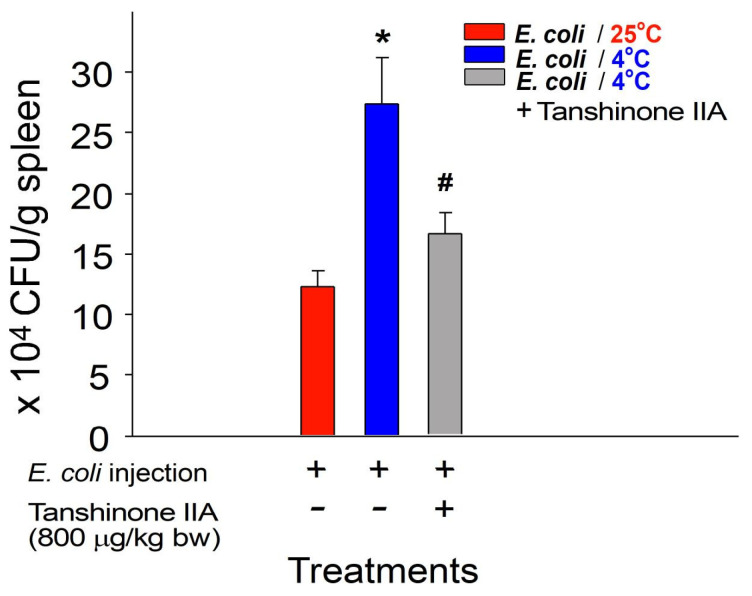
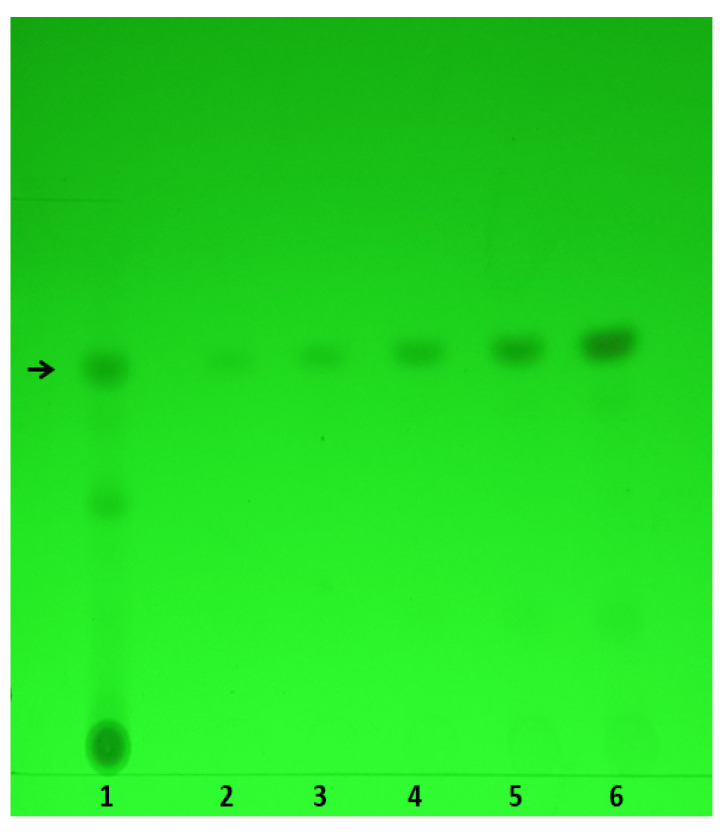
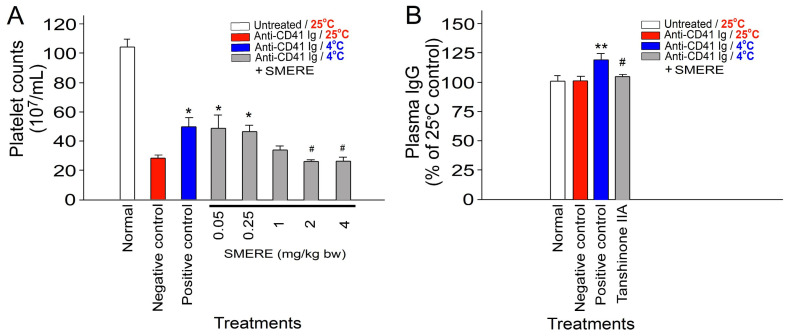
The interaction between environmental stressors, such as cold exposure, and immune function significantly impacts human health. Research on effective therapeutic strategies to combat cold-induced immunosuppression is limited, despite its importance. In this study, we aim to investigate whether traditional herbal medicine can counteract cold-induced immunosuppression. We previously demonstrated that cold exposure elevated immunoglobulin G (IgG) levels in mice, similar to the effects of intravenous immunoglobulin (IVIg) treatments. This cold-induced rise in circulating IgG was mediated by the renin-angiotensin-aldosterone system and linked to vascular constriction. In our mouse model, the cold-exposed groups (4 °C) showed significantly elevated plasma IgG levels and reduced bacterial clearance compared with the control groups maintained at room temperature (25 °C), both indicative of immunosuppression. Using this model, with 234 mice divided into groups of 6, we investigated the potential of tanshinone IIA, an active compound in ethanolic root extract (SMERE), in alleviating cold-induced immunosuppression. Tanshinone IIA and SMERE treatments effectively normalized elevated plasma IgG levels and significantly improved bacterial clearance impaired by cold exposure compared with control groups injected with a vehicle control, dimethyl sulfoxide. Notably, bacterial clearance, which was impaired by cold exposure, showed an approximately 50% improvement following treatment, restoring immune function to levels comparable to those observed under normal temperature conditions (25 °C, < 0.05). These findings highlight the therapeutic potential of traditional herbal medicine in counteracting cold-induced immune dysregulation, offering valuable insights for future strategies aimed at modulating immune function in cold environments. Further research could focus on isolating tanshinone IIA and compounds present in SMERE to evaluate their specific roles in mitigating cold-induced immunosuppression.
环境应激因素(如寒冷暴露)与免疫功能的相互作用对人类健康有重大影响。尽管其重要性不言而喻,但目前针对对抗寒冷诱导免疫抑制的有效治疗策略的研究还很有限。在本研究中,我们旨在研究传统草药是否可以对抗寒冷诱导的免疫抑制。我们之前的研究表明,寒冷暴露会导致小鼠免疫球蛋白 G(IgG)水平升高,这与静脉注射免疫球蛋白(IVIg)治疗的效果相似。这种寒冷诱导的循环 IgG 升高是由肾素-血管紧张素-醛固酮系统介导的,并与血管收缩有关。在我们的小鼠模型中,与在室温(25°C)下保持的对照组相比,暴露于寒冷中的组(4°C)显示出显著升高的血浆 IgG 水平和降低的细菌清除率,这两者都表明存在免疫抑制。使用该模型,我们将 234 只小鼠分为 6 组,研究丹参酮 IIA(乙醇根提取物(SMERE)中的一种活性化合物)缓解寒冷诱导的免疫抑制的潜力。与注射溶剂对照(二甲亚砜)的对照组相比,丹参酮 IIA 和 SMERE 治疗可有效使升高的血浆 IgG 水平正常化,并显著改善因寒冷暴露而受损的细菌清除率。值得注意的是,寒冷暴露导致的细菌清除率改善了约 50%,使免疫功能恢复到与在正常温度条件(25°C,<0.05)下观察到的水平相当。这些发现突出了传统草药在对抗寒冷诱导的免疫失调方面的治疗潜力,为未来在寒冷环境中调节免疫功能的策略提供了有价值的见解。进一步的研究可以集中于分离丹参酮 IIA 和 SMERE 中存在的化合物,以评估它们在减轻寒冷诱导的免疫抑制方面的具体作用。