Cutaneous Biology Research Center, Department of Dermatology, Massachusetts General Hospital, Harvard Medical School, Boston, USA.
Massachusetts General Hospital Cancer Center, Harvard Medical School, Boston, USA.
Sci Rep. 2024 Sep 14;14(1):21527. doi: 10.1038/s41598-024-72031-9.
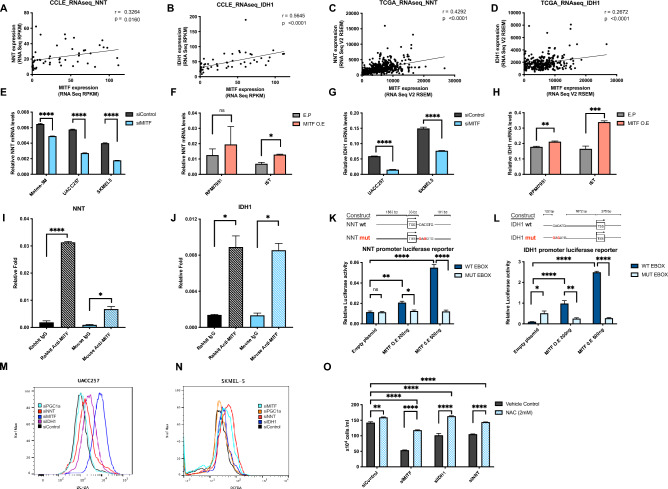
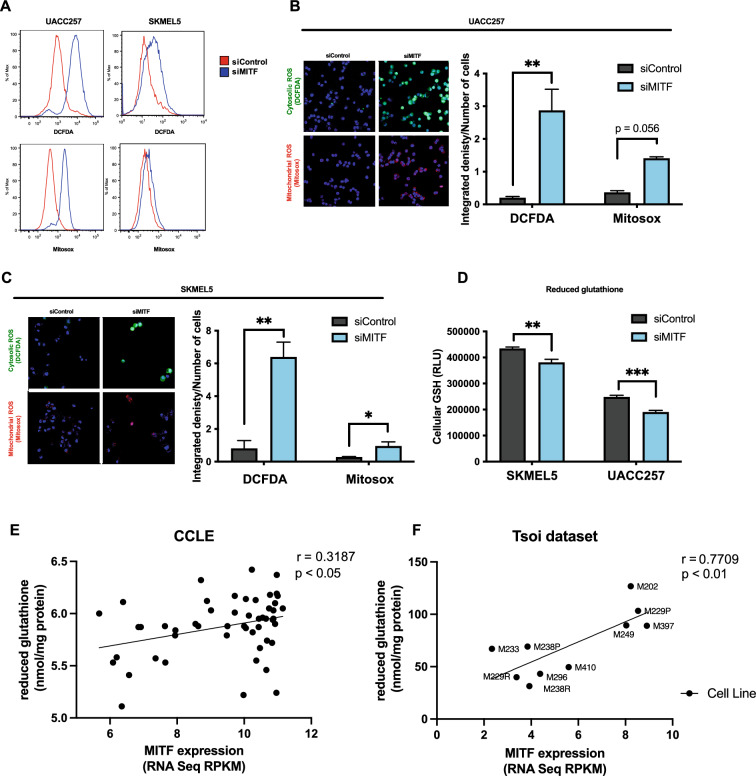
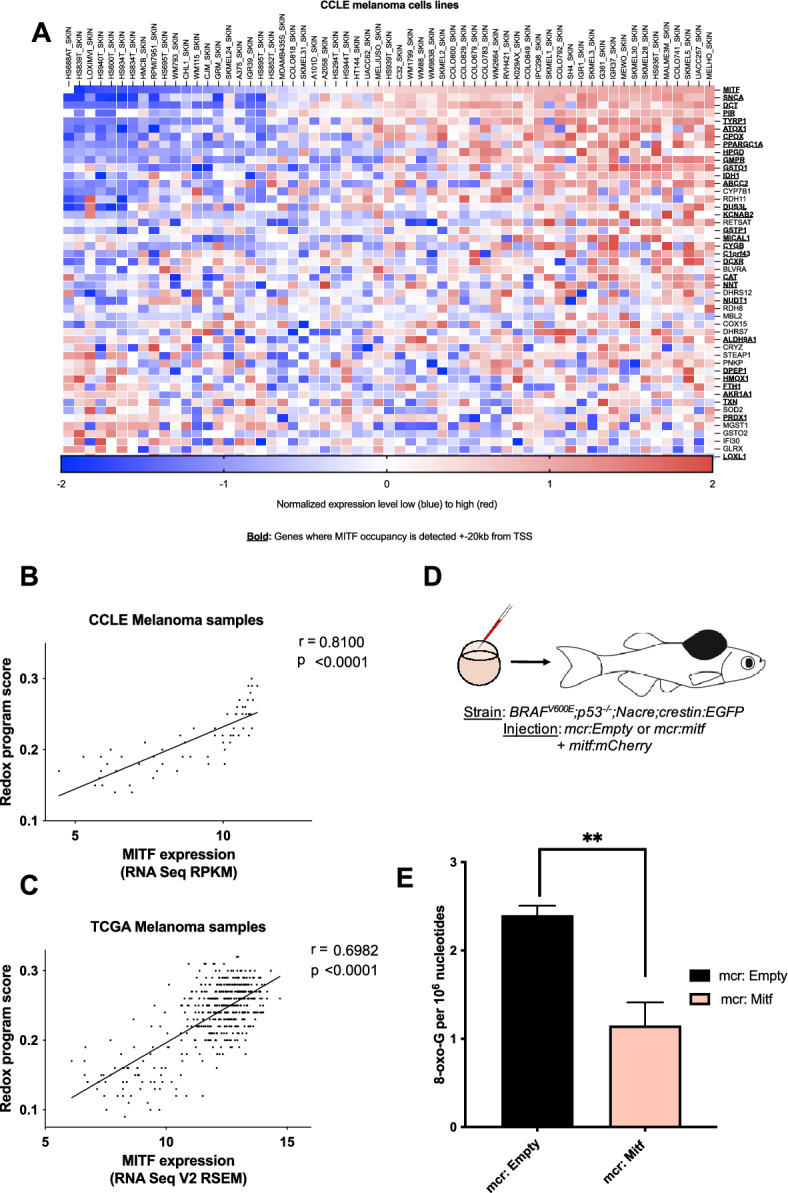
Microphthalmia-associated transcription factor (MITF) is a master regulator of melanocyte function, development and plays a significant role in melanoma pathogenesis. MITF genomic amplification promotes melanoma development, and it can facilitate resistance to multiple therapies. Here, we show that MITF regulates a global antioxidant program that increases survival of melanoma cell lines by protecting the cells from reactive oxygen species (ROS)-induced damage. In addition, this redox program is correlated with MITF expression in human melanoma cell lines and patient-derived melanoma samples. Using a zebrafish melanoma model, we show that MITF decreases ROS-mediated DNA damage in vivo. Some of the MITF target genes involved, such as IDH1 and NNT, are regulated through direct MITF binding to canonical enhancer box (E-BOX) sequences proximal to their promoters. Utilizing functional experiments, we demonstrate the role of MITF and its target genes in reducing cytosolic and mitochondrial ROS. Collectively, our data identify MITF as a significant driver of the cellular antioxidant state.
小眼畸形相关转录因子(MITF)是黑素细胞功能、发育的主要调节因子,在黑色素瘤发病机制中发挥重要作用。MITF 基因组扩增促进黑色素瘤的发展,并且可以促进对多种治疗方法的耐药性。在这里,我们表明 MITF 调节一个全局抗氧化程序,通过保护细胞免受活性氧(ROS)诱导的损伤来增加黑素瘤细胞系的存活率。此外,该氧化还原程序与人类黑素瘤细胞系和患者来源的黑素瘤样本中的 MITF 表达相关。通过使用斑马鱼黑色素瘤模型,我们表明 MITF 减少体内 ROS 介导的 DNA 损伤。一些涉及的 MITF 靶基因,如 IDH1 和 NNT,通过直接 MITF 结合到它们启动子附近的典型增强子盒(E-BOX)序列进行调节。通过功能实验,我们证明了 MITF 及其靶基因在减少细胞质和线粒体 ROS 中的作用。总之,我们的数据确定 MITF 是细胞抗氧化状态的重要驱动因素。