Liu Dong, Shi Kun, Chen Peng, Yan Nuoxiao, Ran Lishan, Kutser Tiit, Tyler Andrew N, Spyrakos Evangelos, Woolway R Iestyn, Zhang Yunlin, Duan Hongtao
Key Laboratory of Lake and Watershed Science for Water Security, Nanjing Institute of Geography and Limnology, Chinese Academy of Sciences, Nanjing, China.
Biological and Environmental Sciences, School of Natural Sciences, University of Stirling, Stirling, UK.
Nat Commun. 2024 Sep 14;15(1):8049. doi: 10.1038/s41467-024-52387-2.
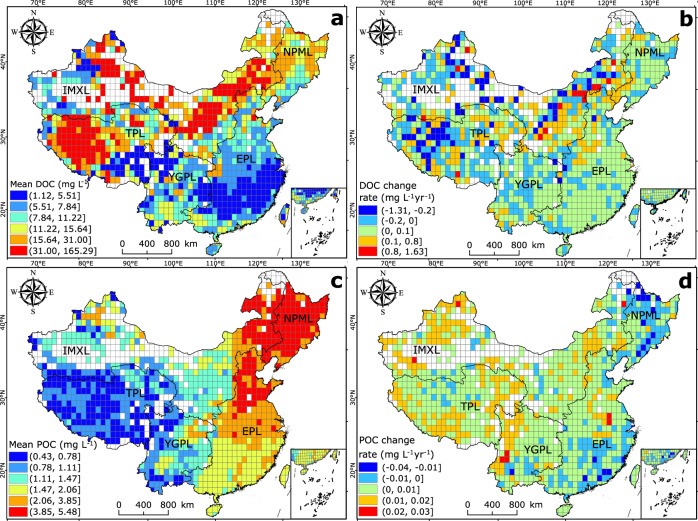
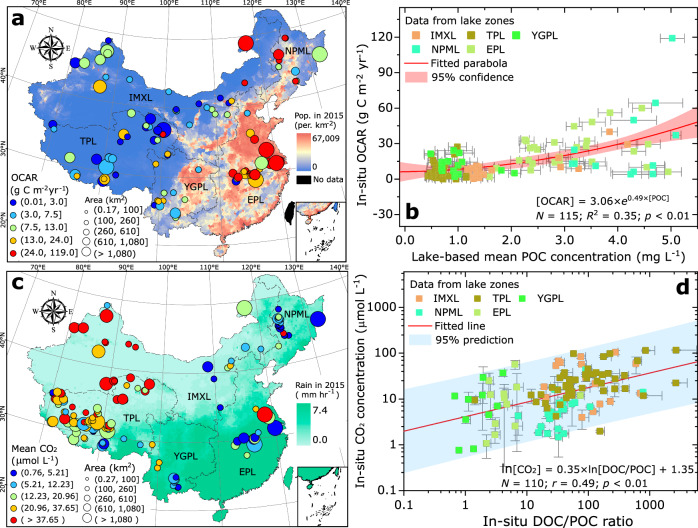
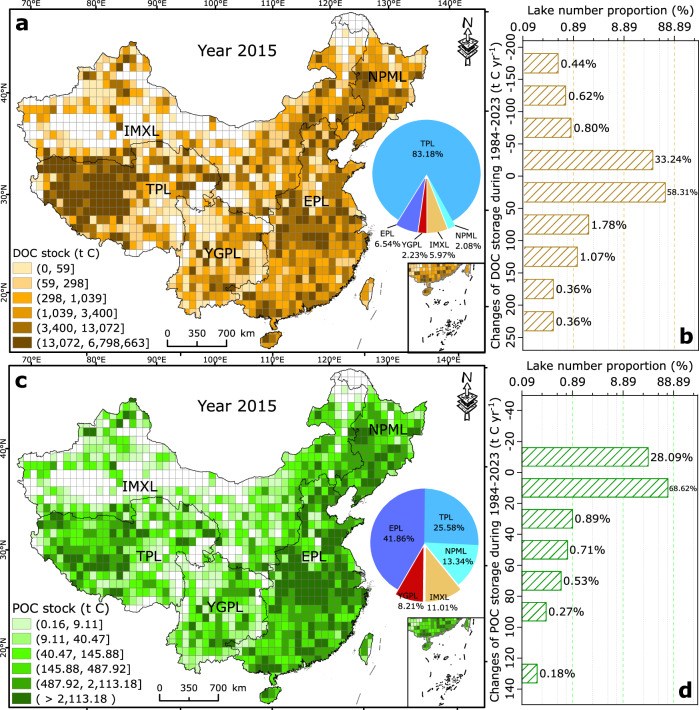
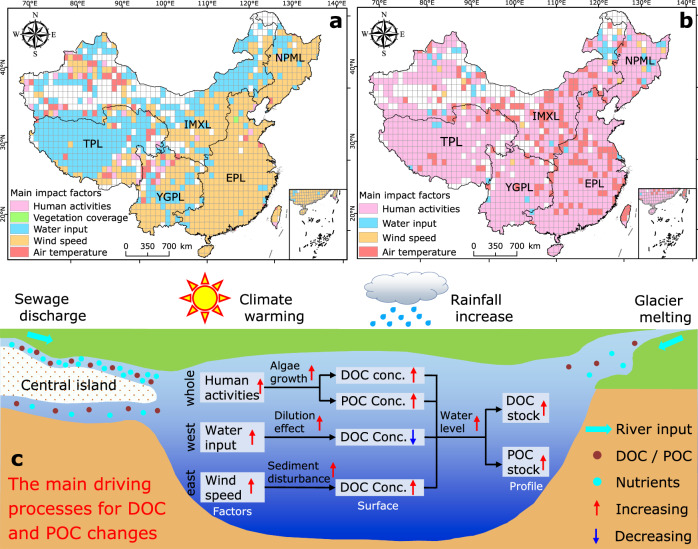
Previous studies typically assumed a constant total organic carbon (OC) storage in the lake water column, neglecting its significant variability within a changing world. Based on extensive field data and satellite monitoring techniques, we demonstrate considerable spatiotemporal variability in OC concentration and storage for 24,366 Chinese lakes during 1984-2023. Here we show that dissolved OC concentration is high in northwest saline lakes and particulate OC concentration is high in southeast eutrophic lakes. Along with increasing OC concentration and water volume, dissolved and particulate OC storage increase by 44.6% and 33.5%, respectively. Intensified human activities, water input, and wind disturbance are the key drivers for increasing OC storage. Moreover, higher OC storage further leads to an 11.0% increase in nationwide OC burial and a decrease in carbon emissions from 71.1% of northwest lakes. Similar changes are occurring globally, which suggests that lakes are playing an increasingly important role in carbon sequestration.
以往的研究通常假定湖泊水柱中的总有机碳(OC)储量恒定,而忽略了在不断变化的世界中其显著的变异性。基于广泛的实地数据和卫星监测技术,我们证明了1984年至2023年期间中国24366个湖泊的OC浓度和储量存在显著的时空变异性。我们在此表明,西北咸水湖的溶解有机碳浓度较高,而东南富营养化湖泊的颗粒有机碳浓度较高。随着OC浓度和水量的增加,溶解有机碳储量和颗粒有机碳储量分别增加了44.6%和33.5%。人类活动加剧、水输入和风扰动是OC储量增加的关键驱动因素。此外,更高的OC储量进一步导致全国范围内OC埋藏增加11.0%,并使71.1%的西北湖泊的碳排放减少。全球也在发生类似的变化,这表明湖泊在碳固存中发挥着越来越重要的作用。