Obijiofor Chinemelum, Sikora Michelle, Moshiri Ata S, Alam Mariam, Lo Sicco Kristen I, Imadojemu Sotonye, Caplan Avrom S
The Ronald O. Perelman Department of Dermatology, NYU Grossman School of Medicine, New York City, New York.
New York Medical College, Valhalla, New York.
Int J Womens Dermatol. 2024 Sep 13;10(3):e181. doi: 10.1097/JW9.0000000000000181. eCollection 2024 Oct.
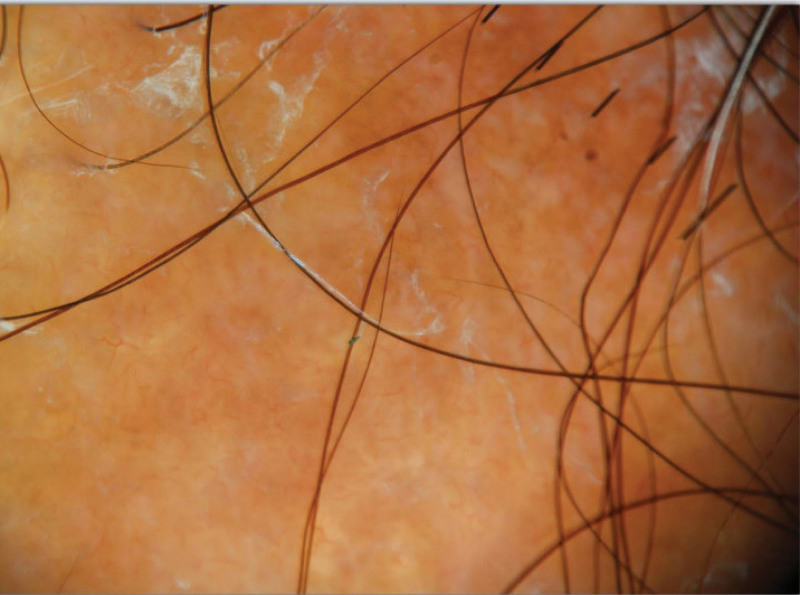
Alopecic sarcoidosis is an uncommon cutaneous manifestation of sarcoidosis. Scarring and nonscarring alopecic sarcoidosis have been reported; however, information on the epidemiology, systemic disease associations, and treatment efficacy is limited.
To address these gaps, we conducted a retrospective chart review and systematic literature review of alopecic sarcoidosis cases.
Full-text English publications from PubMed, Scopus, and Google Scholar from inception to August 2023 were analyzed. Treatment evidence quality was assessed using the modified Oxford Centre for Evidence-Based Medicine rating scale. Three patients with biopsy-proven alopecic sarcoidosis were included as a case series, all demonstrating systemic sarcoidosis and 2 requiring multiple therapies. Among 1778 search results, 60 articles representing 77 cases of alopecic and scalp sarcoidosis were included. Patients were categorized into 4 distinct alopecic subgroups. Black patients constituted the majority of all subgroups.
Extracutaneous sarcoidosis burden was high across all alopecic subgroups, with ocular disease appearing overrepresented. Topical and oral corticosteroids were the main treatments. Though scarring alopecia patients had poor outcomes despite receiving immunomodulators/cx, limited data suggest potential efficacy of tumor necrosis factor-alpha inhibitors.
This study has a small sample size.
Our findings underscore the importance of evidence-based strategies for improving alopecic sarcoidosis management. Prompt diagnosis and systemic evaluation, especially for scarring alopecia, are essential for timely intervention to optimize patient outcomes.
脱发性结节病是结节病一种不常见的皮肤表现。瘢痕性和非瘢痕性脱发性结节病均有报道;然而,关于其流行病学、系统性疾病关联及治疗效果的信息有限。
为填补这些空白,我们对脱发性结节病病例进行了回顾性病历审查和系统性文献综述。
分析了从创刊至2023年8月来自PubMed、Scopus和谷歌学术的英文全文出版物。使用改良的牛津循证医学中心评分量表评估治疗证据质量。纳入3例经活检证实的脱发性结节病患者作为病例系列,所有患者均表现为系统性结节病,2例需要多种治疗。在1778条检索结果中,纳入了代表77例脱发性和头皮结节病病例的60篇文章。患者被分为4个不同的脱发亚组。黑人患者在所有亚组中占多数。
所有脱发亚组的皮肤外结节病负担都很高,眼部疾病似乎占比过高。局部和口服糖皮质激素是主要治疗方法。尽管瘢痕性脱发患者在接受免疫调节剂治疗后效果不佳,但有限的数据表明肿瘤坏死因子-α抑制剂可能有效。
本研究样本量较小。
我们的研究结果强调了循证策略对改善脱发性结节病管理的重要性。及时诊断和系统性评估,尤其是对瘢痕性脱发患者,对于及时干预以优化患者预后至关重要。