Kelly Shannon C, Higgins Cassandra B, Sun Jiameng, Adams Joshua A, Zhang Yiming, Ballentine Samuel, Miao Yong, Cui XiaoXia, Milewska Małgorzata, Wandzik Ilona, Yoshino Jun, Swarts Benjamin M, Wada Shun-Ichi, DeBosch Brian J
Department of Pediatrics, Washington University School of Medicine, St. Louis, MO 63110, USA.
Department of Pathology and Immunology, Washington University School of Medicine, St. Louis, MO 63110, USA.
PNAS Nexus. 2024 Aug 30;3(9):pgae357. doi: 10.1093/pnasnexus/pgae357. eCollection 2024 Sep.
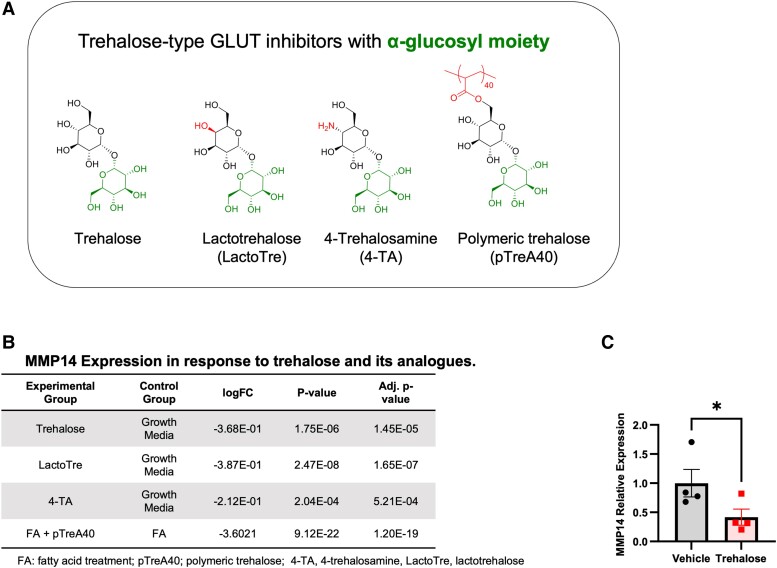
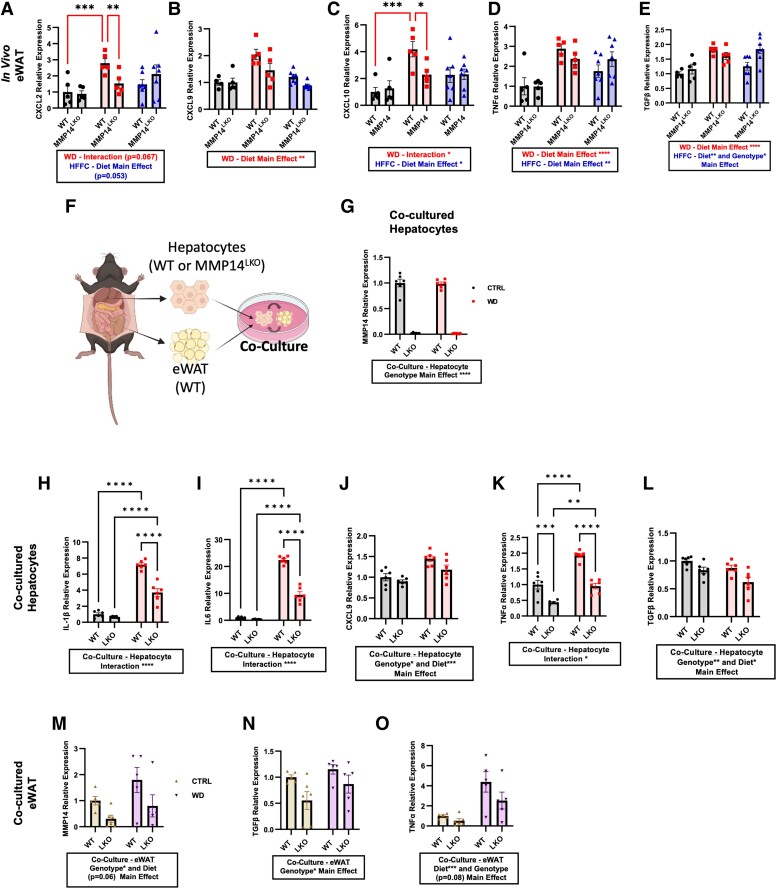
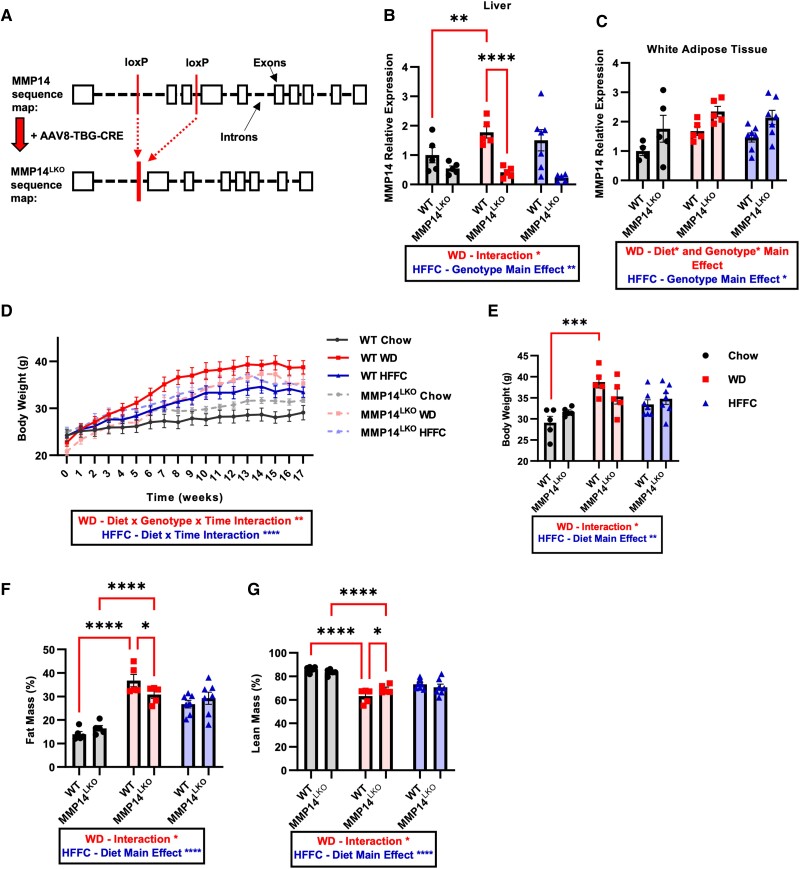
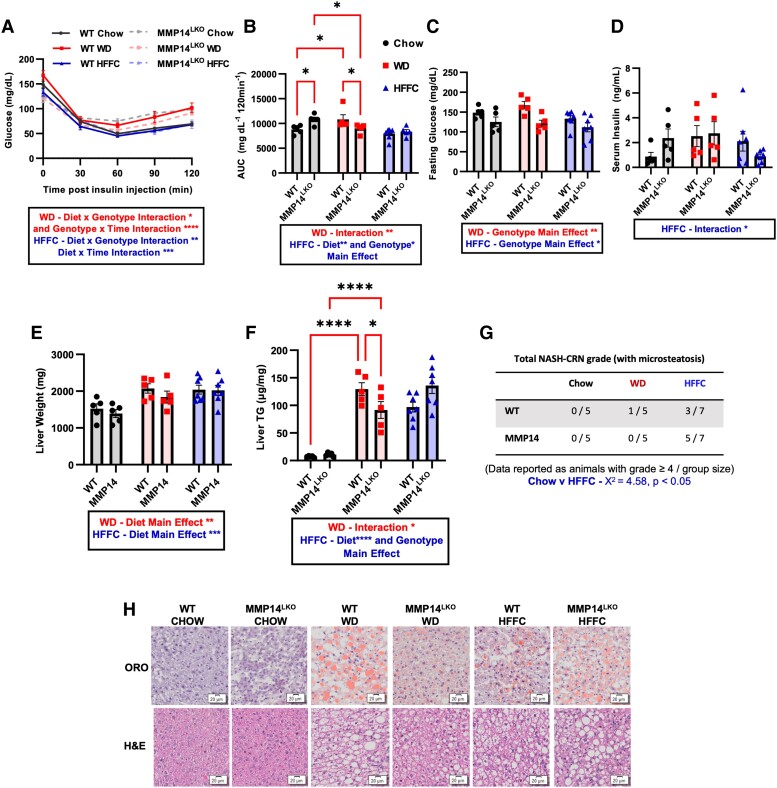
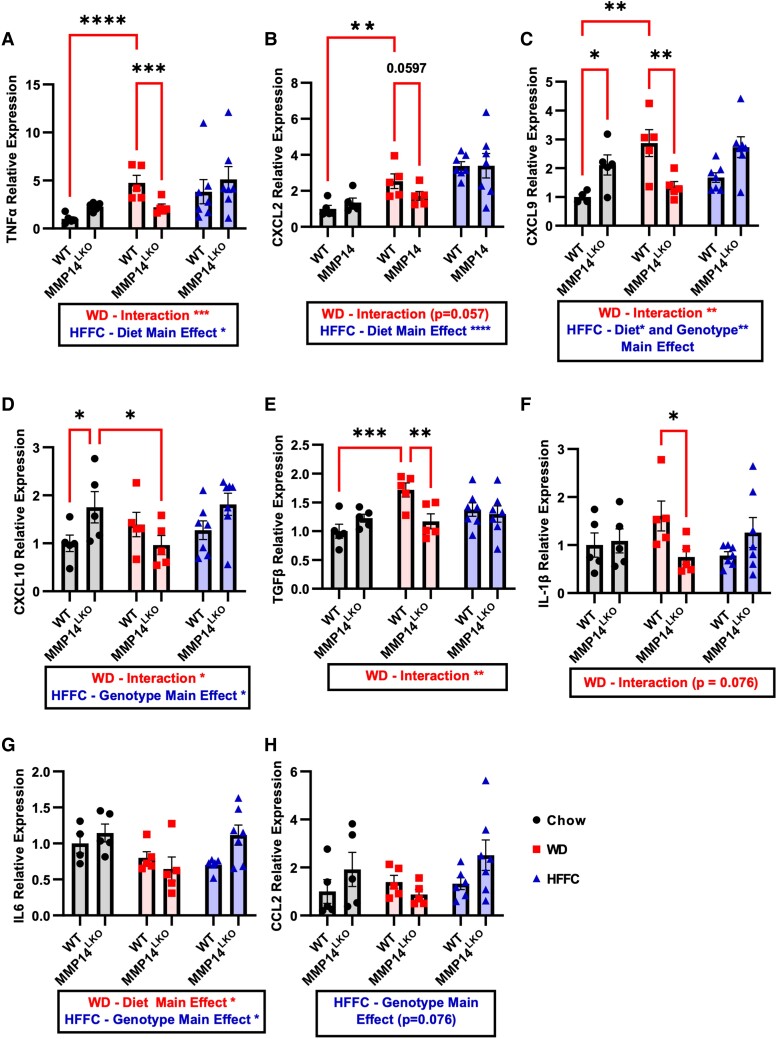
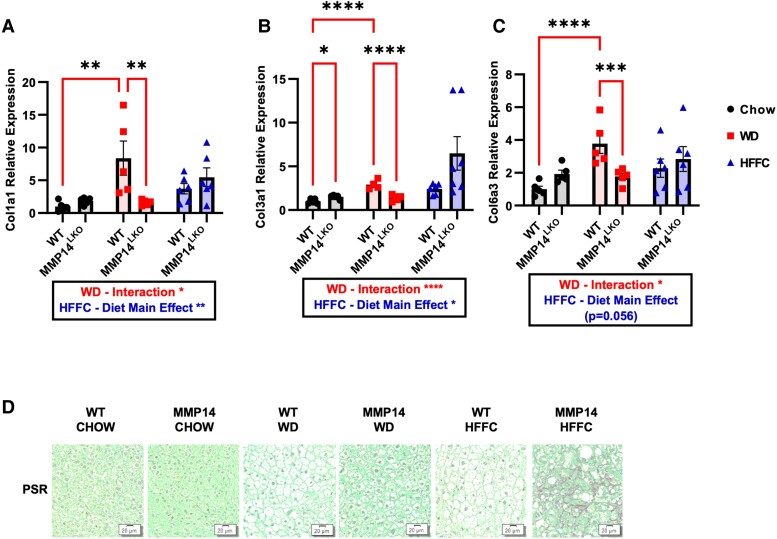
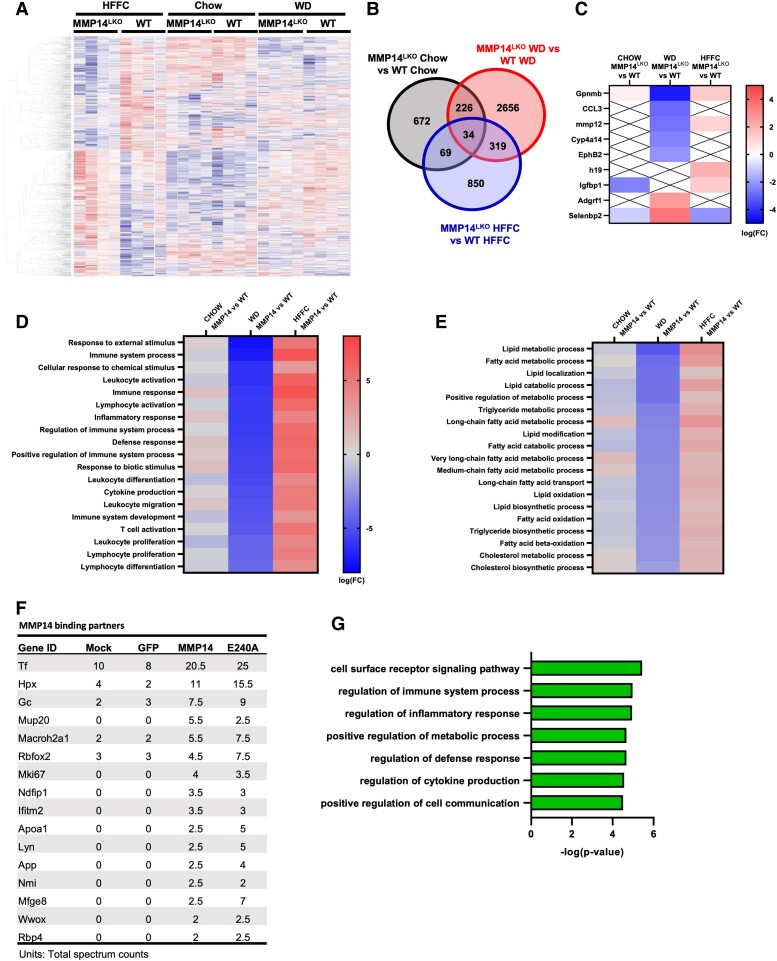
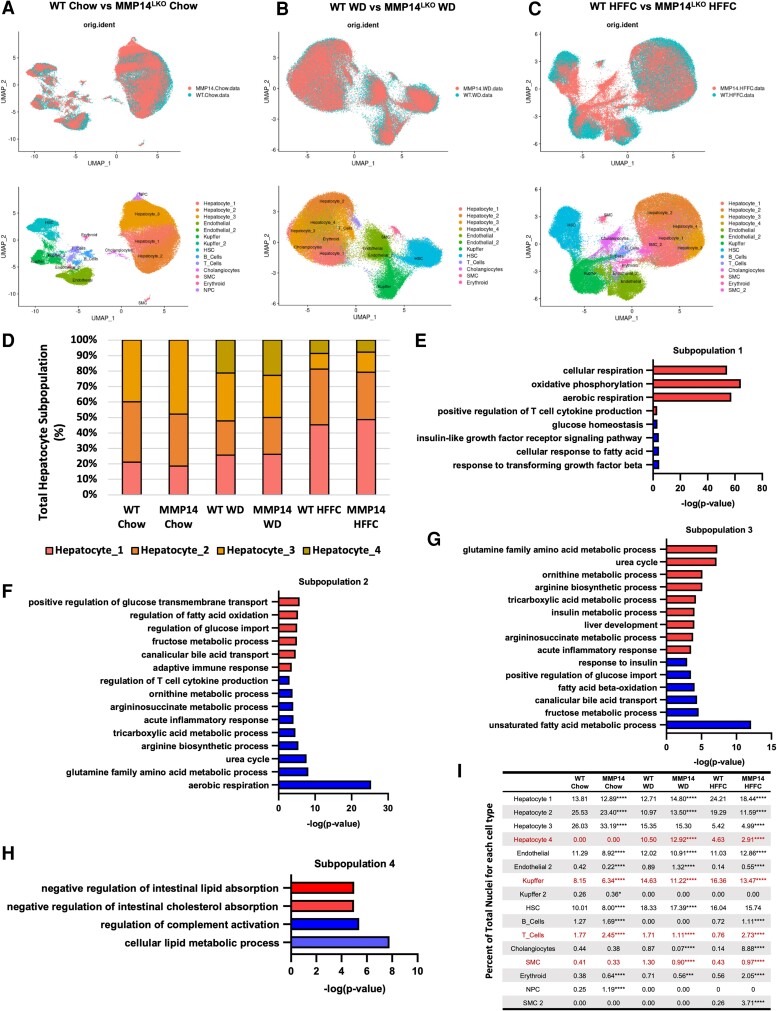
The matrix metalloproteinase MMP14 is a ubiquitously expressed, membrane-bound, secreted endopeptidase that proteolyzes substrates to regulate development, signaling, and metabolism. However, the spatial and contextual events inciting MMP14 activation and its metabolic sequelae are not fully understood. Here, we introduce an inducible, hepatocyte-specific MMP14-deficient model (MMP14 mice) to elucidate cell-intrinsic and systemic MMP14 function. We show that hepatocyte MMP14 mediates diet-induced body weight gain, peripheral adiposity, and impaired glucose homeostasis and drives diet-induced liver triglyceride accumulation and induction of hepatic inflammatory and fibrotic gene expression. Single-nucleus RNA sequencing revealed that hepatocyte MMP14 mediates Kupffer cell and T-cell accumulation and promotes diet-induced hepatocellular subpopulation shifts toward protection against lipid absorption. MMP14 co-immunoprecipitation and proteomic analyses revealed MMP14 substrate binding across both inflammatory and cytokine signaling, as well as metabolic pathways. Strikingly, hepatocyte MMP14 loss-of-function suppressed skeletal muscle and adipose inflammation in vivo, and in a reductionist adipose-hepatocyte co-culture model. Finally, we reveal that trehalose-type glucose transporter inhibitors decrease hepatocyte MMP14 gene expression and nominate these inhibitors as translatable therapeutic metabolic agents. We conclude that hepatocyte MMP14 drives liver and inter-organ inflammatory and metabolic sequelae of obesogenic dietary insult. Modulating MMP14 activation and blockade thus represents a targetable node in the pathogenesis of hepatic inflammation.
基质金属蛋白酶MMP14是一种广泛表达的膜结合分泌型内肽酶,可通过蛋白水解底物来调节发育、信号传导和代谢。然而,引发MMP14激活及其代谢后果的空间和背景事件尚未完全明确。在此,我们引入一种可诱导的、肝细胞特异性MMP14缺陷模型(MMP14小鼠),以阐明细胞内在和全身的MMP14功能。我们发现肝细胞MMP14介导饮食诱导的体重增加、外周脂肪增多以及葡萄糖稳态受损,并促使饮食诱导的肝脏甘油三酯积累以及肝脏炎症和纤维化基因表达的诱导。单核RNA测序显示,肝细胞MMP14介导库普弗细胞和T细胞的积累,并促进饮食诱导的肝细胞亚群向防止脂质吸收的方向转变。MMP14免疫共沉淀和蛋白质组学分析揭示了MMP14在炎症和细胞因子信号传导以及代谢途径中的底物结合情况。引人注目的是,肝细胞MMP14功能丧失在体内以及在简化的脂肪-肝细胞共培养模型中均抑制了骨骼肌和脂肪炎症。最后,我们发现海藻糖型葡萄糖转运抑制剂可降低肝细胞MMP14基因表达,并将这些抑制剂指定为可转化的治疗性代谢药物。我们得出结论,肝细胞MMP14驱动肥胖性饮食损伤引起的肝脏和器官间炎症及代谢后果。因此,调节MMP14激活和阻断代表了肝脏炎症发病机制中的一个可靶向节点。