Catlett Ian M, Gao Lu, Hu Yanhua, Banerjee Subhashis, Krueger James G
Bristol Myers Squibb, 3401 Princeton Pike, Lawrenceville, NJ, 08648, USA.
The Rockefeller University, New York, NY, USA.
Dermatol Ther (Heidelb). 2024 Oct;14(10):2827-2839. doi: 10.1007/s13555-024-01262-5. Epub 2024 Sep 16.
Psoriasis, a chronic, immune-mediated, inflammatory disease, affects 2‒3% of the population. Tyrosine kinase 2 (TYK2) mediates cytokine signaling involved in adaptive [interleukin (IL)-12, IL-23] and innate (type-I interferons) immune responses; IL-23-driven T-helper (Th)17 pathways play a key role in chronic inflammation in psoriasis. In a phase 2 trial, deucravacitinib, an oral, selective, allosteric TYK2 inhibitor, reduced IL-23/Th17 and type-I interferon pathway expression in the skin of patients with moderate to severe plaque psoriasis, reductions that were accompanied by clinical improvement of psoriatic lesions.
The aim of this study was to identify biomarkers of psoriatic disease in serum from patients enrolled in the phase 2 trial and to assess the effects of deucravacitinib on those biomarkers.
Serum biomarkers from Olink proteomics and other quantitative assays were evaluated for a pharmacodynamic response to deucravacitinib treatment and correlation with psoriasis disease activity measures.
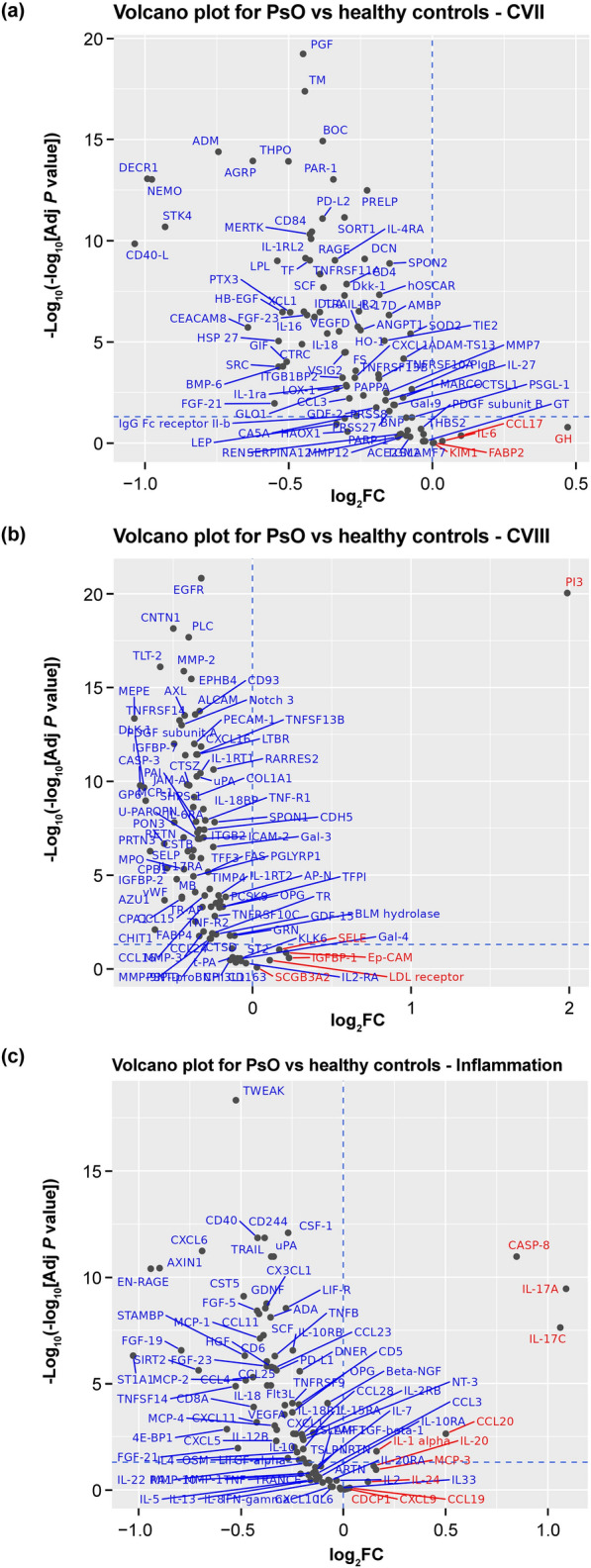
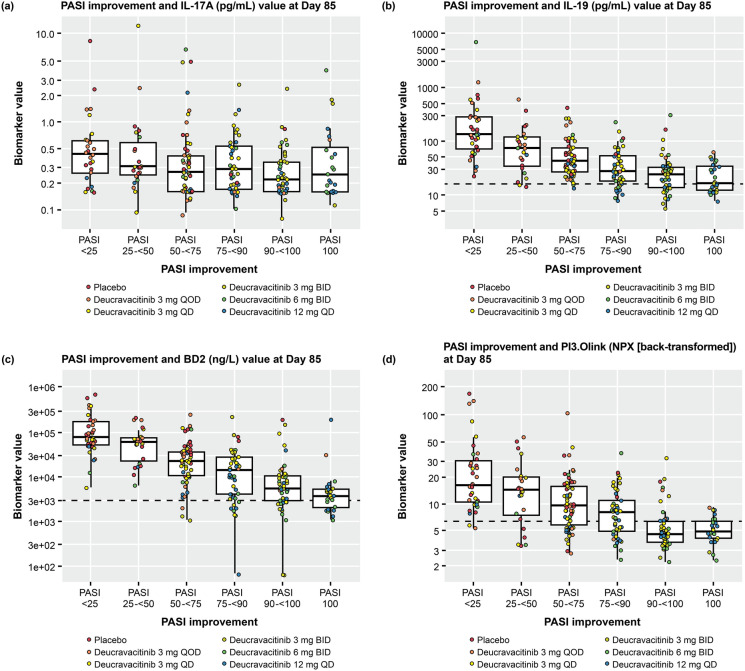
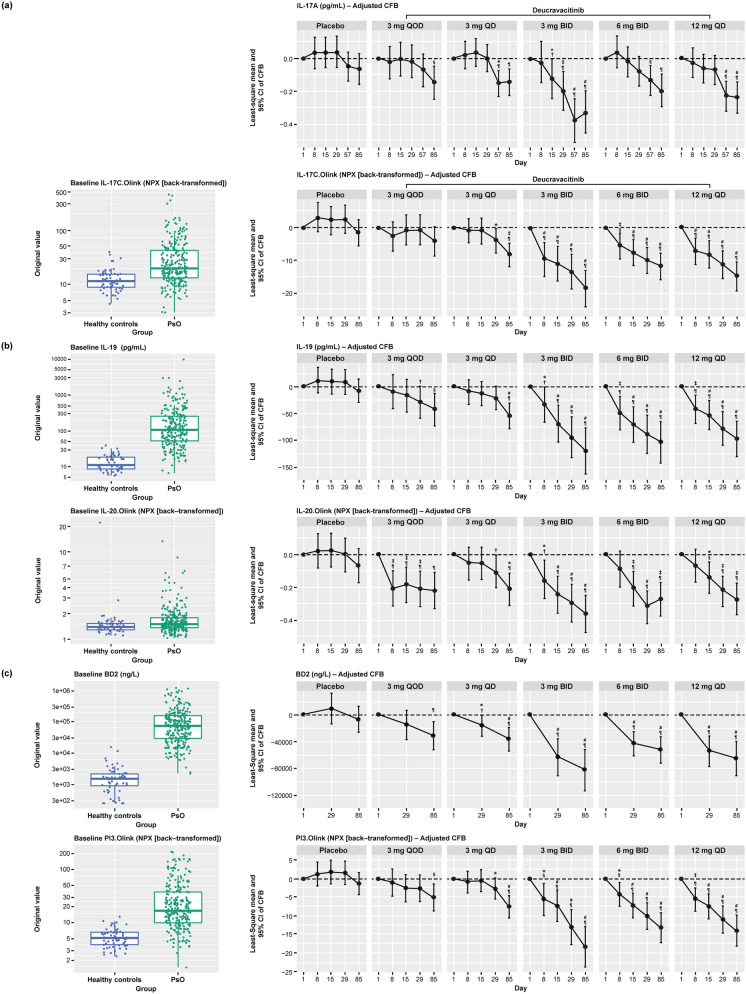
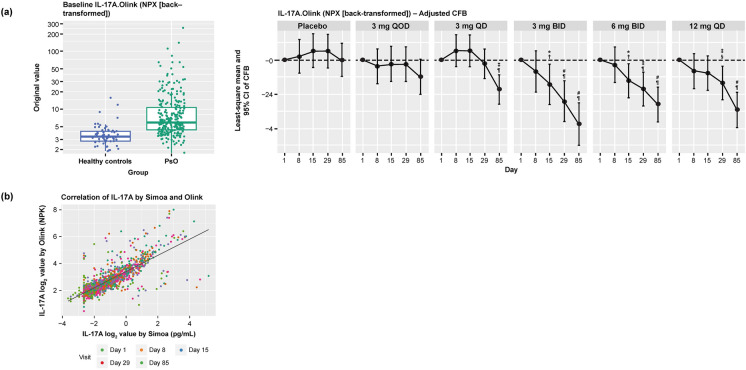
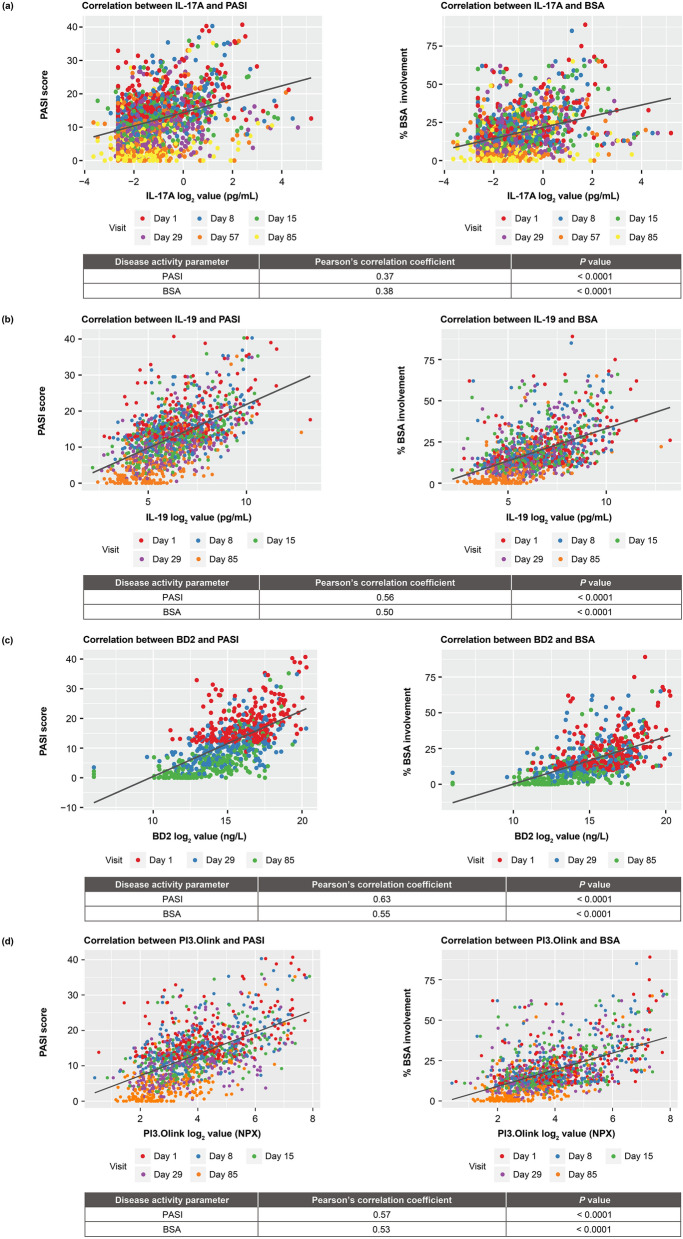
Serum biomarkers associated with the IL-23/Th17 pathway [IL-17A, IL-17C, IL-19, IL-20, beta-defensin, and peptidase inhibitor 3 (PI3)] were upregulated in patients with psoriasis versus healthy controls. Deucravacitinib treatment reduced IL-17A (adjusted mean change from baseline at Day 85; 12 mg once daily versus placebo; -0.240 versus -0.067), IL-17C (-14.850 versus -1.664), IL-19 (-96.445 versus -8.119), IL-20 (-0.265 versus -0.064), beta-defensin (-65,025.443 versus -7553.961), and PI3 (-14.005 versus -1.360) expression. Reductions in serum biomarker expression occurred in a dose- and time-dependent manner, with significant reductions from baseline seen with deucravacitinib doses ≥ 3 mg twice daily (P ≤ 0.05). Biomarker expression correlated with disease activity measures such as Psoriasis Area and Severity Index (PASI) at baseline. Biomarker expression also correlated with PASI scores at Week 12.
IL-23/Th17 pathway expression in the serum of patients with psoriasis is an indicator of disease activity and response to deucravacitinib treatment.
NCT02931838.
银屑病是一种慢性、免疫介导的炎症性疾病,影响2%至3%的人口。酪氨酸激酶2(TYK2)介导参与适应性[白细胞介素(IL)-12、IL-23]和先天性(I型干扰素)免疫反应的细胞因子信号传导;IL-23驱动的辅助性T细胞(Th)17通路在银屑病的慢性炎症中起关键作用。在一项2期试验中,口服、选择性、变构TYK2抑制剂氘可来昔替尼降低了中度至重度斑块状银屑病患者皮肤中IL-23/Th17和I型干扰素通路的表达,这些降低伴随着银屑病皮损的临床改善。
本研究的目的是确定2期试验中入组患者血清中的银屑病疾病生物标志物,并评估氘可来昔替尼对这些生物标志物的影响。
评估来自Olink蛋白质组学和其他定量检测的血清生物标志物对氘可来昔替尼治疗的药效学反应,以及与银屑病疾病活动指标的相关性。
与IL-23/Th17通路相关的血清生物标志物[IL-17A、IL-17C、IL-19、IL-20、β-防御素和肽酶抑制剂3(PI3)]在银屑病患者中相对于健康对照上调。氘可来昔替尼治疗降低了IL-17A(第85天相对于基线的调整后平均变化;每日一次12mg与安慰剂相比;-0.240与-0.067)、IL-17C(-14.850与-1.664)、IL-19(-96.445与-8.119)、IL-20(-0.265与-0.064)、β-防御素(-65025.443与-7553.961)和PI3(-14.005与-1.360)的表达。血清生物标志物表达的降低呈剂量和时间依赖性,氘可来昔替尼剂量≥3mg每日两次时与基线相比有显著降低(P≤0.05)。生物标志物表达在基线时与疾病活动指标如银屑病面积和严重程度指数(PASI)相关。生物标志物表达在第12周时也与PASI评分相关。
银屑病患者血清中IL-23/Th17通路表达是疾病活动和对氘可来昔替尼治疗反应的指标。
NCT02931838。