Program in Medical Neuroscience, College of Medical Science and Technology, Taipei Medical University and National Health Research Institute, Taipei, 11031, Taiwan.
Graduate Institute of Neural Regenerative Medicine, College of Medical Science and Technology, Taipei Medical University, 250 Wu-Xing Street, Taipei City, 11031, Taiwan.
J Biomed Sci. 2024 Sep 17;31(1):91. doi: 10.1186/s12929-024-01083-w.
Traumatic brain injury (TBI) causes axon tearing and synapse degradation, resulting in multiple neurological dysfunctions and exacerbation of early neurodegeneration; the repair of axonal and synaptic structures is critical for restoring neuronal function. C-C Motif Chemokine Ligand 5 (CCL5) shows many neuroprotective activities.
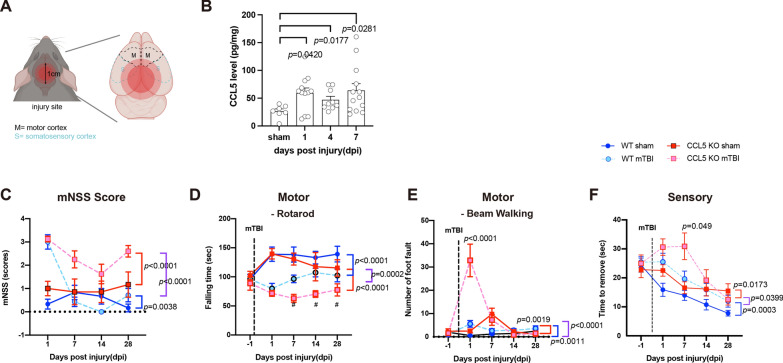
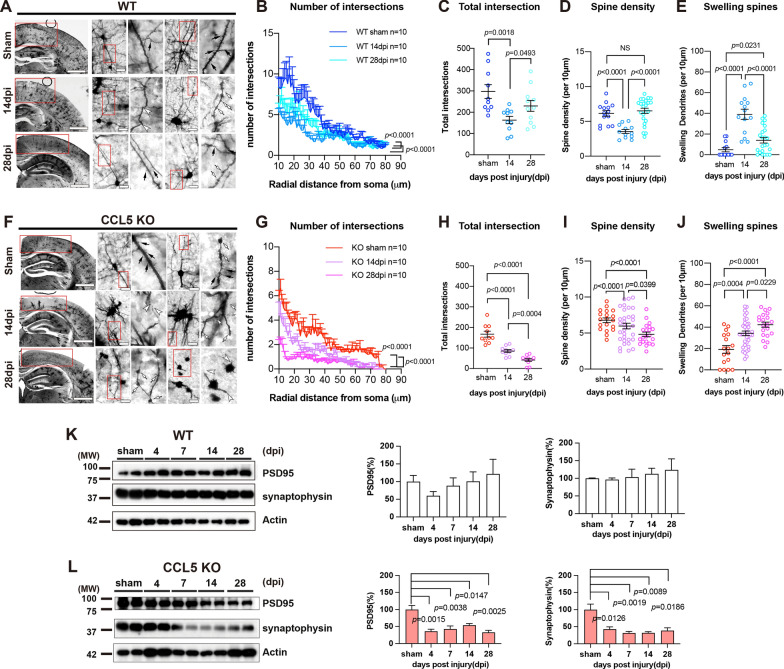
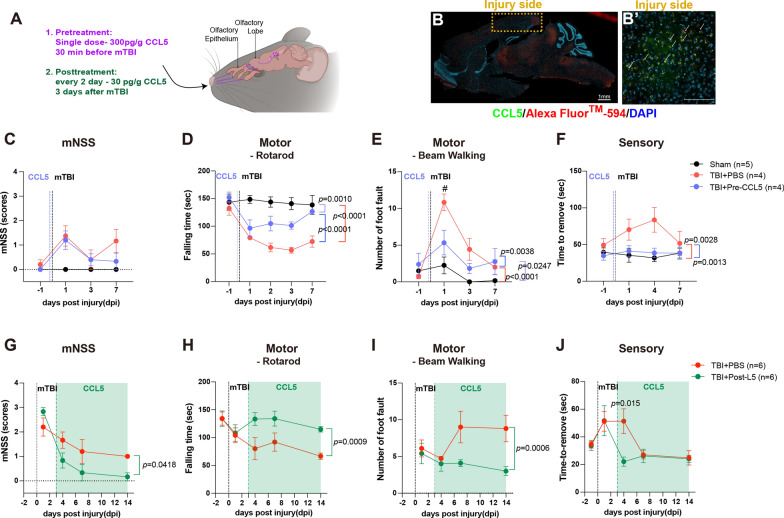
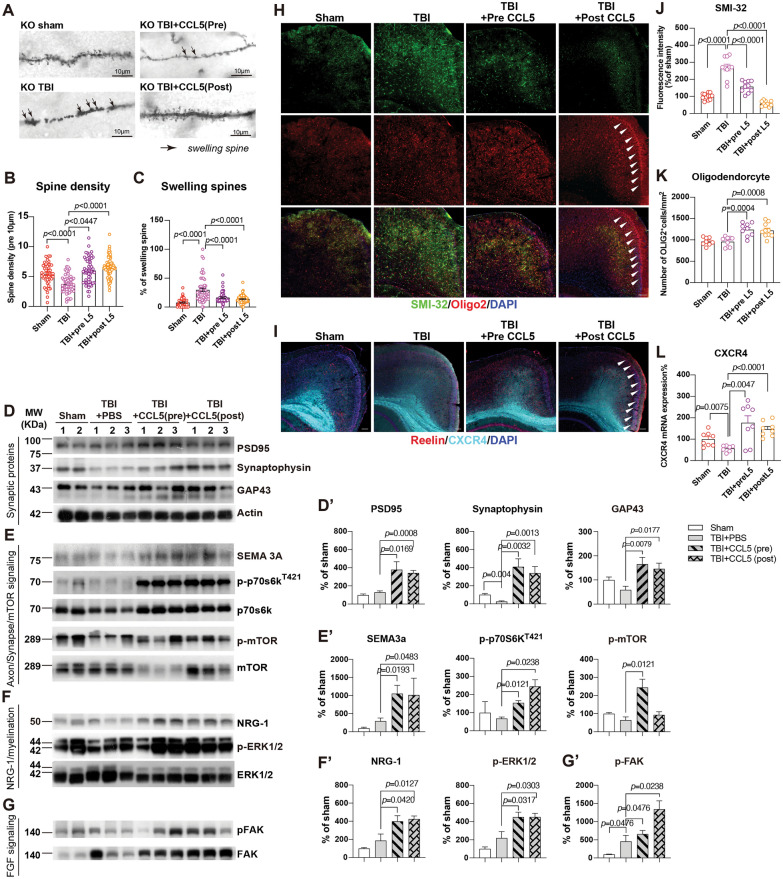
A close-head weight-drop system was used to induce mild brain trauma in C57BL/6 (wild-type, WT) and CCL5 knockout (CCL5-KO) mice. The mNSS score, rotarod, beam walking, and sticker removal tests were used to assay neurological function after mTBI in different groups of mice. The restoration of motor and sensory functions was impaired in CCL5-KO mice after one month of injury, with swelling of axons and synapses from Golgi staining and reduced synaptic proteins-synaptophysin and PSD95. Administration of recombinant CCL5 (Pre-treatment: 300 pg/g once before injury; or post-treatment: 30 pg/g every 2 days, since 3 days after injury for 1 month) through intranasal delivery into mouse brain improved the motor and sensory neurological dysfunctions in CCL5-KO TBI mice.
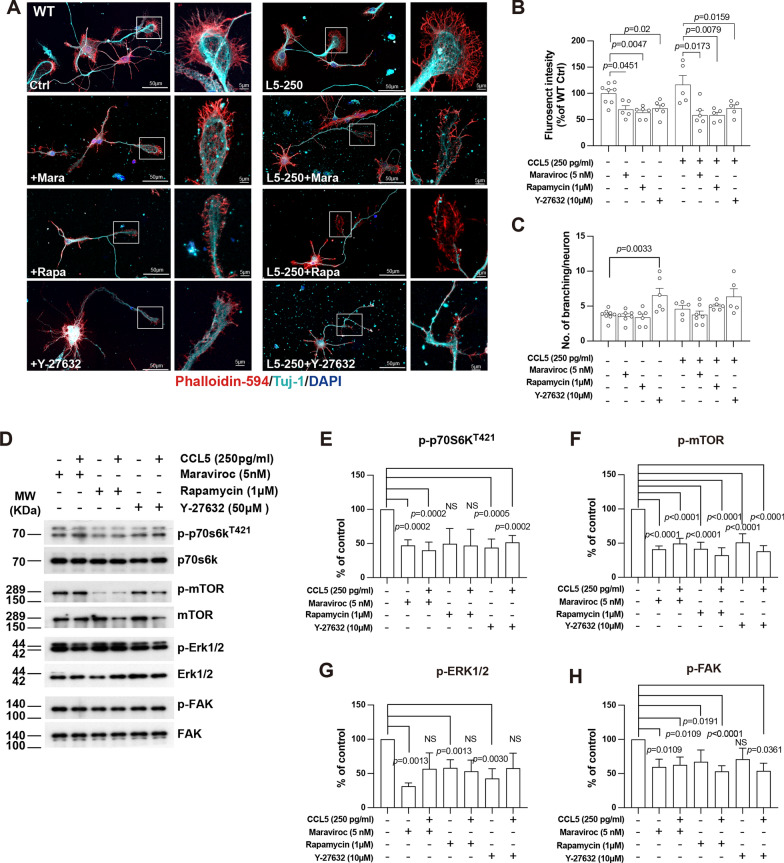
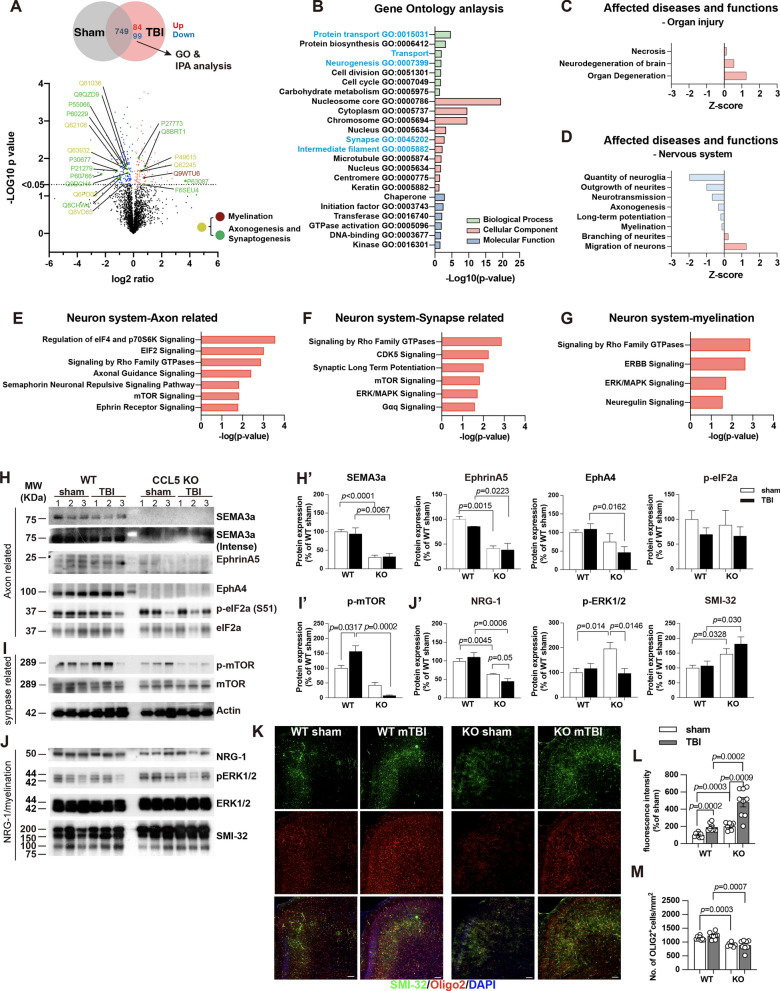
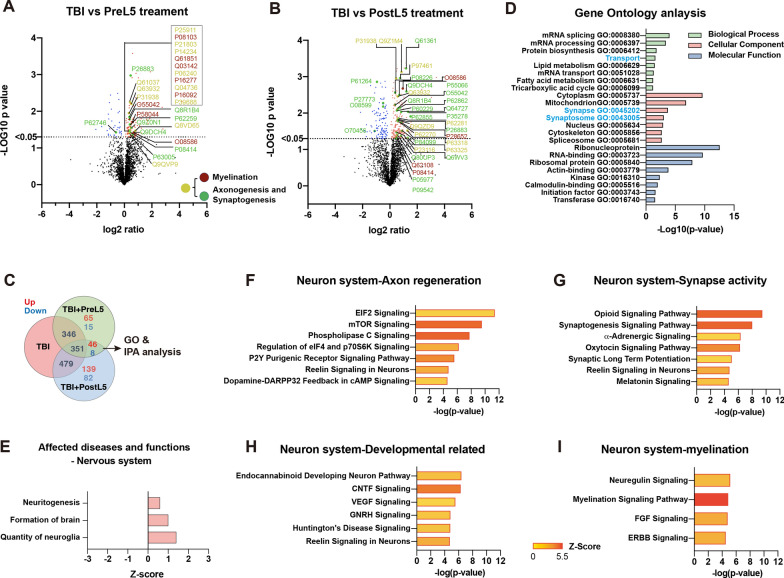
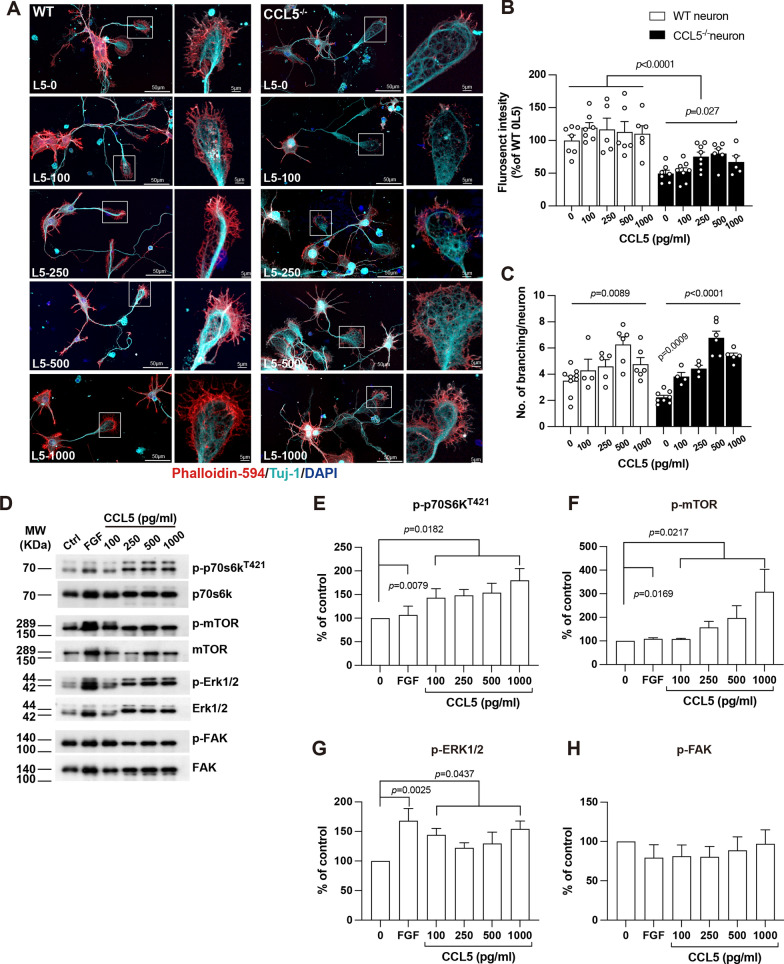
Proteomic analysis using LC-MS/MS identified that the "Nervous system development and function"-related proteins, including axonogenesis, synaptogenesis, and myelination signaling pathways, were reduced in injured cortex of CCL5-KO mice; both pre-treatment and post-treatment with CCL5 augmented those pathways. Immunostaining and western blot analysis confirmed axonogenesis and synaptogenesis related Semaphorin, Ephrin, p70S6/mTOR signaling, and myelination-related Neuregulin/ErbB and FGF/FAK signaling pathways were up-regulated in the cortical tissue by CCL5 after brain injury. We also noticed cortex redevelopment after long-term administration of CCL5 after brain injury with increased Reelin positive Cajal-Rerzius Cells and CXCR4 expression. CCL5 enhanced the growth of cone filopodia in a primary neuron culture system; blocking CCL5's receptor CCR5 by Maraviroc reduced the intensity of filopodia in growth cone and also CCL5 mediated mTOR and Rho signalling activation. Inhibiting mTOR and Rho signaling abolished CCL5 induced growth cone formation.
CCL5 plays a critical role in starting the intrinsic neuronal regeneration system following TBI, which includes growth cone formation, axonogenesis and synaptogensis, remyelination, and the subsequent proper wiring of cortical circuits. Our study underscores the potential of CCL5 as a robust therapeutic stratagem in treating axonal injury and degeneration during the chronic phase after mild brain injury.
创伤性脑损伤 (TBI) 会导致轴突撕裂和突触退化,从而导致多种神经功能障碍和早期神经退行性变加剧;轴突和突触结构的修复对于恢复神经元功能至关重要。C-C 基序趋化因子配体 5 (CCL5) 显示出许多神经保护活性。
使用近头部重物跌落系统诱导 C57BL/6(野生型,WT)和 CCL5 敲除(CCL5-KO)小鼠轻度脑外伤。mNSS 评分、转棒、走棒和贴纸去除试验用于检测不同组别小鼠 mTBI 后的神经功能。CCL5-KO 小鼠在受伤一个月后运动和感觉功能恢复受损,高尔基染色显示轴突和突触肿胀,突触蛋白突触小体相关蛋白和突触后密度蛋白 95 减少。通过鼻腔内给予重组 CCL5(预处理:受伤前一次 300 pg/g;或后处理:受伤后 3 天开始,每 2 天 30 pg/g,持续 1 个月)改善了 CCL5-KO TBI 小鼠的运动和感觉神经功能障碍。
使用 LC-MS/MS 的蛋白质组学分析表明,与神经系统发育和功能相关的蛋白质,包括轴突发生、突触发生和髓鞘形成信号通路,在 CCL5-KO 小鼠受伤皮层中减少;CCL5 的预处理和后处理均增强了这些通路。免疫染色和 Western blot 分析证实,CCL5 后大脑损伤后的皮质组织中轴突发生和突触发生相关的 Semaphorin、Ephrin、p70S6/mTOR 信号以及髓鞘形成相关的 Neuregulin/ErbB 和 FGF/FAK 信号通路上调。我们还注意到,在长期给予 CCL5 后,大脑损伤后的大脑皮质发生了重新发育,Cajal-Rerzius 细胞和 CXCR4 的 Reelin 阳性表达增加。CCL5 增强了原代神经元培养系统中锥体丝状伪足的生长;Maraviroc 阻断 CCL5 的受体 CCR5 减少了生长锥中丝状伪足的强度,也减少了 CCL5 介导的 mTOR 和 Rho 信号激活。抑制 mTOR 和 Rho 信号通路消除了 CCL5 诱导的生长锥形成。
CCL5 在 TBI 后启动内在神经元再生系统中起着关键作用,包括生长锥形成、轴突发生和突触发生、髓鞘形成和随后的皮质回路的适当布线。我们的研究强调了 CCL5 作为一种强大的治疗策略在治疗轻度脑损伤后慢性期轴突损伤和退化中的潜力。