Department of Immunology, Blavatnik Institute, Harvard Medical School, Boston, MA, USA.
Gene Lay Institute of Immunology and Inflammation, Brigham and Women's Hospital, Massachusetts General Hospital and Harvard Medical School, Boston, MA, USA.
Nat Immunol. 2024 Oct;25(10):1871-1883. doi: 10.1038/s41590-024-01961-3. Epub 2024 Sep 17.
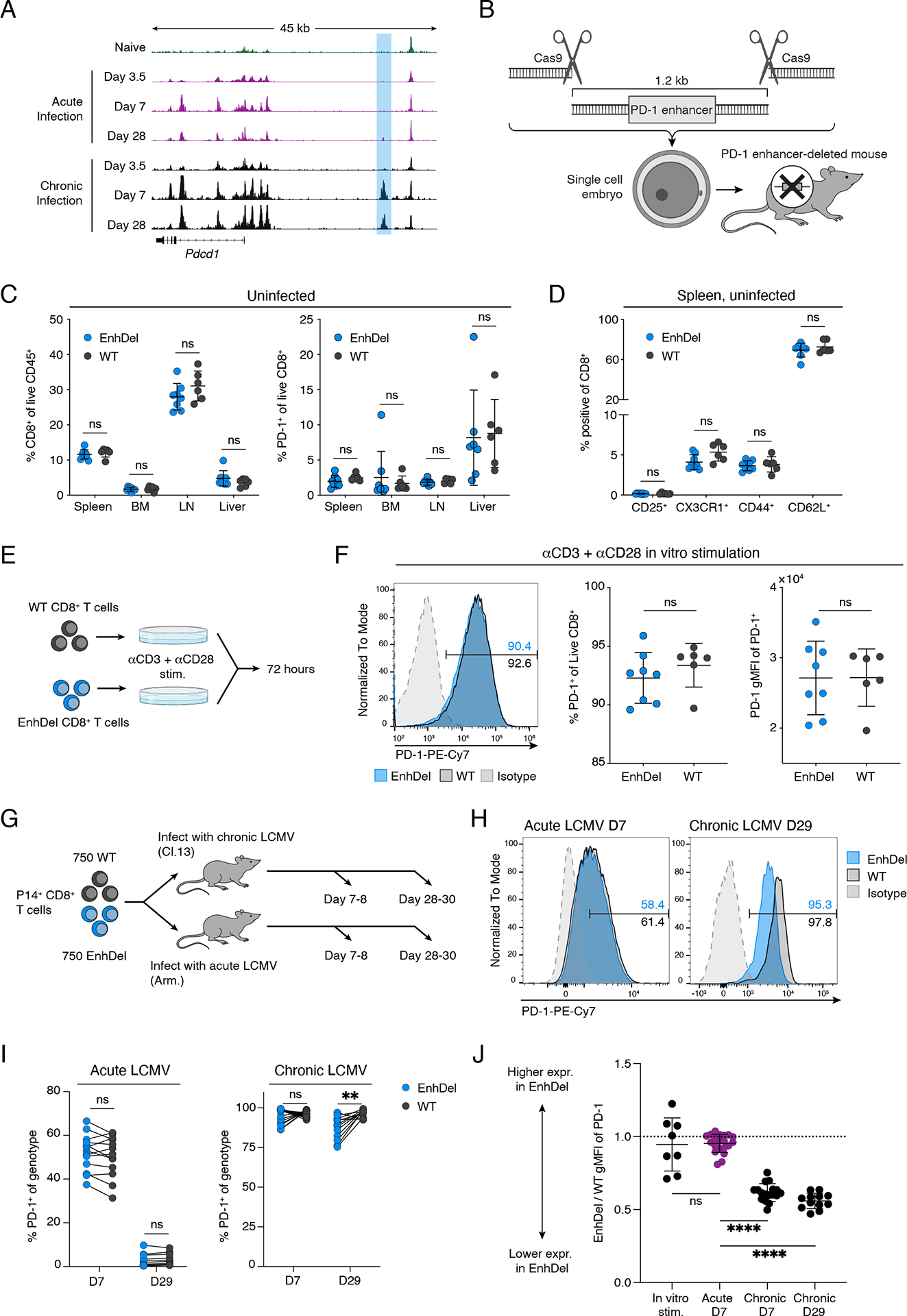
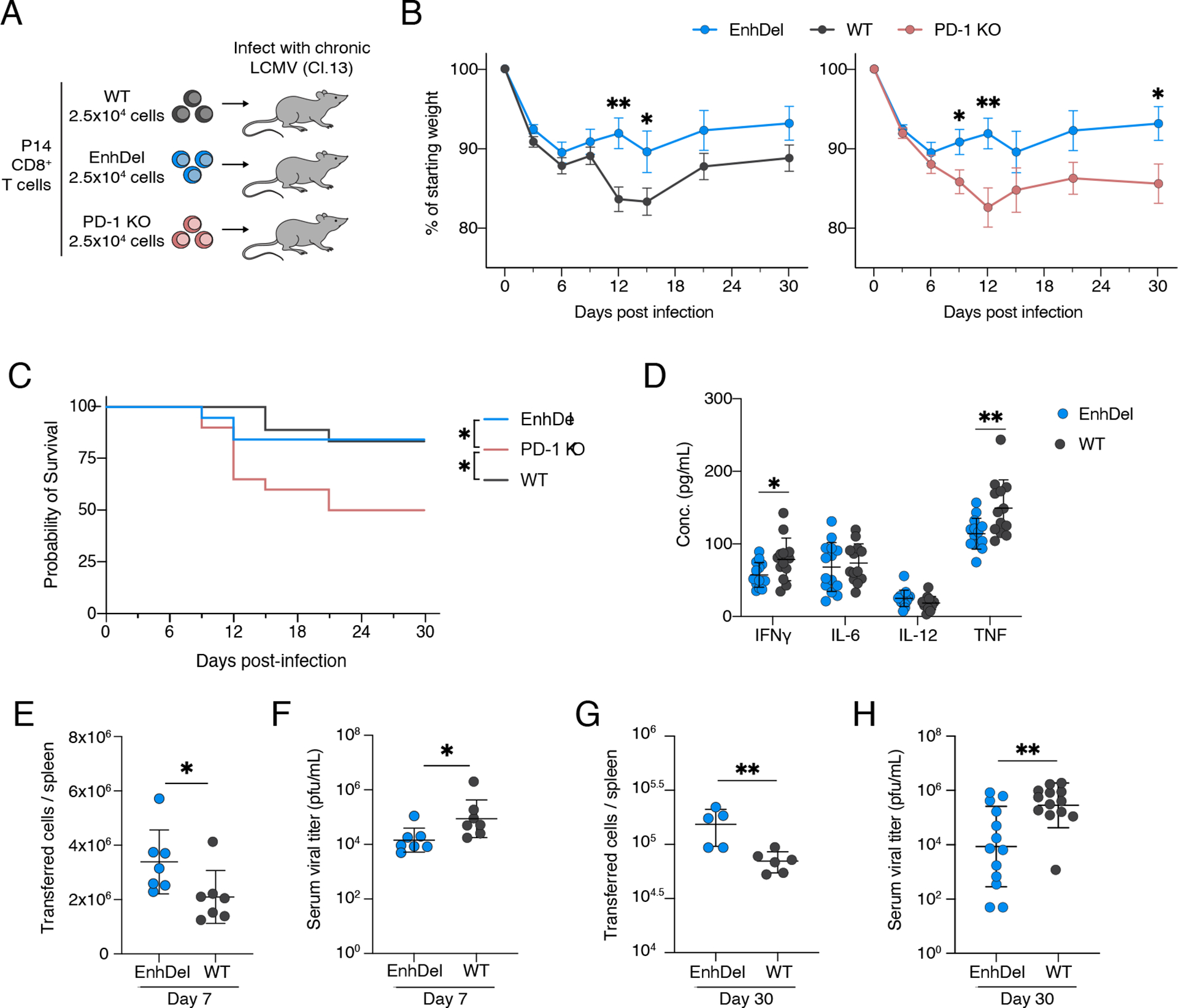
PD-1 is a key negative regulator of CD8 T cell activation and is highly expressed by exhausted T cells in cancer and chronic viral infection. Although PD-1 blockade can improve viral and tumor control, physiological PD-1 expression prevents immunopathology and improves memory formation. The mechanisms driving high PD-1 expression in exhaustion are not well understood and could be critical to disentangling its beneficial and detrimental effects. Here, we functionally interrogated the epigenetic regulation of PD-1 using a mouse model with deletion of an exhaustion-specific PD-1 enhancer. Enhancer deletion exclusively alters PD-1 expression in CD8 T cells in chronic infection, creating a 'sweet spot' of intermediate expression where T cell function is optimized compared to wild-type and Pdcd1-knockout cells. This permits improved control of chronic infection without additional immunopathology. Together, these results demonstrate that tuning PD-1 via epigenetic editing can reduce CD8 T cell dysfunction while avoiding excess immunopathology.
PD-1 是 CD8 T 细胞活化的关键负调控因子,在癌症和慢性病毒感染中,衰竭的 T 细胞高度表达 PD-1。虽然 PD-1 阻断可以改善病毒和肿瘤控制,但生理 PD-1 的表达可防止免疫病理并改善记忆形成。导致衰竭中 PD-1 高表达的机制尚不清楚,这对于理清其有益和有害影响可能至关重要。在这里,我们使用一种在慢性感染中缺失衰竭特异性 PD-1 增强子的小鼠模型,对 PD-1 的表观遗传调控进行了功能研究。增强子缺失仅在慢性感染的 CD8 T 细胞中改变 PD-1 的表达,创造了一个“最佳表达点”,与野生型和 Pdcd1 敲除细胞相比,T 细胞功能得到了优化。这使得在不增加免疫病理的情况下,能够更好地控制慢性感染。总之,这些结果表明,通过表观遗传编辑来调节 PD-1 可以减少 CD8 T 细胞功能障碍,同时避免过度的免疫病理。