Han Shuai, Guo Xinyun, Wang Min, Liu Huan, Song Yidan, He Yunyun, Hsueh Kuang-Lung, Cui Weiren, Su Wenji, Kuai Letian, Deng Jason
WuXi AppTec (Shanghai) Co., Ltd., 240 Hedan Road, Shanghai 200131, China.
WuXi AppTec, 22 Strathmore Road, Natick, Massachusetts 01760, United States.
ACS Med Chem Lett. 2024 Aug 21;15(9):1456-1466. doi: 10.1021/acsmedchemlett.4c00121. eCollection 2024 Sep 12.
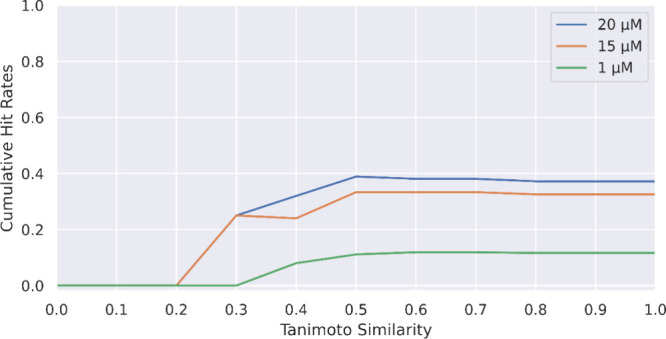
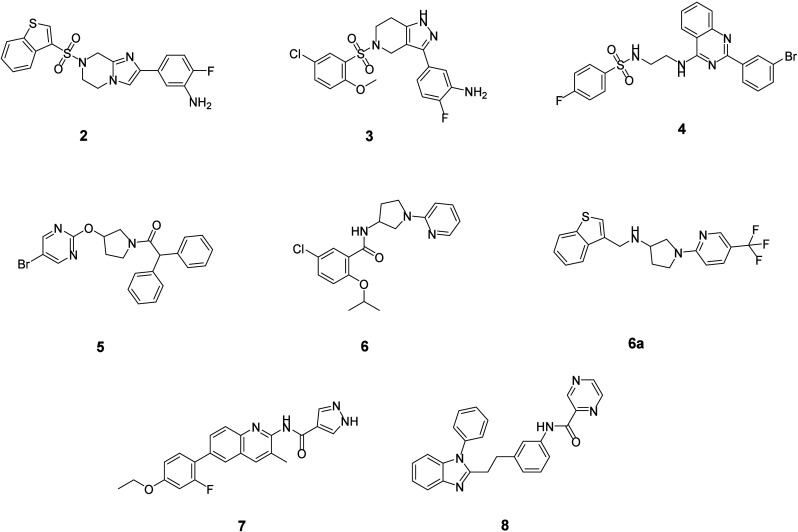
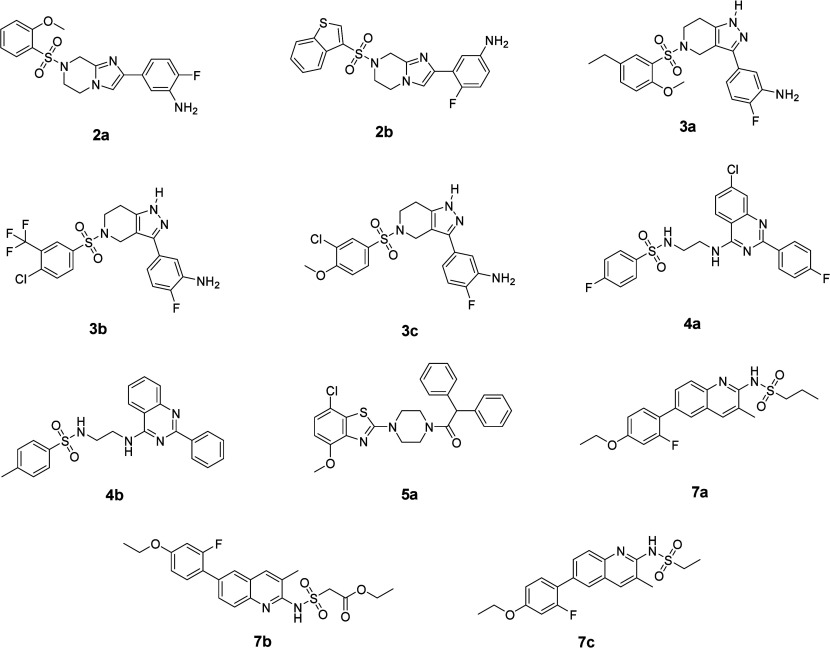
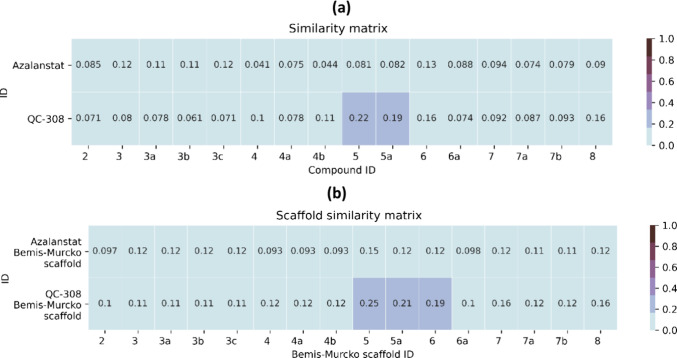
DNA-encoded library (DEL) technology, especially when combined with machine learning (ML), is a powerful method to discover novel inhibitors. DEL-ML can expand a larger chemical space and boost cost-effectiveness during hit finding. Heme oxygenase-1 (HO-1), a heme-degrading enzyme, is linked to diseases such as cancer and neurodegenerative disorders. The discovery of five series of new scaffold HO-1 hits is reported here, using a DEL-ML workflow, which emphasizes the model's uncertainty quantification and domain of applicability. This model exhibits a strong extrapolation ability, identifying new structures beyond the DEL chemical space. About 37% of predicted molecules showed a binding affinity of < 20 μM, with the strongest being 141 nM, amd 14 of those molecules displayed >100-fold selectivity for HO-1 over heme oxygenase-2 (HO-2). These molecules also showed structural novelty compared to existing HO-1 inhibitors. Docking simulations provided insights into possible selectivity rationale.
DNA编码文库(DEL)技术,特别是与机器学习(ML)相结合时,是发现新型抑制剂的强大方法。DEL-ML可以扩展更大的化学空间,并在发现活性化合物过程中提高成本效益。血红素加氧酶-1(HO-1)是一种血红素降解酶,与癌症和神经退行性疾病等疾病有关。本文报道了使用DEL-ML工作流程发现的五个系列的新型骨架HO-1活性化合物,该工作流程强调了模型的不确定性量化和适用范围。该模型具有很强的外推能力,能够识别DEL化学空间之外的新结构。约37%的预测分子显示出<20μM的结合亲和力,最强的为141 nM,其中14个分子对HO-1的选择性比对血红素加氧酶-2(HO-2)高100倍以上。与现有的HO-1抑制剂相比,这些分子还表现出结构新颖性。对接模拟为可能的选择性原理提供了见解。