Zhang Qi, Barabash Stas, Holmstrom Mats, Wang Xiao-Dong, Futaana Yoshifumi, Fowler Christopher M, Ramstad Robin, Nilsson Hans
Swedish Institute of Space Physics, Kiruna, Sweden.
Department of Physics, Umeå University, Umeå, Sweden.
Nature. 2024 Oct;634(8032):45-47. doi: 10.1038/s41586-024-07959-z. Epub 2024 Sep 18.
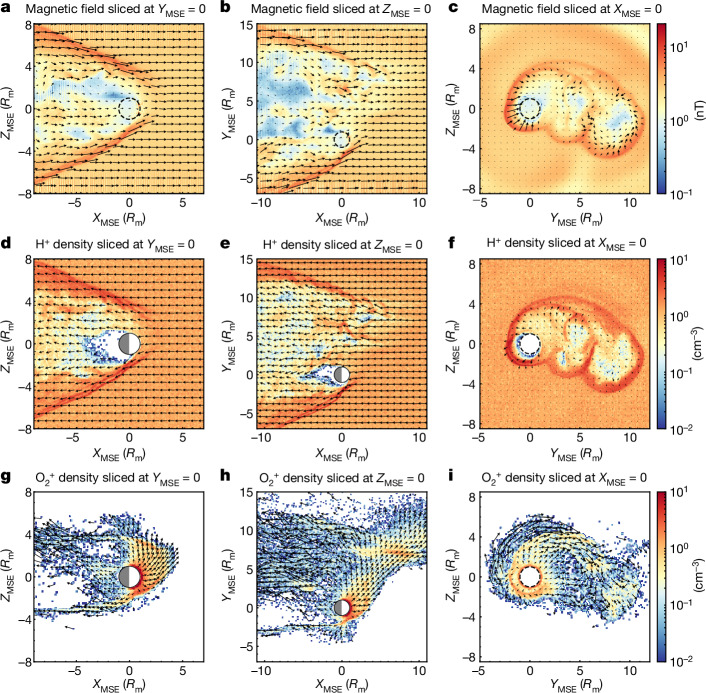
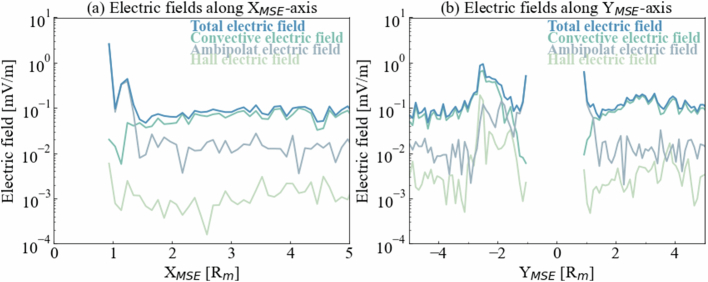
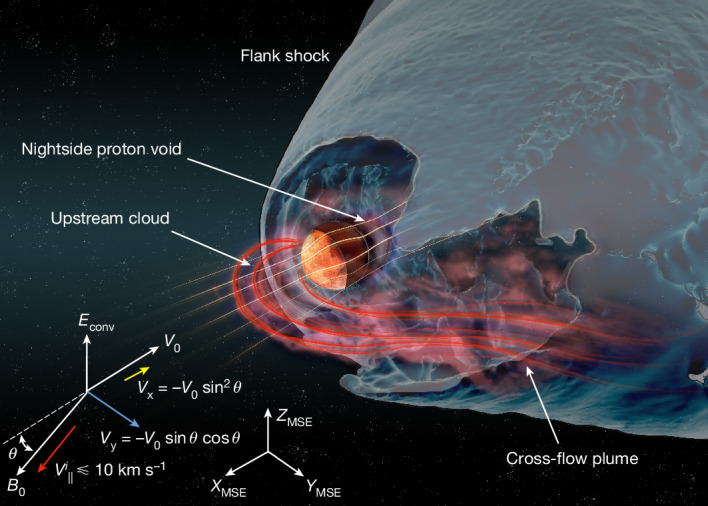
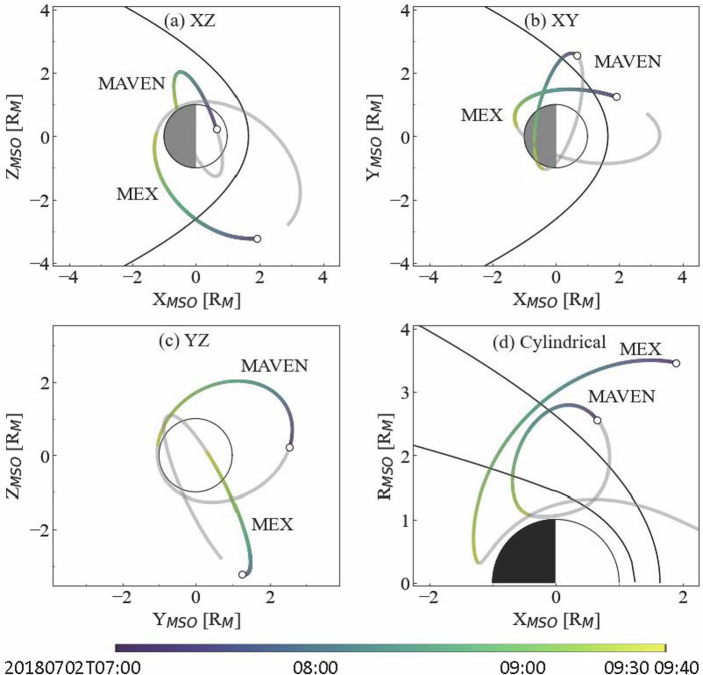
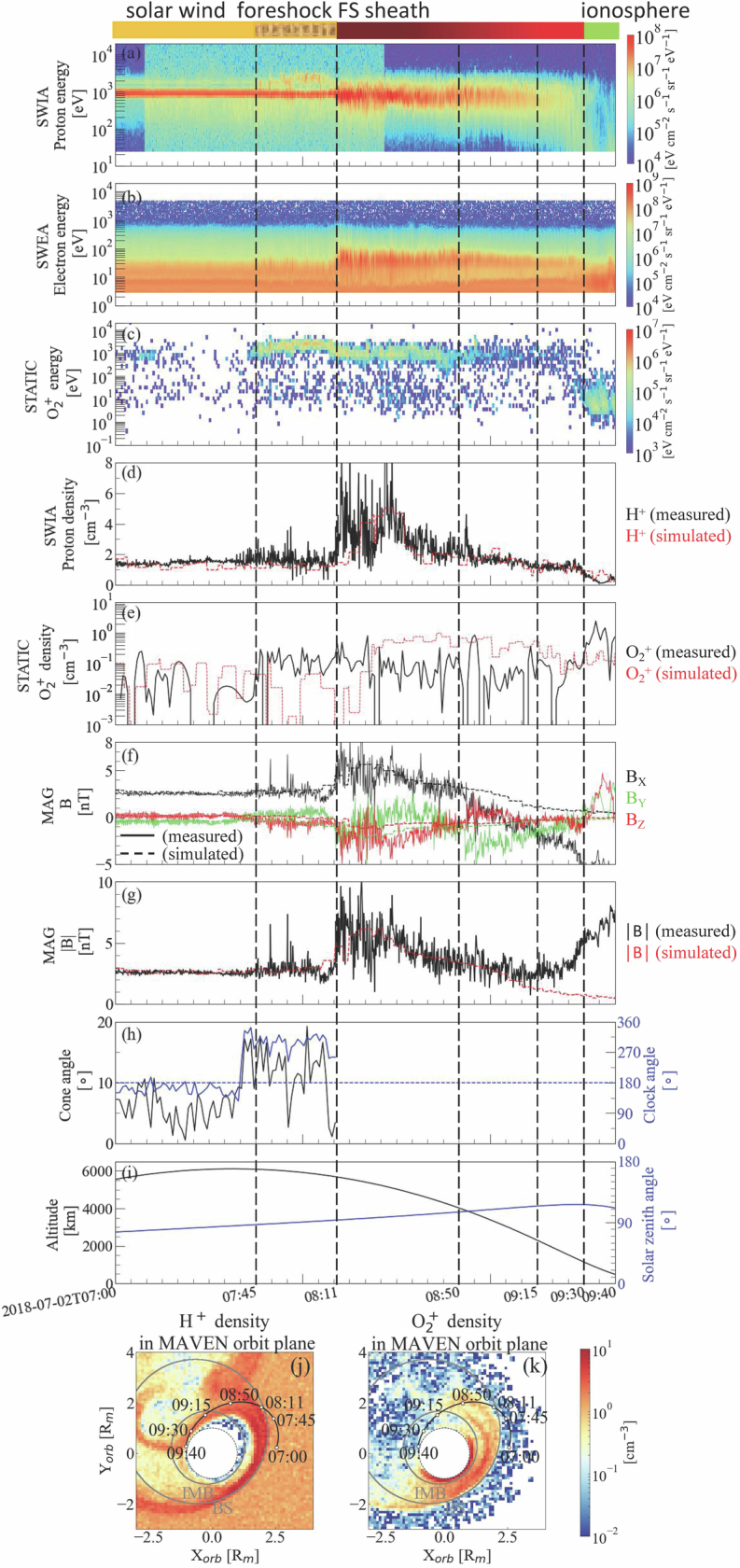
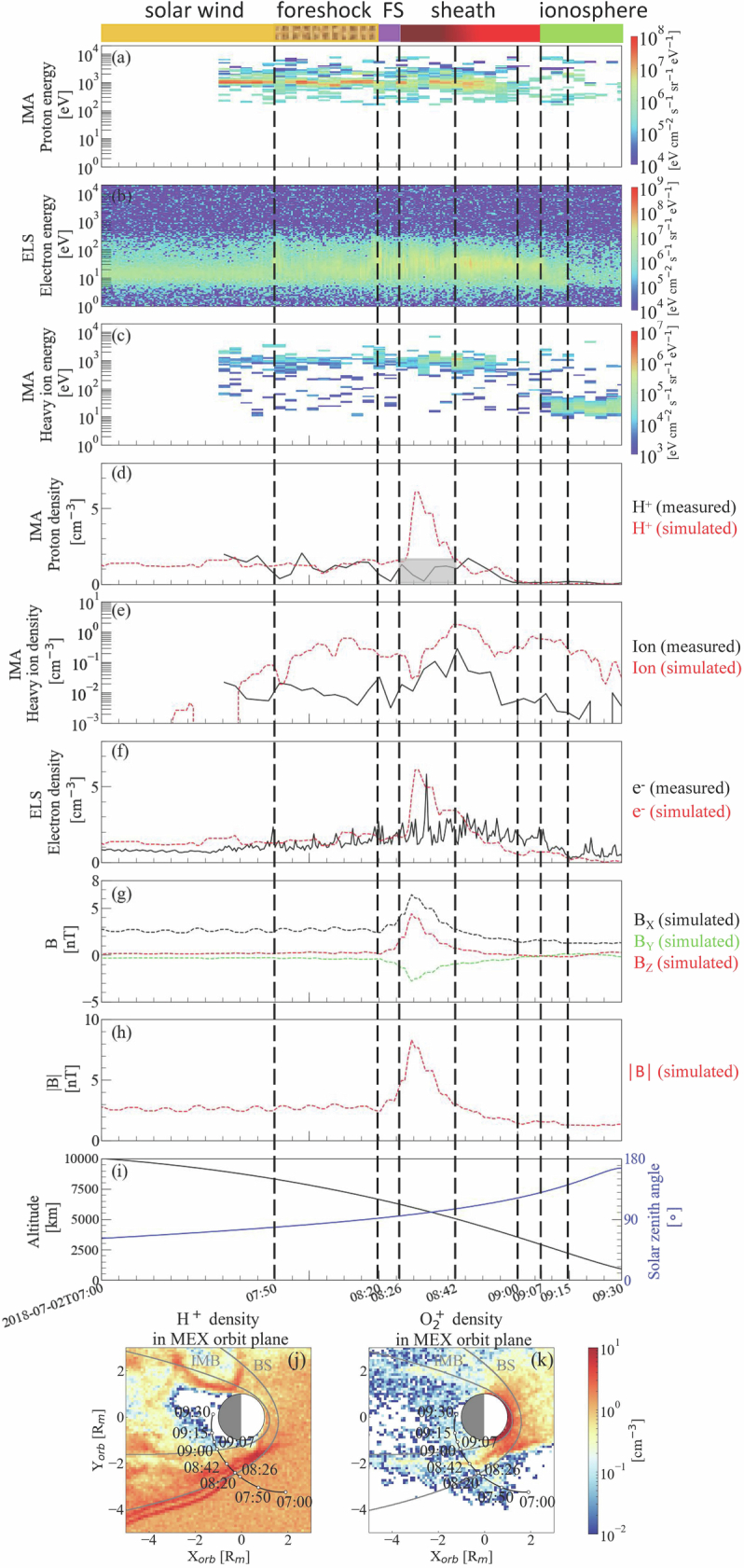
The interaction between planets and stellar winds can lead to atmospheric loss and is, thus, important for the evolution of planetary atmospheres. The planets in our Solar System typically interact with the solar wind, whose velocity is at a large angle to the embedded stellar magnetic field. For planets without an intrinsic magnetic field, this interaction creates an induced magnetosphere and a bow shock in front of the planet. However, when the angle between the solar wind velocity and the solar wind magnetic field (cone angle) is small, the interaction is very different. Here we show that when the cone angle is small at Mars, the induced magnetosphere degenerates. There is no shock on the dayside, only weak flank shocks. A cross-flow plume appears and the ambipolar field drives planetary ions upstream. Hybrid simulations with a 4° cone angle show agreement with observations by the Mars Atmosphere and Volatile Evolution mission and Mars Express. Degenerate, induced magnetospheres are complex and not yet explored objects. It remains to be studied what the secondary effects are on processes like atmospheric loss through ion escape.
行星与恒星风之间的相互作用会导致大气损失,因此对行星大气的演化至关重要。我们太阳系中的行星通常与太阳风相互作用,太阳风的速度与嵌入的恒星磁场成大角度。对于没有固有磁场的行星,这种相互作用会在行星前方产生感应磁层和弓形激波。然而,当太阳风速度与太阳风磁场之间的夹角(锥角)很小时,相互作用就会大不相同。我们在此表明,当火星的锥角很小时,感应磁层会退化。昼侧没有激波,只有微弱的侧翼激波。出现了一个横向流动羽流,双极场驱使行星离子向上游移动。锥角为4°的混合模拟结果与火星大气与挥发物演化任务及火星快车号的观测结果相符。退化的感应磁层很复杂,尚未得到充分研究。离子逃逸导致大气损失等过程的次生效应仍有待研究。