Huck Institutes of the Life Sciences, The Pennsylvania State University, University Park, Pennsylvania, USA.
Department of Kinesiology, The Pennsylvania State University, University Park, Pennsylvania, USA.
Physiol Rep. 2024 Sep;12(18):e70044. doi: 10.14814/phy2.70044.
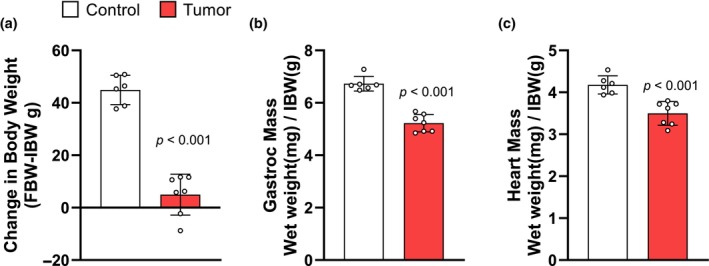
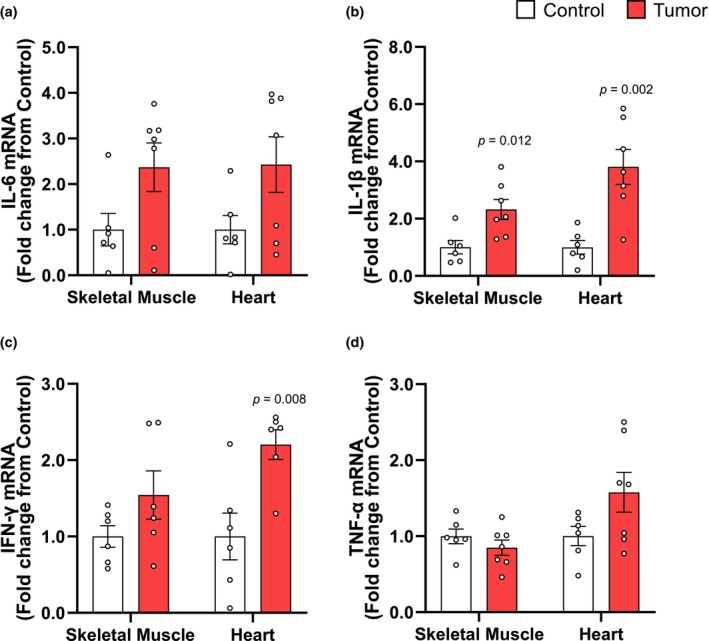
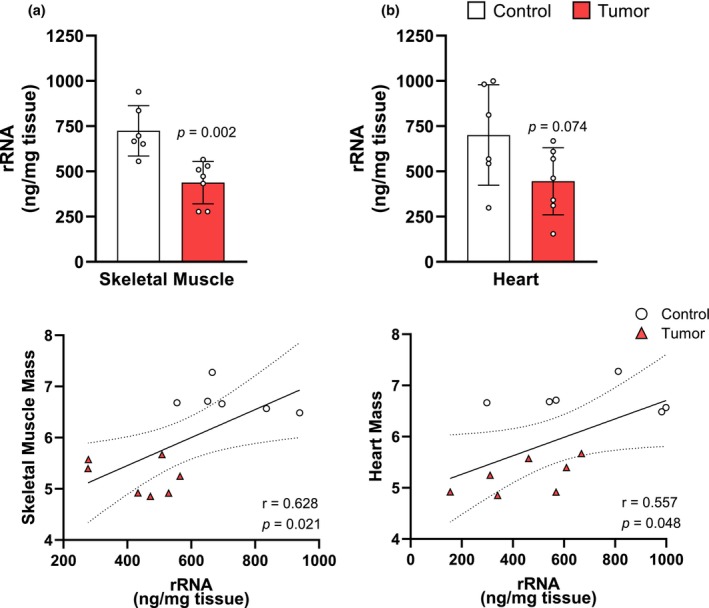
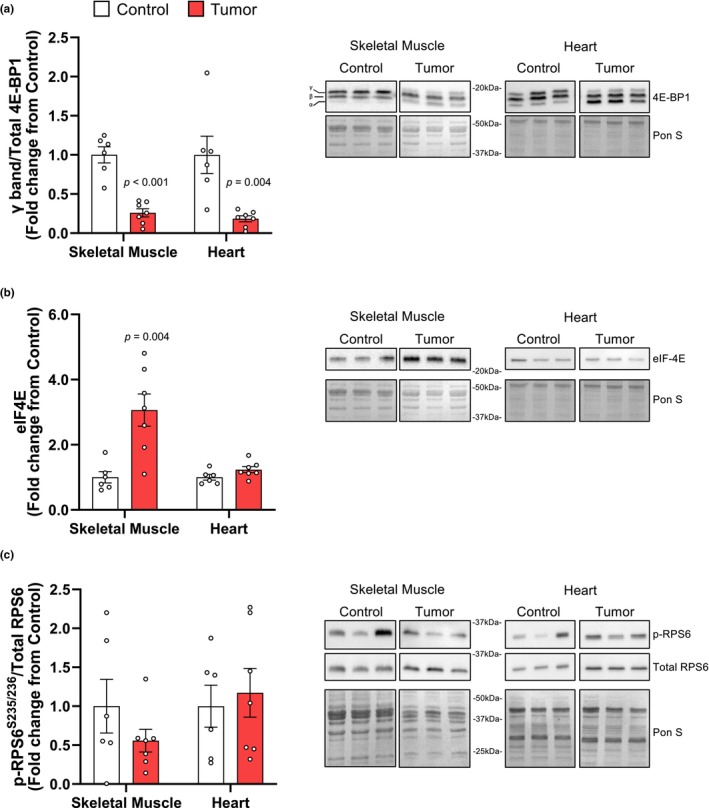
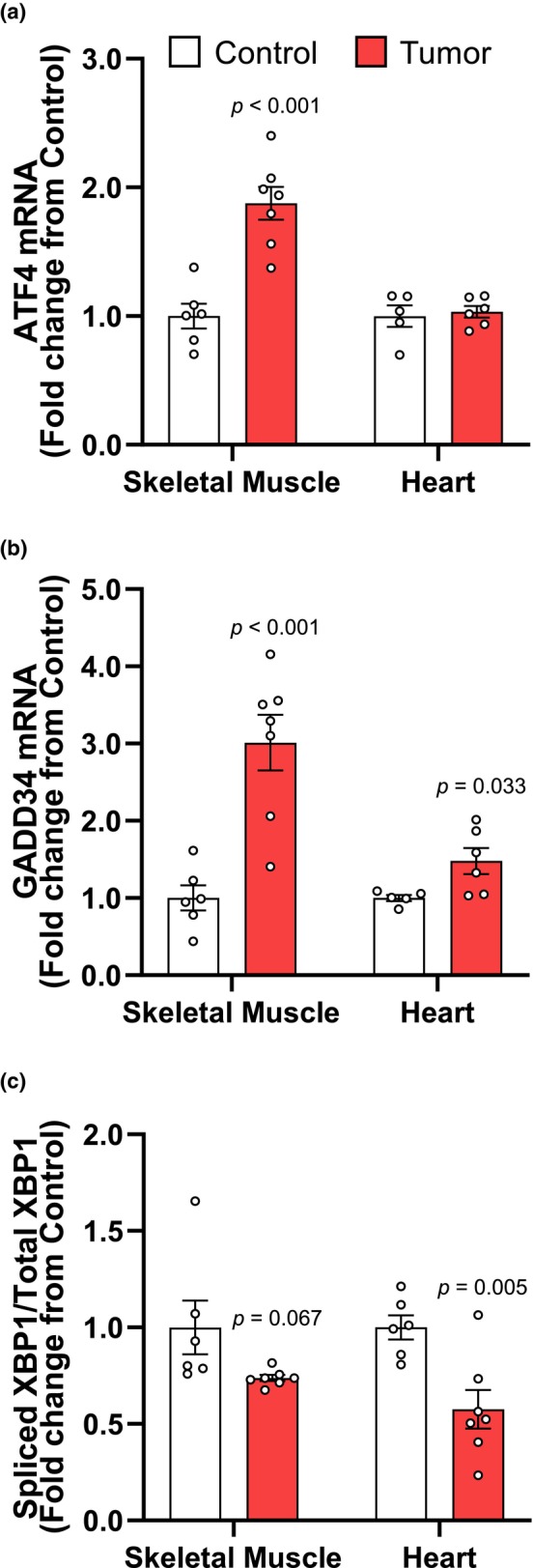
Cancer cachexia manifests as whole body wasting, however, the precise mechanisms governing the alterations in skeletal muscle and cardiac anabolism have yet to be fully elucidated. In this study, we explored changes in anabolic processes in both skeletal and cardiac muscles in the Yoshida AH-130 ascites hepatoma model of cancer cachexia. AH-130 tumor-bearing rats experienced significant losses in body weight, skeletal muscle, and heart mass. Skeletal and cardiac muscle loss was associated with decreased ribosomal (r)RNA, and hypophosphorylation of the eukaryotic factor 4E binding protein 1. Endoplasmic reticulum stress was evident by higher activating transcription factor mRNA in skeletal muscle and growth arrest and DNA damage-inducible protein (GADD)34 mRNA in both skeletal and cardiac muscles. Tumors provoked an increase in tissue expression of interferon-γ in the heart, while an increase in interleukin-1β mRNA was apparent in both skeletal and cardiac muscles. We conclude that compromised skeletal muscle and heart mass in the Yoshida AH-130 ascites hepatoma model involves a marked reduction translational capacity and efficiency. Furthermore, our observations suggest that endoplasmic reticulum stress and tissue production of pro-inflammatory factors may play a role in the development of skeletal and cardiac muscle wasting.
癌症恶病质表现为全身性消瘦,然而,调节骨骼肌和心肌合成代谢改变的确切机制尚未完全阐明。在这项研究中,我们探讨了 Yoshida AH-130 腹水肝癌癌恶病质模型中骨骼肌和心肌中合成代谢过程的变化。AH-130 荷瘤大鼠体重、骨骼肌和心脏质量显著下降。骨骼肌和心肌的丢失与核糖体(r)RNA 减少和真核因子 4E 结合蛋白 1 的低磷酸化有关。骨骼肌中激活转录因子 mRNA 的增加和骨骼肌和心肌中生长停滞和 DNA 损伤诱导蛋白(GADD)34 mRNA 的增加表明内质网应激明显。肿瘤引起心脏组织中干扰素-γ表达增加,而骨骼肌和心肌中白细胞介素-1β mRNA 增加。我们的结论是,Yoshida AH-130 腹水肝癌模型中骨骼肌和心肌质量的受损涉及到翻译能力和效率的显著降低。此外,我们的观察表明,内质网应激和组织产生促炎因子可能在骨骼肌和心肌消耗的发展中起作用。