Department of Medicine, Miller School of Medicine, University of Miami, Miami, FL, USA.
Texas A&M University Health Science Center, Department of Neuroscience & Experimental Therapeutics, Bryan, USA.
Commun Biol. 2024 Sep 19;7(1):1181. doi: 10.1038/s42003-024-06873-4.
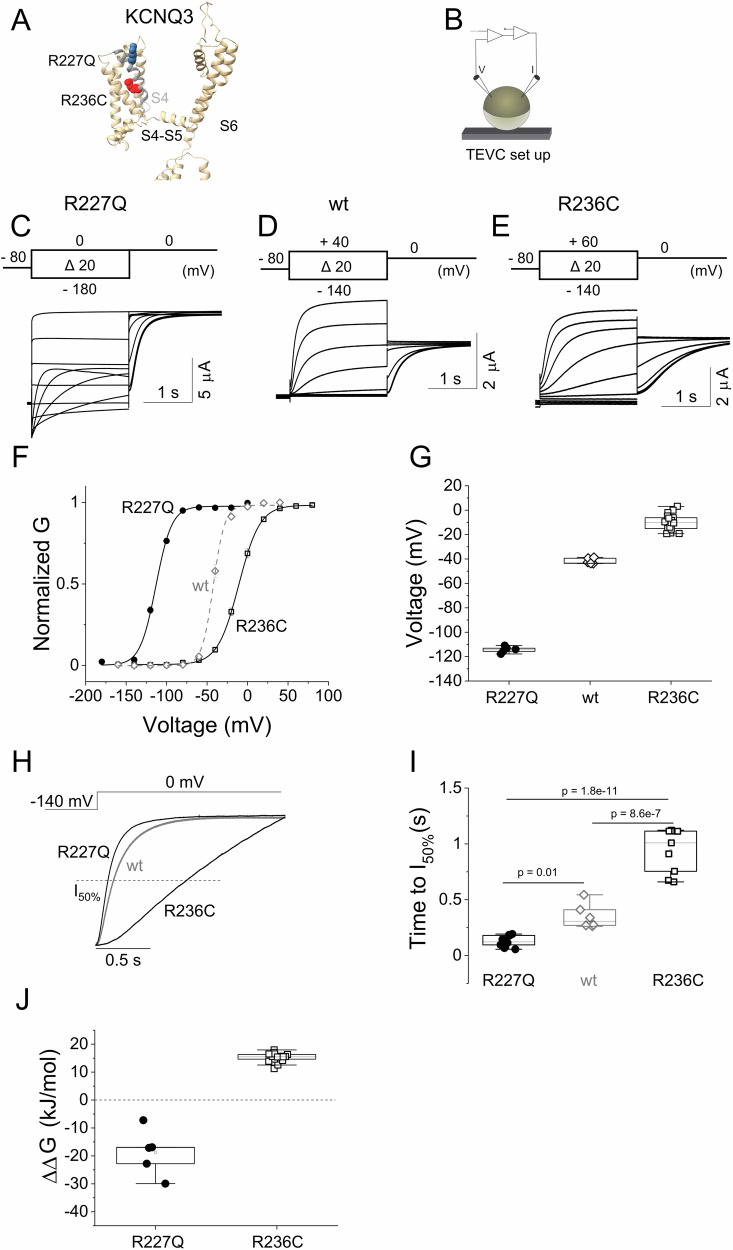
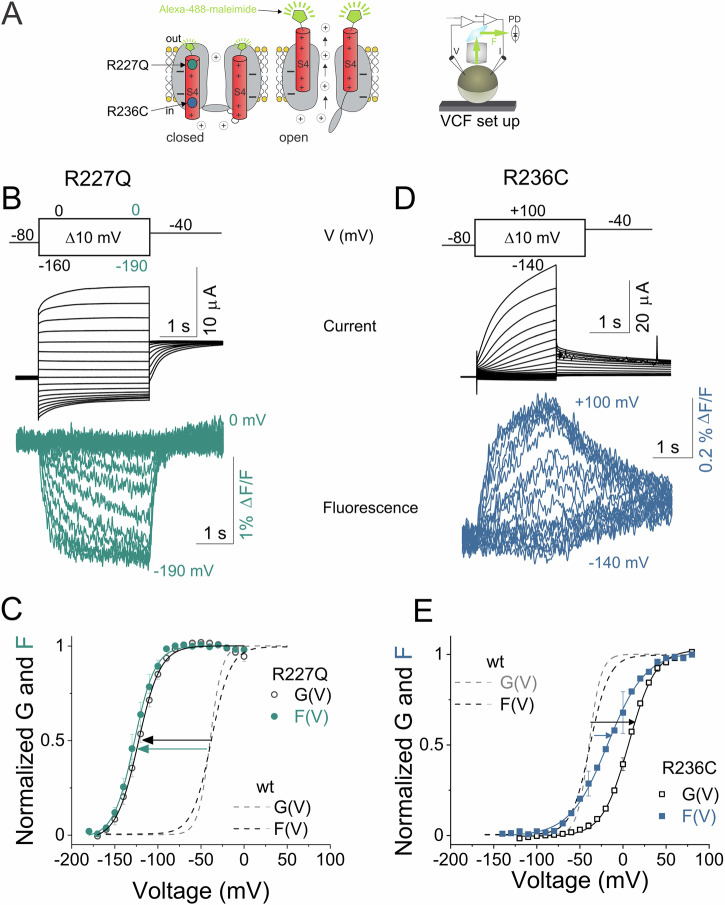
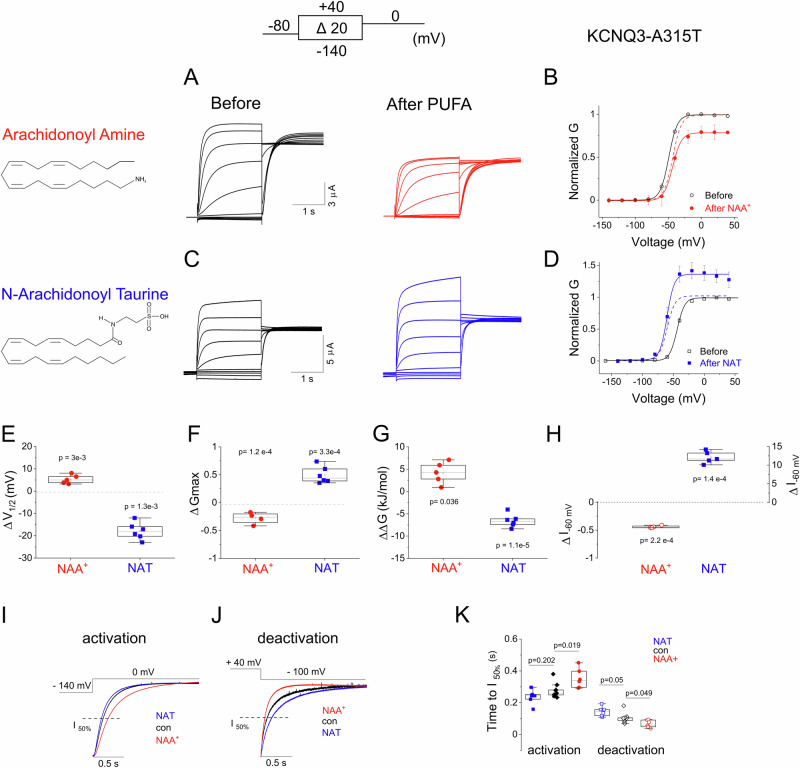
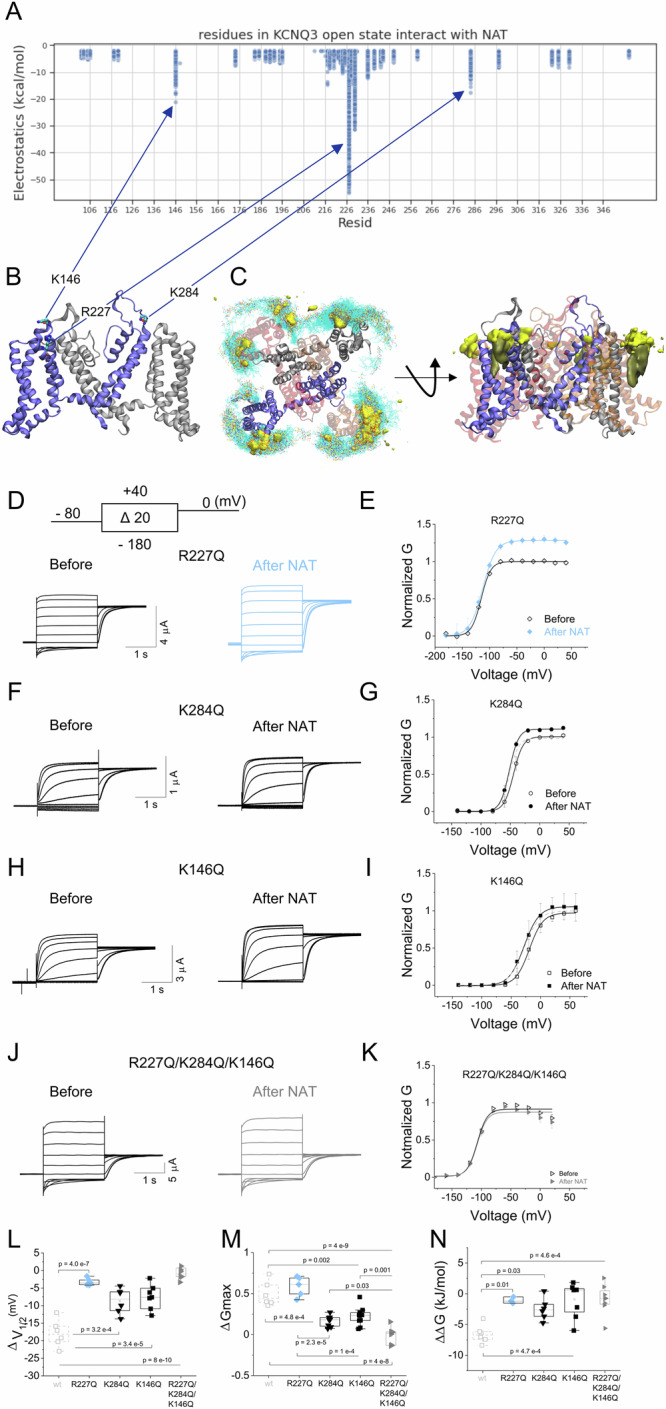
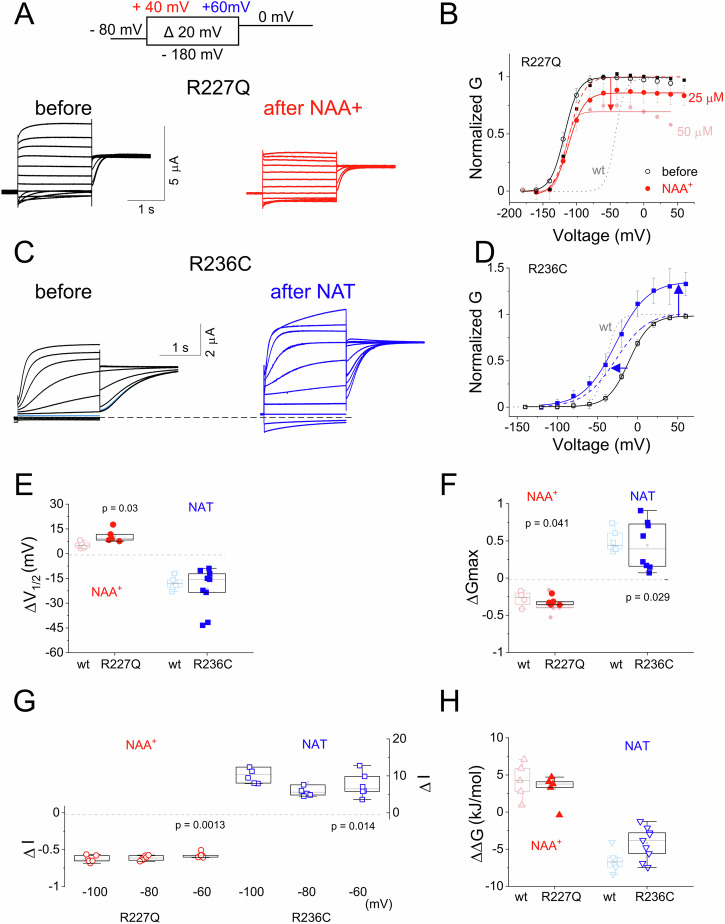
A major driver of neuronal hyperexcitability is dysfunction of K channels, including voltage-gated KCNQ2/3 channels. Their hyperpolarized midpoint of activation and slow activation and deactivation kinetics produce a current that regulates membrane potential and impedes repetitive firing. Inherited mutations in KCNQ2 and KCNQ3 are linked to a wide spectrum of neurodevelopmental disorders (NDDs), ranging from benign familial neonatal seizures to severe epileptic encephalopathies and autism spectrum disorders. However, the impact of these variants on the molecular mechanisms underlying KCNQ3 channel function remains poorly understood and existing treatments have significant side effects. Here, we use voltage clamp fluorometry, molecular dynamic simulations, and electrophysiology to investigate NDD-associated variants in KCNQ3 channels. We identified two distinctive mechanisms by which loss- and gain-of function NDD-associated mutations in KCNQ3 affect channel gating: one directly affects S4 movement while the other changes S4-to-pore coupling. MD simulations and electrophysiology revealed that polyunsaturated fatty acids (PUFAs) primarily target the voltage-sensing domain in its activated conformation and form a weaker interaction with the channel's pore. Consistently, two such compounds yielded partial and complete functional restoration in R227Q- and R236C-containing channels, respectively. Our results reveal the potential of PUFAs to be developed into therapies for diverse KCNQ3-based channelopathies.
神经元过度兴奋的一个主要驱动因素是 K 通道功能障碍,包括电压门控 KCNQ2/3 通道。它们的激活中点超极化和缓慢的激活和失活动力学产生一种电流,调节膜电位并阻碍重复放电。KCNQ2 和 KCNQ3 的遗传突变与广泛的神经发育障碍(NDD)有关,从良性家族性新生儿癫痫到严重的癫痫性脑病和自闭症谱系障碍。然而,这些变体对 KCNQ3 通道功能的分子机制的影响仍知之甚少,并且现有治疗方法有明显的副作用。在这里,我们使用电压钳荧光法、分子动力学模拟和电生理学来研究 KCNQ3 通道中的 NDD 相关变体。我们确定了两种不同的机制,通过这些机制,KCNQ3 中的失活和功能获得性 NDD 相关突变会影响通道门控:一种直接影响 S4 运动,另一种改变 S4 到孔的偶联。MD 模拟和电生理学表明,多不饱和脂肪酸(PUFA)主要靶向其激活构象中的电压传感结构域,并与通道的孔形成较弱的相互作用。一致地,两种这样的化合物分别在含有 R227Q 和 R236C 的通道中产生部分和完全的功能恢复。我们的结果揭示了 PUFAs 作为治疗多种基于 KCNQ3 的通道病的潜力。