Department of Rheumatology, Aarhus University Hospital, Palle Juul- Jensens Boulevard 99, Aarhus, 8200, Denmark.
Department of Clinical Medicine, Aarhus University, Aarhus, Denmark.
BMC Health Serv Res. 2024 Sep 20;24(1):1104. doi: 10.1186/s12913-024-11597-6.
The integration of telehealth interventions into clinical practice is frequently delayed, hindering the full adoption. Previously, we developed a digital patient education (PE) programme for self-management in rheumatoid arthritis (RA). While the programme design considered crucial factors to ensure the likelihood of success in clinical practice, there is a need for a systematic evaluation of implementation perspectives. The purpose of this study was to explore perspectives crucial to implementation of a digital PE programme in clinical practice.
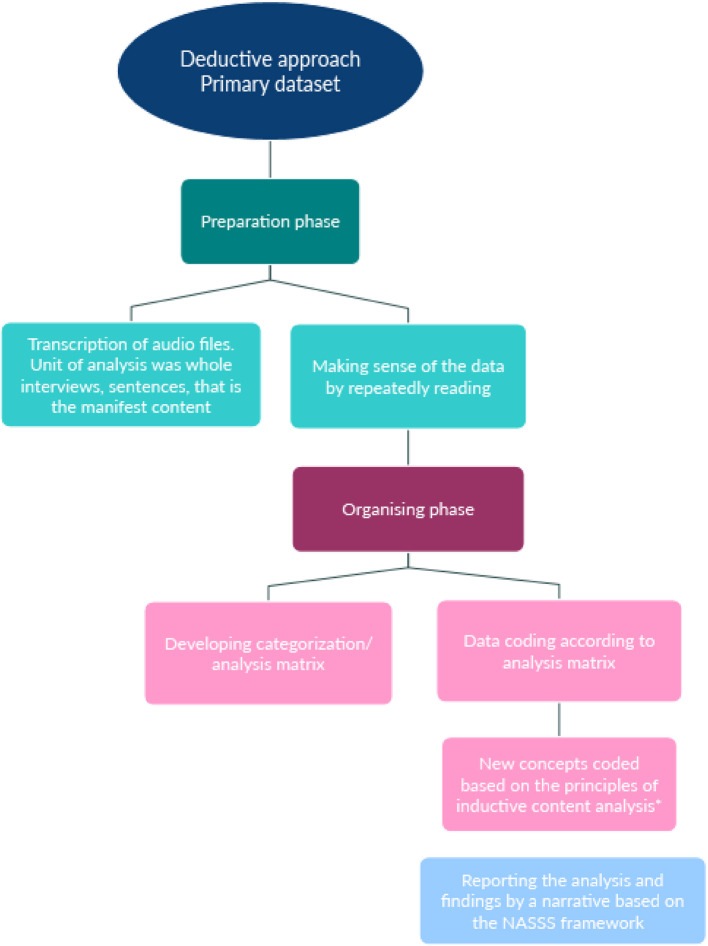
The non-adoption, abandonment, scale-up, spread and sustainability (NASSS) framework was used to evaluate the successes and challenges of implementing the digital PE programme. We included a data set consisting of qualitative focus group discussions involving study nurses, rheumatologists, and leaders from rheumatology departments. Data analysis was guided by a deductive content analysis approach. Further we included data from earlier studies pertaining to the programme's implementation, comprising the programme development process, a randomized controlled trial evaluating the programme's effectiveness, and a qualitative study exploring patients' perspectives of the programme.
Facilitators and challenges of importance to implementation of digital PE were identified. While a wide range of patients could benefit from using digital PE, future implementation should aim for an even broader group than those studied. Both patients and healthcare providers embraced the technology, and the fact that it did not require specific technical skills enhances its potential for success. However, offering digital PE should be based on individual assessments, and expanding its use will require organizational adjustments. An adaptable structure is needed to accommodate unforeseen care needs that may arise following the use of digital PE at home. There was indication of some reluctance among healthcare providers toward the programme shown by concerns about changing roles, which could impact the adoption of the program.
The design and ease of use of the technology, the program's effectiveness, its availability, and the potential to release healthcare resources may encourage the implementation of digital patient education. Challenges associated with implementing this mode of care pertains to the condition and the patient population, user adoption of the technology, and the organization of patient education.
The study is registered by the Central Denmark Region Scientific Committee (no. 1-16-02-52-19).
远程医疗干预措施融入临床实践常常会被延迟,这阻碍了其全面应用。此前,我们开发了一个用于类风湿关节炎自我管理的数字患者教育(PE)计划。虽然该计划的设计考虑了确保在临床实践中取得成功的关键因素,但仍需要系统地评估实施观点。本研究的目的是探讨实施数字 PE 计划在临床实践中的关键观点。
采用非采用、放弃、扩展、传播和可持续性(NASSS)框架来评估数字 PE 计划实施的成功和挑战。我们纳入了一组数据,包括涉及研究护士、风湿病专家和风湿病部门领导的定性焦点小组讨论。数据分析采用演绎内容分析方法。此外,我们还纳入了与该计划实施相关的早期研究数据,包括计划开发过程、评估该计划有效性的随机对照试验以及一项探索患者对该计划看法的定性研究。
确定了对数字 PE 实施具有重要意义的促进因素和挑战。虽然广泛的患者可以从使用数字 PE 中受益,但未来的实施应该针对比研究中更广泛的群体。患者和医疗保健提供者都接受了这项技术,而且它不需要特定的技术技能,这提高了其成功的潜力。然而,提供数字 PE 应该基于个人评估,扩大其使用范围将需要进行组织调整。需要一种适应性强的结构来适应在家中使用数字 PE 后可能出现的不可预见的护理需求。医疗保健提供者对该计划表现出一些不情愿,这表明他们对角色变化的担忧,这可能会影响该计划的采用。
技术的设计和易用性、计划的有效性、其可用性以及释放医疗资源的潜力可能会鼓励实施数字患者教育。与实施这种护理模式相关的挑战涉及到疾病和患者人群、用户对技术的采用以及患者教育的组织。
该研究已在丹麦中央区科学委员会注册(编号 1-16-02-52-19)。