State Key Laboratory of Oncology in South China, Guangdong Provincial Clinical Research Center for Cancer, Sun Yat-sen University Cancer Center, Guangzhou, 510060, P. R. China.
Department of Neurosurgery, Huashan Hospital, Shanghai Medical College, Fudan University, Shanghai, 200040, China.
Mol Cancer. 2024 Sep 20;23(1):205. doi: 10.1186/s12943-024-02117-5.
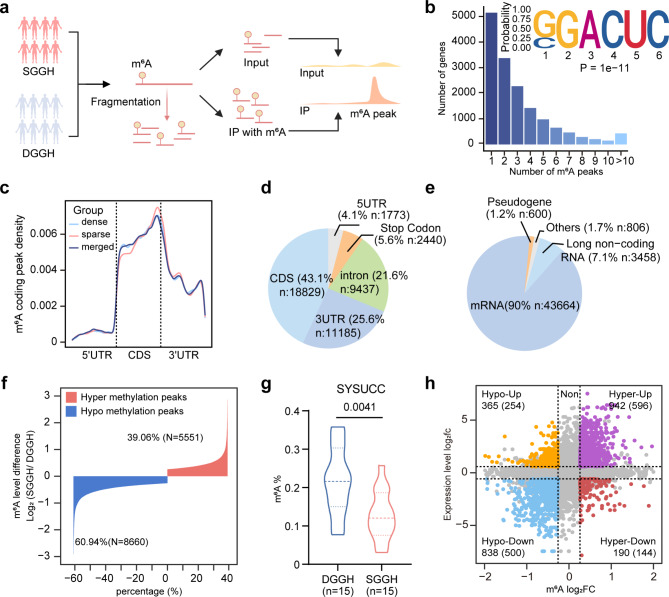
Growth hormone-secreting pituitary neuroendocrine tumors can be pathologically classified into densely granulated (DGGH) and sparsely granulated types (SGGH). SGGH is more aggressive and associated with a poorer prognosis. While epigenetic regulation is vital in tumorigenesis and progression, the role of N-methyladenosine (mA) in aggressive behavior has yet to be elucidated.
We performed mA-sequencing on tumor samples from 8 DGGH and 8 SGGH patients, complemented by a suite of assays including ELISA, immuno-histochemistry, -blotting and -fluorescence, qPCR, MeRIP, RIP, and RNA stability experiments, aiming to delineate the influence of mA on tumor behavior. We further assessed the therapeutic potential of targeted drugs using cell cultures, organoid models, and animal studies.
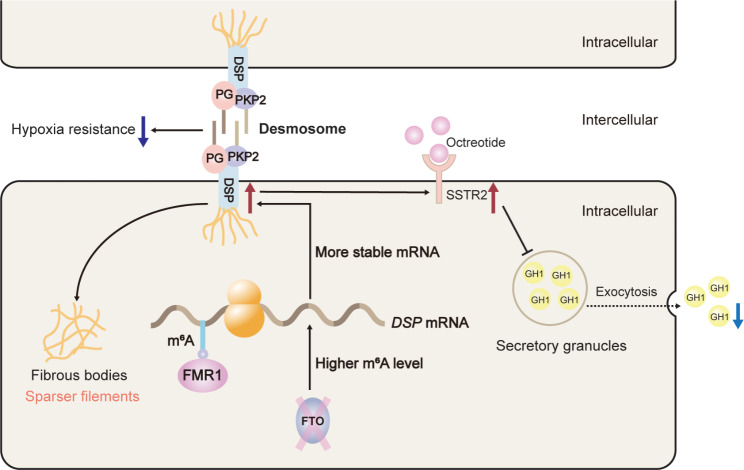
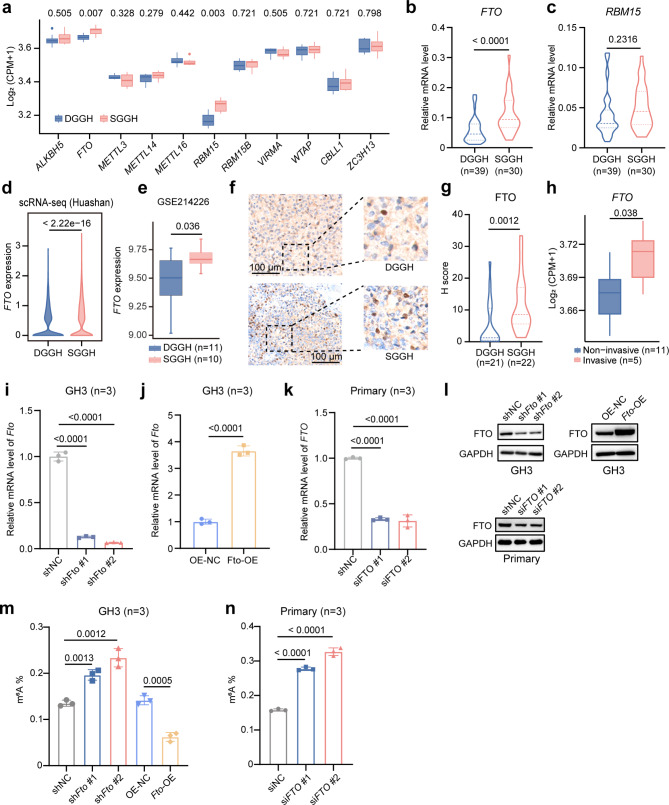
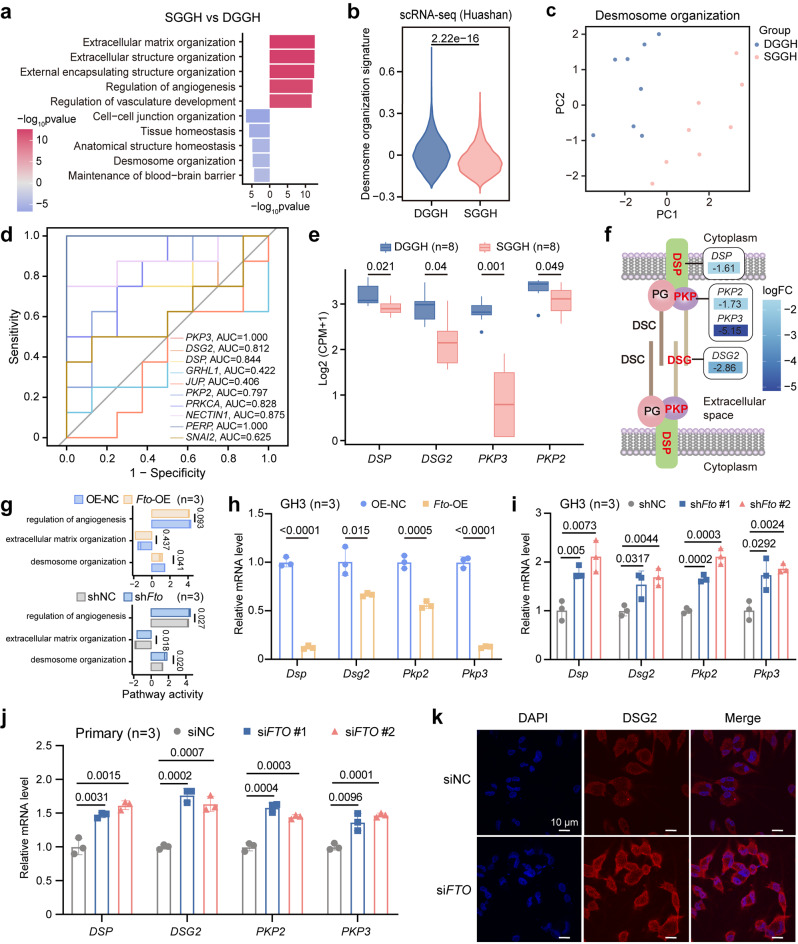
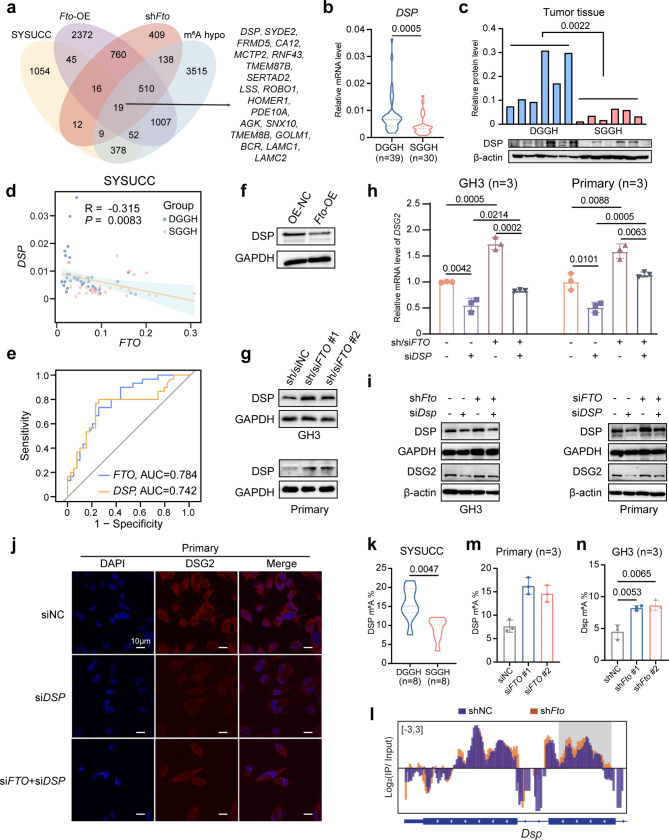
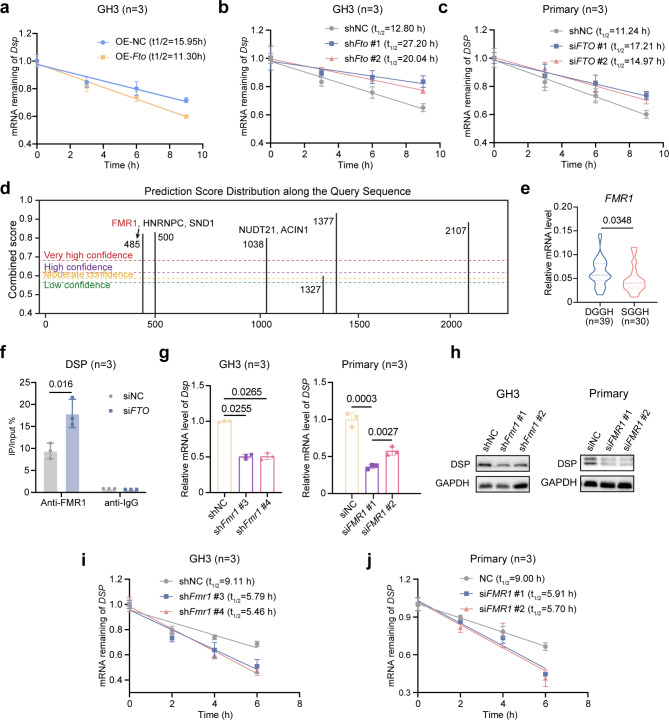
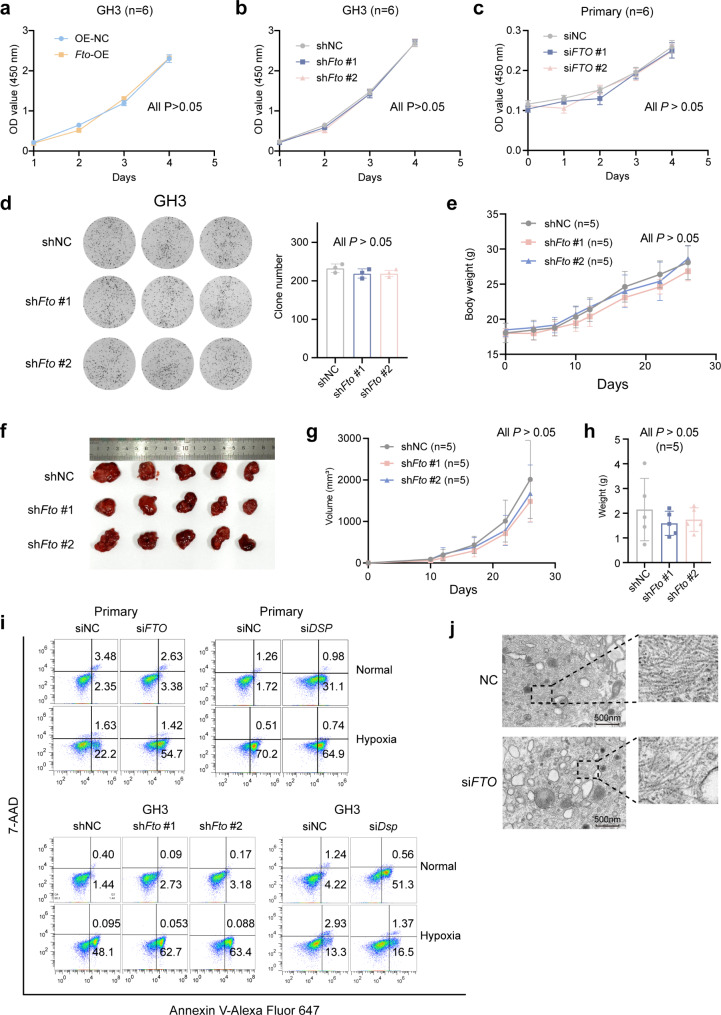
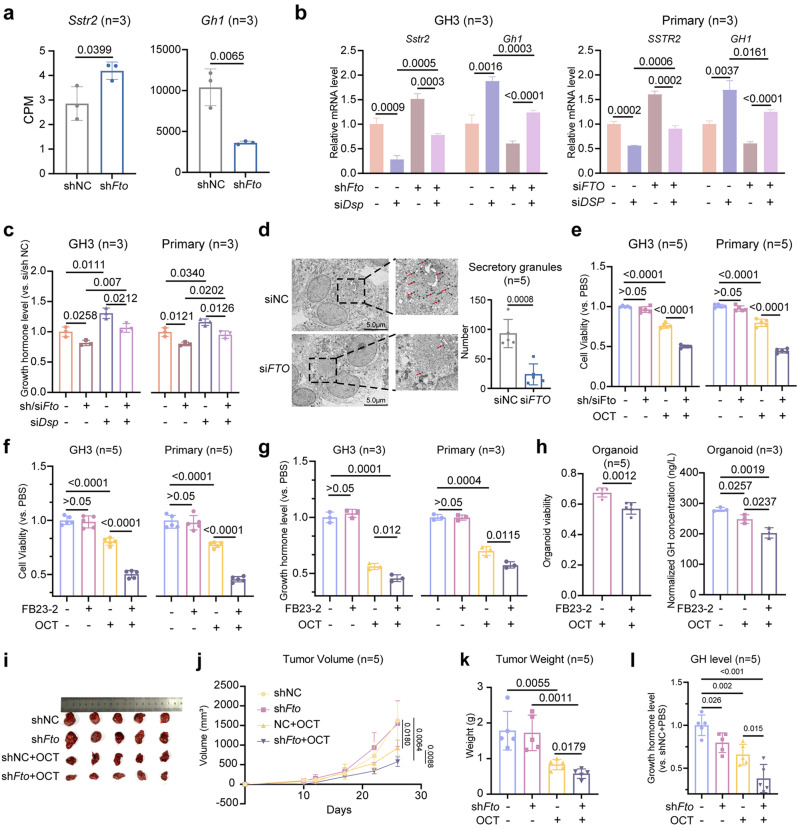
We discovered a significant reduction of mA levels in SGGH compared to DGGH, with an elevated expression of fat mass and obesity-associated protein (FTO), an mA demethylase, in SGGH subtype. Series of in vivo and in vitro experiments demonstrated that FTO inhibition in tumor cells robustly diminishes hypoxia resistance, attenuates growth hormone secretion, and augments responsiveness to octreotide. Mechanically, FTO-mediated mA demethylation destabilizes desmoplakin (DSP) mRNA, mediated by the mA reader FMR1, leading to prohibited desmosome integrity and enhanced tumor hypoxia tolerance. Targeting the FTO-DSP-SSTR2 axis curtailed growth hormone secretion, therefor sensitizing tumors to octreotide therapy.
Our study reveals the critical role of FTO in the aggressive growth hormone-secreting pituitary neuroendocrine tumors subtype and suggests FTO may represent a new therapeutic target for refractory/persistent SGGH.
生长激素分泌性垂体神经内分泌肿瘤在病理上可分为致密颗粒型(DGGH)和稀疏颗粒型(SGGH)。SGGH 更具侵袭性,预后较差。虽然表观遗传调控在肿瘤发生和进展中至关重要,但 N6-甲基腺苷(m6A)在侵袭性行为中的作用尚未阐明。
我们对 8 例 DGGH 和 8 例 SGGH 患者的肿瘤样本进行了 m6A 测序,并结合一系列检测方法,包括 ELISA、免疫组化、印迹和荧光、qPCR、MeRIP、RIP 和 RNA 稳定性实验,旨在阐明 m6A 对肿瘤行为的影响。我们进一步使用细胞培养、类器官模型和动物研究评估了靶向药物的治疗潜力。
我们发现 SGGH 中的 m6A 水平明显低于 DGGH,并且 SGGH 亚型中脂肪量和肥胖相关蛋白(FTO)的表达上调,FTO 是一种 m6A 去甲基化酶。一系列体内和体外实验表明,肿瘤细胞中 FTO 的抑制可显著降低缺氧耐药性,减弱生长激素分泌,并增强对奥曲肽的反应性。机制上,FTO 介导的 m6A 去甲基化使桥粒蛋白(DSP)mRNA 不稳定,由 m6A 阅读器 FMR1 介导,导致桥粒完整性受损,肿瘤缺氧耐受性增强。靶向 FTO-DSP-SSTR2 轴可抑制生长激素分泌,从而使肿瘤对奥曲肽治疗敏感。
本研究揭示了 FTO 在侵袭性生长激素分泌性垂体神经内分泌肿瘤亚型中的关键作用,并表明 FTO 可能代表难治性/持续性 SGGH 的新治疗靶点。