Research and Innovation, South-East Regional Office of WHO (SEARO), New Delhi, India.
Clinical Development Services Agency (CDSA), Translational Health Science and Technology Institute (THSTI), Faridabad, India.
Health Res Policy Syst. 2024 Sep 20;22(1):131. doi: 10.1186/s12961-024-01219-2.
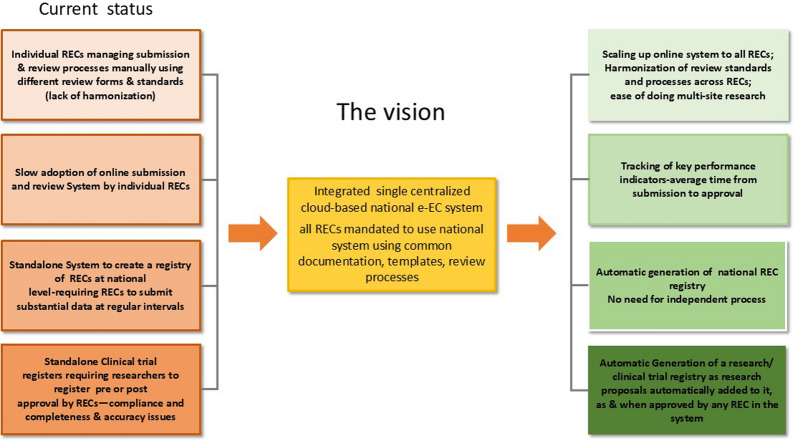
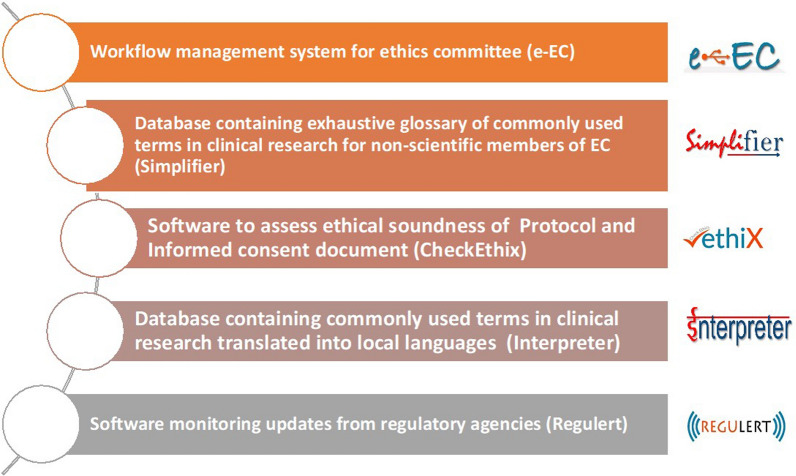
The current research ethics review systems are composed of isolated institutional Research Ethics Committees (RECs) that develop their own standard operating procedures (SOPs), templates and so on, with low adoption of digital solutions to manage submission and review processes. This poses several challenges, such as delays, higher costs, and hindering multi-site research. We propose an online national research ethics platform that all RECs can use, with common review processes and documentation requirements following national policy. The system will scale up adoption of digital solutions to all RECs. It will reduce administrative burden and harmonize review procedures. It will also obviate the need for separate and isolated interventions such as national REC registries or clinical trial registries, as these can be generated as transactional outputs of the system. The harmonized procedures and possibility of single submission will facilitate multi-site research. Sharing of resources and expertise among RECs on the platform will enhance resilience. An e-EC system developed in India and a Regional Health research portal developed by the WHO South-East Asia office offer proof of concepts to demonstrate the feasibility of developing and using such systems. The proposed solution is ambitious but feasible. Developing the proposed system will be a vital cost-effective investment in national health infrastructure to strengthen the research ecosystem and accelerate delivery of improved healthcare innovations by reducing unnecessary delays in conducting research. To maximize benefits, concurrent efforts are needed to build researchers' capacity and enhance the quality and efficiency of human reviews of the research proposals by REC.
当前的研究伦理审查系统由孤立的机构研究伦理委员会(RECs)组成,这些委员会制定自己的标准操作程序(SOP)、模板等,很少采用数字解决方案来管理提交和审查流程。这带来了一些挑战,例如延迟、成本增加和阻碍多地点研究。我们提出了一个在线的全国性研究伦理平台,所有 REC 都可以使用,采用共同的审查流程和符合国家政策的文件要求。该系统将推广数字解决方案在所有 REC 中的应用。它将减轻行政负担并协调审查程序。它还将消除对单独和孤立干预措施的需求,如国家 REC 注册处或临床试验注册处,因为这些可以作为系统的交易性输出生成。协调的程序和单一提交的可能性将促进多地点研究。平台上 REC 之间资源和专业知识的共享将增强弹性。印度开发的电子 EC 系统和世卫组织东南亚办公室开发的区域卫生研究门户提供了概念验证,以展示开发和使用此类系统的可行性。所提出的解决方案虽然具有挑战性,但是可行的。开发拟议的系统将是对国家卫生基础设施进行的一项重要的具有成本效益的投资,有助于加强研究生态系统,并通过减少研究过程中的不必要延迟来加速提供改进的医疗保健创新。为了最大限度地发挥效益,需要同时努力建设研究人员的能力,并通过提高 REC 对研究提案的人力审查的质量和效率来增强其效益。