Department of Oral and Maxillofacial Surgery, Plastic Surgery, University Medical Center of the Johannes Gutenberg-University, Augustusplatz 2, 55131, Mainz, Germany.
Institute of Medical Biostatistics, Epidemiology and Informatics (IMBEI), University Medical Center of the Johannes Gutenberg University Mainz, 55131, Mainz, Germany.
Clin Oral Investig. 2024 Sep 21;28(10):541. doi: 10.1007/s00784-024-05929-3.
This meta-analysis aims to investigate the long-term survival rates of dental implants over a 20-year period, providing a practical guide for clinicians while identifying potential areas for future research.
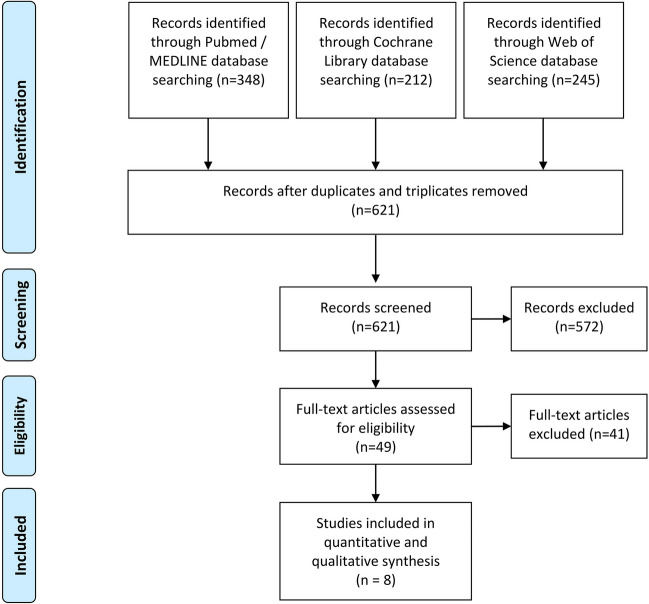
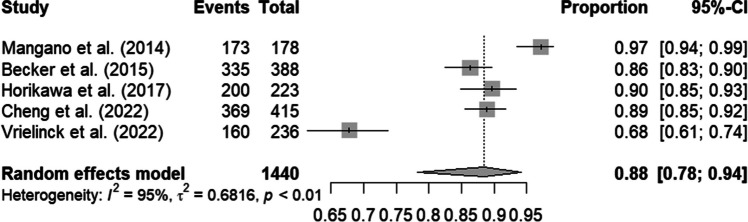
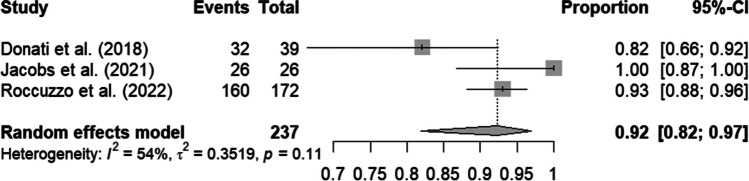
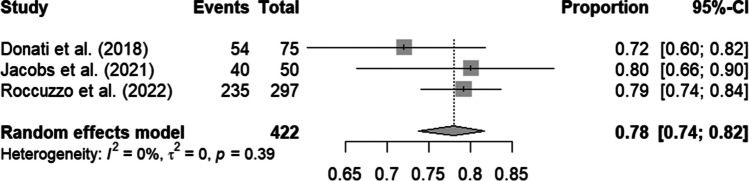
Data were sourced from recent publications, focusing exclusively on screw-shaped titanium implants with a rough surface. Both retrospective and prospective studies were included to ensure an adequate sample size. A systematic electronic literature search was conducted in the databases: MEDLINE (PubMed), Cochrane, and Web of Science. The risk of bias for all studies was analyzed using a tool by Hoy et al. RESULTS: Three prospective studies (n = 237 implants) revealed a mean implant survival rate of 92% (95% CI: 82% to 97%), decreasing to 78% (95% CI: 74%-82%) after imputation (n = 422 implants). A total of five retrospective studies (n = 1440 implants) showed a survival rate of 88% (95% CI: 78%-94%). Implant failure causes were multifactorial.
This review consolidates 20-year dental implant survival data, reflecting a remarkable 4 out of 5 implants success rate. It emphasizes the need for long-term follow-up care, addressing multifactorial implant failure. Prioritizing quality standards is crucial to prevent overestimating treatment effectiveness due to potential statistical errors. While dental implantology boasts reliable therapies, there is still room for improvement, and additional high-quality studies are needed, particularly to evaluate implant success.
Never before have the implant survival over 20 years been systematically analyzed in a meta-analysis. Although a long-term survival can be expected, follow-up is essential and shouldn't end after insertion or even after 10 years.
本荟萃分析旨在研究种植体在 20 年内的长期存活率,为临床医生提供实用指南,同时确定未来研究的潜在领域。
数据来源于近期出版物,仅关注具有粗糙表面的螺钉状钛种植体。纳入回顾性和前瞻性研究,以确保足够的样本量。在 MEDLINE(PubMed)、Cochrane 和 Web of Science 数据库中进行了系统的电子文献检索。使用 Hoy 等人的工具分析所有研究的偏倚风险。
3 项前瞻性研究(n=237 个种植体)显示平均种植体存活率为 92%(95%CI:82%-97%),在插补后(n=422 个种植体)降至 78%(95%CI:74%-82%)。总共 5 项回顾性研究(n=1440 个种植体)显示存活率为 88%(95%CI:78%-94%)。种植体失败的原因是多因素的。
本综述整合了 20 年的牙科种植体存活率数据,反映了高达 4/5 的种植体成功率,这是一个显著的结果。它强调了需要进行长期随访护理,以解决多因素的种植体失败问题。优先考虑质量标准至关重要,以防止由于潜在的统计误差而高估治疗效果。尽管牙科种植学拥有可靠的治疗方法,但仍有改进的空间,需要更多高质量的研究,特别是评估种植体的成功率。
种植体 20 年以上的存活率从未在荟萃分析中进行过系统分析。尽管可以预期长期存活率,但随访是必不可少的,不应在插入后甚至在 10 年后结束。