Digital Health Validation Lab, College of Medical, Veterinary & Life Sciences, University of Glasgow, Glasgow, UK.
Robertson Centre for Biostatistics, University of Glasgow, Glasgow, UK.
BMJ Open. 2024 Sep 20;14(9):e081062. doi: 10.1136/bmjopen-2023-081062.
Diagnosing and treating lung cancer in early stages is essential for survival outcomes. The chest X-ray (CXR) remains the primary screening tool to identify lung cancers in the UK; however, there is a shortfall of radiologists, while demand continues to increase. Image analysis by machine-learning software has the potential to support radiology workflows with a focus on immediate triage of suspicious X-rays. The RADICAL study will evaluate Qure.ai's 'qXR' software in reducing reporting time for suspicious X-rays in NHS Greater Glasgow & Clyde.
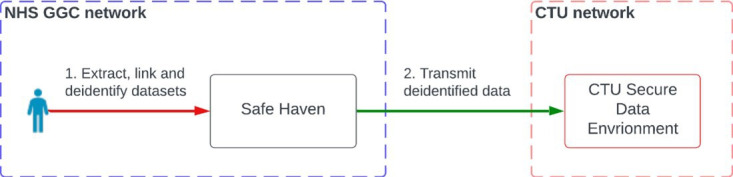
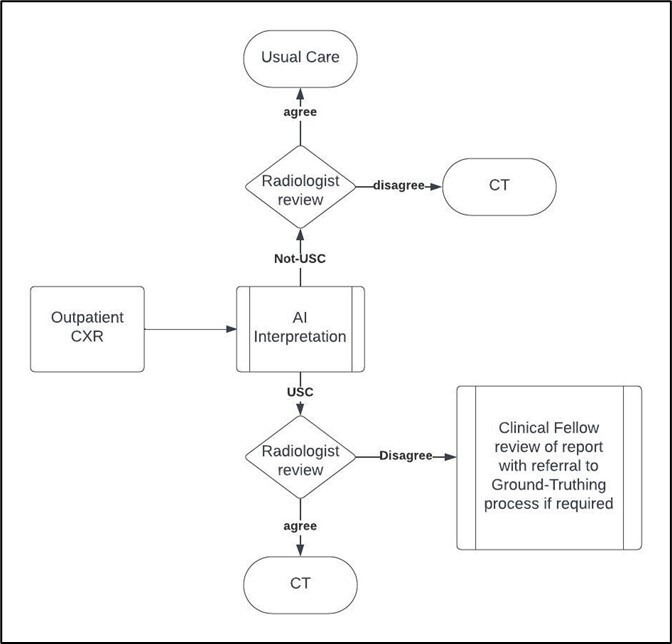
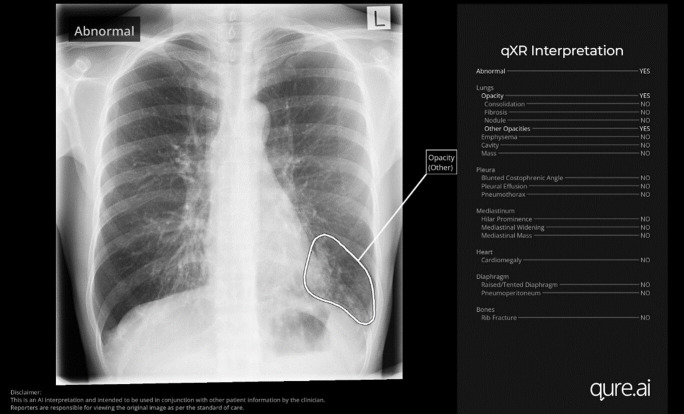
This is a stepped-wedge cluster-randomised study consisting of a retrospective technical evaluation and prospective clinical effectiveness study alongside the assessment of acceptability via qualitative work and evaluation of cost-effectiveness via a cost utility analysis. The primary objective is to assess the clinical effectiveness of qXR to prioritise patients suspected with lung cancer on CXR for follow-up CT. Secondary objectives will look at the utility, safety, technical performance, health economics and acceptability of the intervention. The study period is 24 months, consisting of an initial 12 month data collection period and a 12 month follow-up period. All the standard care CXRs from outpatient and primary care requests will be securely transmitted to Qure.ai software 'qXR' for interpretation. Images with features of cancer will be flagged as 'Urgent Suspicion of Cancer' and be prioritised for radiologist review within the existing reporting workflow.
The study will follow the principles of Good Clinical Practice. The protocol was granted REC approval in August 2023 from North West-Greater Manchester West Research Ethics Committee (REC 23/NW/0211). This study was registered on clinicaltrials.gov (NCT06044454). An interim report will be produced for use by the Scottish Government. The results from this study will be presented at artificial intelligence, radiology and respiratory meetings and published in peer-reviewed journals.
NCT06044454.
早期诊断和治疗肺癌对于生存结果至关重要。胸部 X 光(CXR)仍然是英国识别肺癌的主要筛查工具;然而,放射科医生短缺,而需求持续增加。通过机器学习软件进行图像分析有可能支持放射科工作流程,重点是对可疑 X 光进行即时分诊。RADICAL 研究将评估 Qure.ai 的“qXR”软件在减少 NHS 大格拉斯哥和克莱德的可疑 X 光报告时间方面的效果。
这是一项阶梯式楔形集群随机研究,包括回顾性技术评估和前瞻性临床有效性研究,以及通过定性工作评估可接受性和通过成本效用分析评估成本效益。主要目标是评估 qXR 对优先考虑 CXR 上疑似肺癌患者进行后续 CT 检查的临床有效性。次要目标将着眼于干预措施的实用性、安全性、技术性能、健康经济学和可接受性。研究期为 24 个月,包括 12 个月的数据收集期和 12 个月的随访期。所有来自门诊和初级保健请求的标准护理 CXR 将被安全传输到 Qure.ai 软件“qXR”进行解释。具有癌症特征的图像将被标记为“癌症紧急可疑”,并在现有报告工作流程中优先由放射科医生审查。
该研究将遵循良好临床实践的原则。该方案于 2023 年 8 月获得了西北-大曼彻斯特西部研究伦理委员会(REC 23/NW/0211)的 REC 批准。本研究已在 clinicaltrials.gov 上注册(NCT06044454)。将制作一份中期报告供苏格兰政府使用。该研究的结果将在人工智能、放射学和呼吸会议上展示,并发表在同行评议的期刊上。
NCT06044454。