Department of Neurosurgery, West China Hospital, Sichuan University, Chengdu, China.
Department of Critical care medicine, West China Hospital, Sichuan University, Chengdu, China.
Clin Appl Thromb Hemost. 2024 Jan-Dec;30:10760296241280919. doi: 10.1177/10760296241280919.
Coagulopathy is associated with poor prognosis of traumatic brain injury (TBI) patients. This study is performed to explore the association between serum magnesium level and the risk of coagulopathy in TBI.
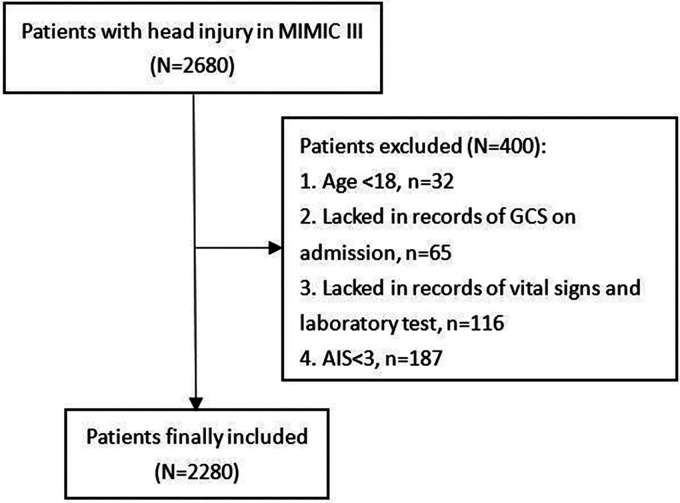
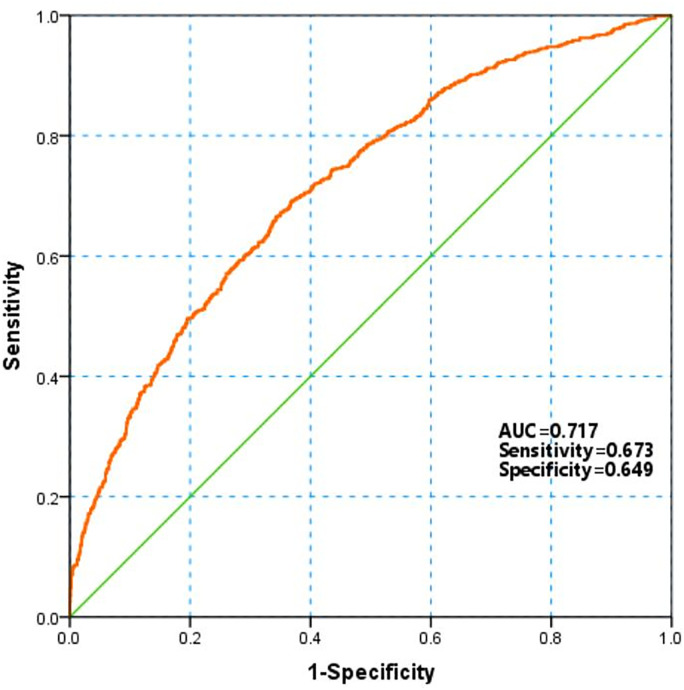
TBI patients from the Medical Information Mart for Intensive Care-III database were included for this study. Logistic regression analysis was performed to explore risk factors and develop a predictive model for coagulopathy in TBI. The restricted cubic spline (RCS) was utilized to analyze the association between serum magnesium level and the development of coagulopathy. Receiver operating characteristic curve was drawn to evaluate the performance of the predictive model for coagulopathy.
The incidence of coagulopathy in TBI was 32.6%. The RCS indicated the association between magnesium and coagulopathy was U-shaped. Multivariate logistic regression confirmed age, coronary heart disease, cerebral vascular disease, chronic liver disease, GCS, ISS, epidural hematoma, hemoglobin, shock index and magnesium level were independently associated with the coagulopathy in TBI. Compared with patients of magnesium level between 1.7 and 2.3 mg/dL, those with magnesium level below 1.7 mg/dL or above 2.2 mg/dL had a higher risk of coagulopathy.
Both hypermagnesemia and hypomagnesemia are associated with higher risk of coagulopathy in TBI patients. Physicians should pay more attention on preventing coagulopathy in TBI patients with hypomagnesemia or hypermagnesemia.
凝血功能障碍与创伤性脑损伤(TBI)患者的预后不良有关。本研究旨在探讨血清镁水平与 TBI 患者凝血功能障碍风险的关系。
本研究纳入了来自医疗信息集市-重症监护 III 数据库的 TBI 患者。采用逻辑回归分析探讨 TBI 患者凝血功能障碍的危险因素,并建立预测模型。采用受限立方样条(RCS)分析血清镁水平与凝血功能障碍发生的关系。绘制受试者工作特征曲线评价凝血功能障碍预测模型的性能。
TBI 患者凝血功能障碍的发生率为 32.6%。RCS 表明镁与凝血功能障碍之间呈 U 型关系。多因素逻辑回归证实年龄、冠心病、脑血管病、慢性肝病、GCS、ISS、硬膜外血肿、血红蛋白、休克指数和镁水平与 TBI 患者凝血功能障碍独立相关。与镁水平在 1.7 至 2.3mg/dL 之间的患者相比,镁水平低于 1.7mg/dL 或高于 2.2mg/dL 的患者发生凝血功能障碍的风险更高。
高镁血症和低镁血症均与 TBI 患者凝血功能障碍风险增加相关。医生应更加关注低镁血症或高镁血症的 TBI 患者凝血功能障碍的预防。