Kiss Lóránt, Berényi Alexandra Erzsébet, Németh Miklós, Tegze Anna, Homlok Renáta, Takács Erzsébet, Mészáros László
Department of Polymer Engineering, Faculty of Mechanical Engineering, Budapest University of Technology and Economics, Műegyetem rkp. 3., H-1111 Budapest, Hungary.
Department of Surface Chemistry and Catalysis, Institute for Energy Security and Environmental Safety, HUN-REN Centre for Energy Research, Konkoly-Thege M. street 29-33, H-1121 Budapest, Hungary.
Heliyon. 2024 Sep 5;10(18):e37454. doi: 10.1016/j.heliyon.2024.e37454. eCollection 2024 Sep 30.
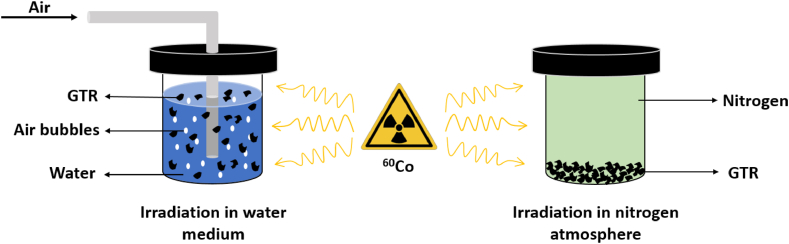
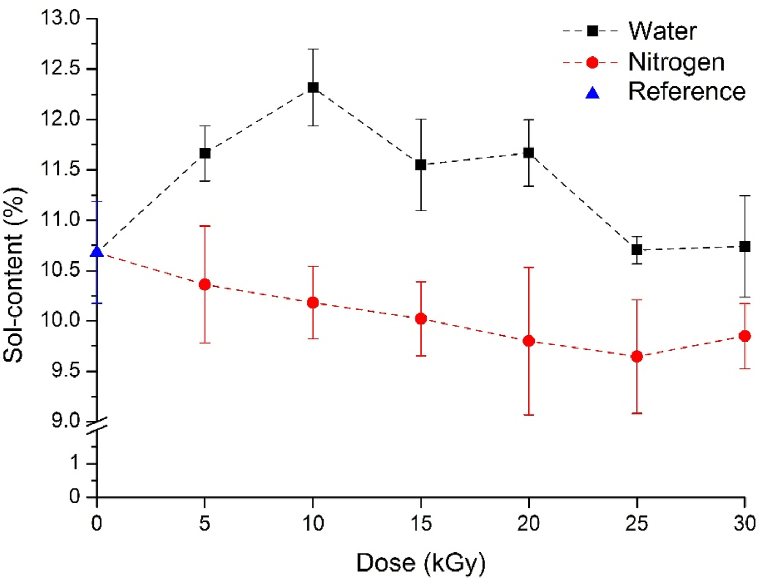
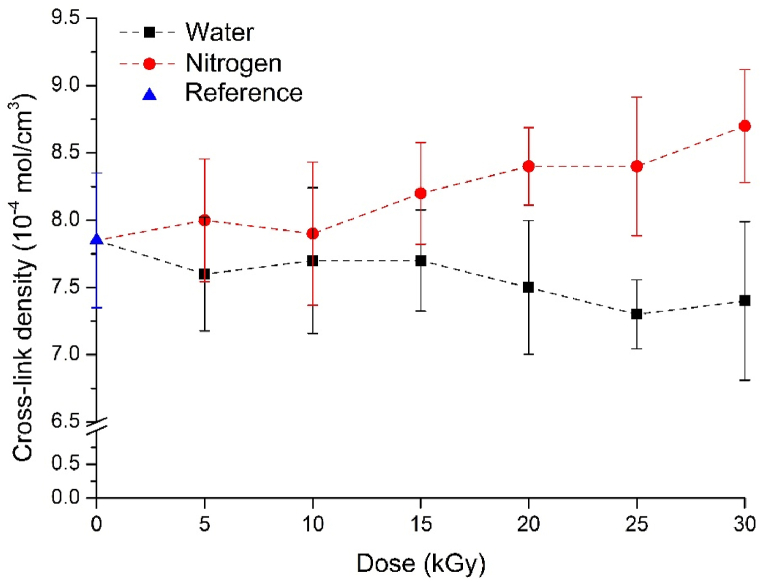
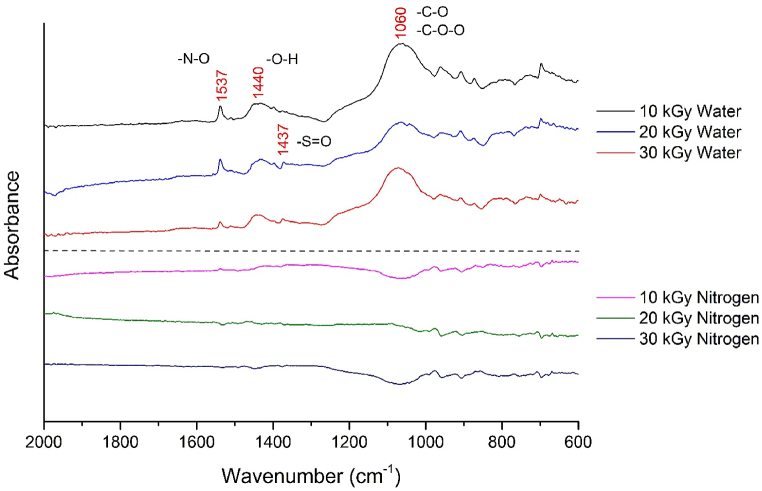
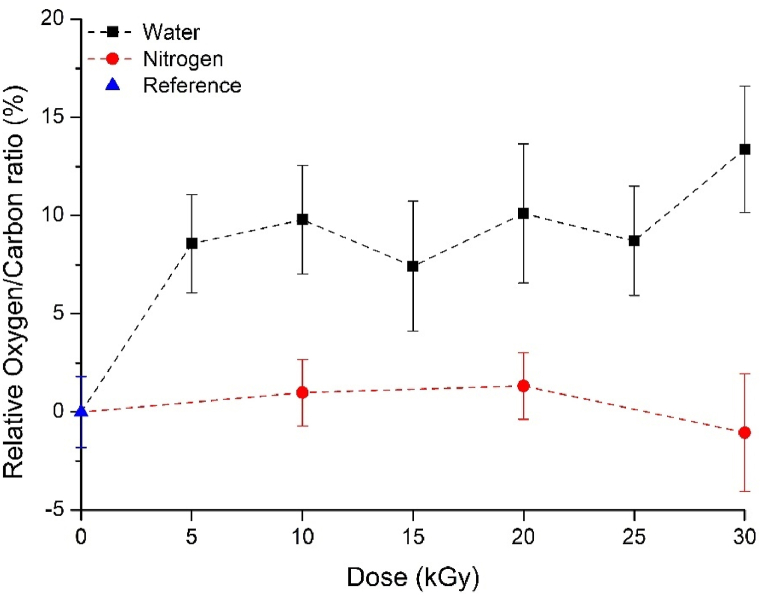
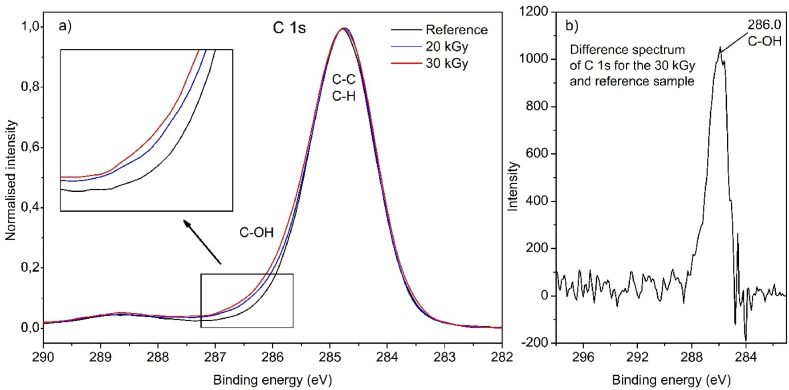
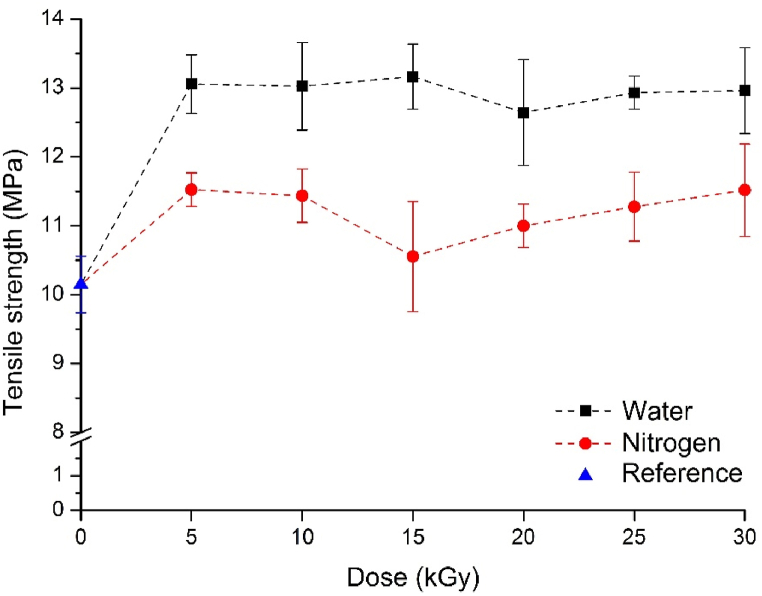
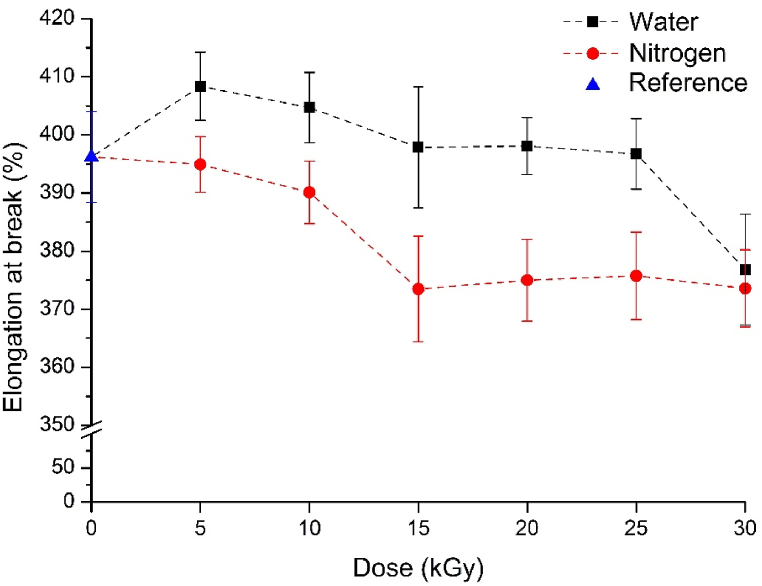
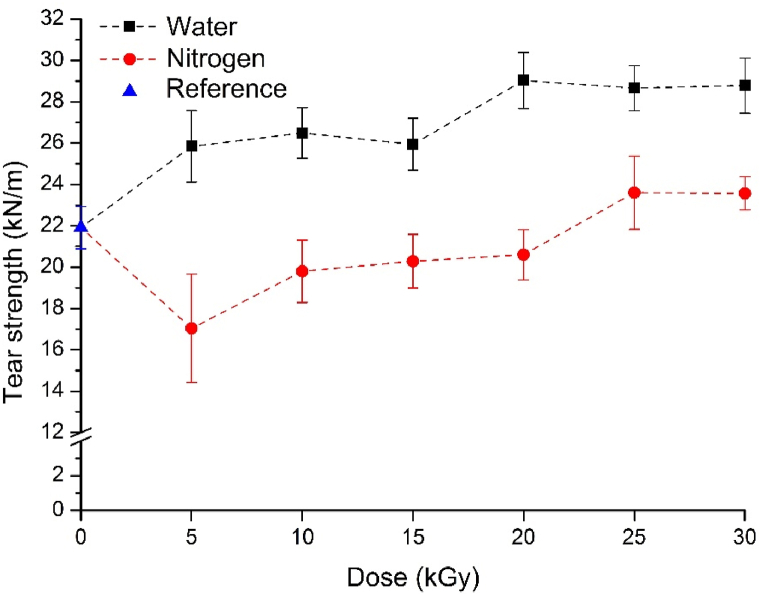
In this study, we examined the chemical changes occurring in ground tire rubber (GTR) and on its surface as a result of gamma irradiation in water, with low doses of 5, 10, 15, 20, 25, and 30 kGy. To better distinguish the changes the radiation caused in the GTR and the surface activation of the GTR caused by the irradiated water, we also performed radiation treatments in an inert atmosphere. We mixed the treated GTRs with fresh rubber, and after vulcanization, investigated the mechanical properties and conducted dose optimization. The chemical changes occurring in GTR were characterized by Soxhlet-extraction and cross-link density measurements. Changes on the surface were investigated by Fourier transform infrared spectroscopy (FTIR) and X-ray photoelectron spectroscopy (XPS). In water irradiation, cross-link density decreased (∼10 %), while in an inert atmosphere, new bonds formed between the chains (∼10 %), with negligible degradation (∼2 %) in both cases. Based on the FTIR spectra, new oxygen-containing groups appeared on the GTR surface in water treatment, while this was not observed in a nitrogen atmosphere. The increase in surface oxygen content was confirmed by XPS, showing a ∼10 % increase as a result of water treatment, while it remained unchanged in the inert atmosphere. We achieved a 30 % increase in tensile strength (5 kGy) without a decrease in elongation properties and a 32 % increase in tear strength (20 kGy) for vulcanizates containing surface-activated GTR. Mechanical properties did not improve with treatments in an inert atmosphere. The oxidizing agents formed during the radiolysis of water activated the surface of the GTR, helping to establish a better connection with the matrix.
在本研究中,我们研究了在水中以5、10、15、20、25和30千戈瑞的低剂量伽马辐射导致的磨碎轮胎橡胶(GTR)及其表面发生的化学变化。为了更好地区分辐射在GTR中引起的变化以及辐照水引起的GTR表面活化,我们还在惰性气氛中进行了辐射处理。我们将处理过的GTR与新鲜橡胶混合,硫化后,研究其机械性能并进行剂量优化。通过索氏提取和交联密度测量对GTR中发生的化学变化进行了表征。通过傅里叶变换红外光谱(FTIR)和X射线光电子能谱(XPS)研究了表面变化。在水辐照中,交联密度降低(约10%),而在惰性气氛中,链间形成了新的键(约10%),两种情况下的降解都可忽略不计(约2%)。基于FTIR光谱,水处理时GTR表面出现了新的含氧基团,而在氮气气氛中未观察到这种情况。XPS证实了表面氧含量的增加,表明水处理使其增加了约10%,而在惰性气氛中保持不变。对于含有表面活化GTR的硫化胶,我们实现了拉伸强度提高30%(5千戈瑞)且伸长性能不降低,撕裂强度提高32%(20千戈瑞)。在惰性气氛中处理并没有改善机械性能。水辐射分解过程中形成的氧化剂使GTR表面活化,有助于与基体建立更好的连接。