Jassi Chikondi, Kuo Wei-Wen, Chang Yu-Chun, Wang Tso-Fu, Ho Tsung-Jung, Hsieh Dennis Jine-Yuan, Kuo Chia-Hua, Chen Ming-Cheng, Li Chi-Cheng, Huang Chih-Yang
Department of Biological Science and Technology, China Medical University, Taichung, Taiwan.
Department of Biological Science and Technology, China Medical University, Taichung, Taiwan; Ph.D. Program for Biotechnology Industry, China Medical University, Taichung, Taiwan, ROC; School of pharmacy, China Medical University, Taichung, Taiwan, ROC.
Transl Oncol. 2024 Dec;50:102125. doi: 10.1016/j.tranon.2024.102125. Epub 2024 Sep 23.
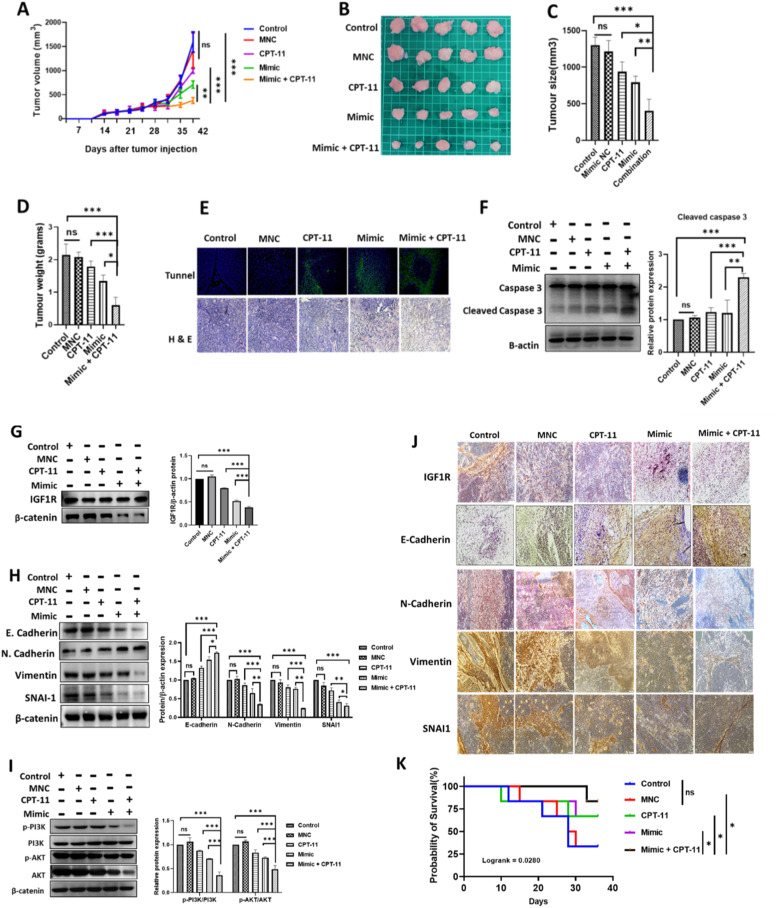
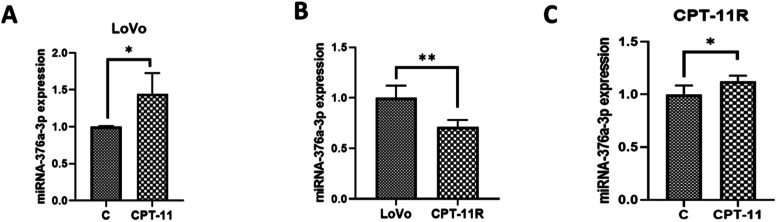
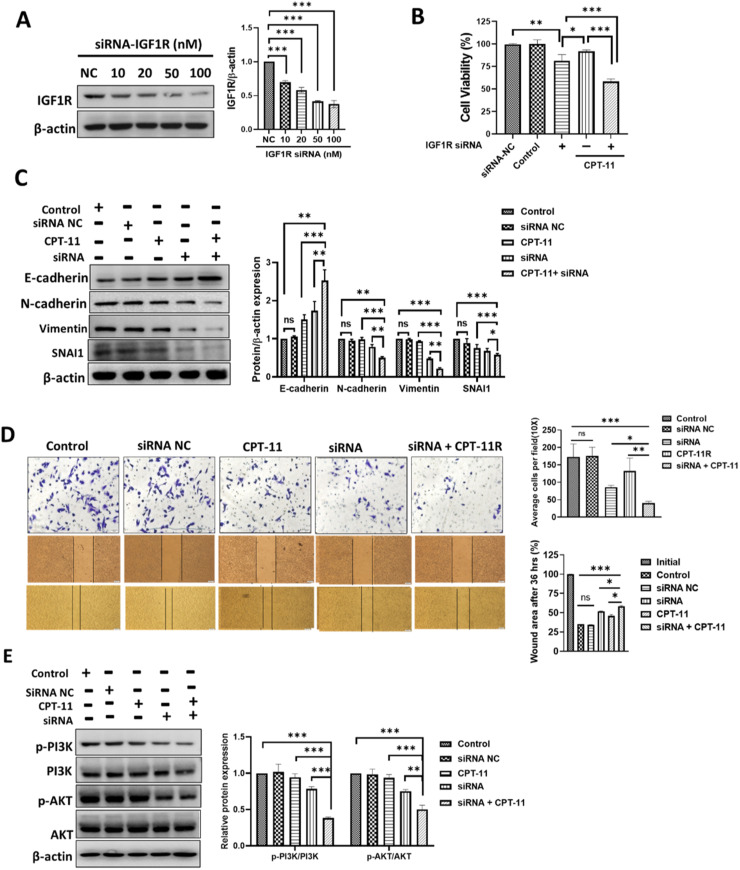
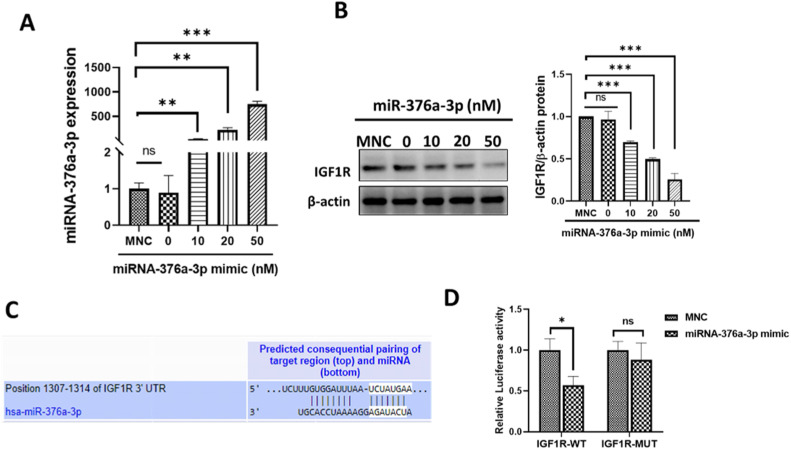
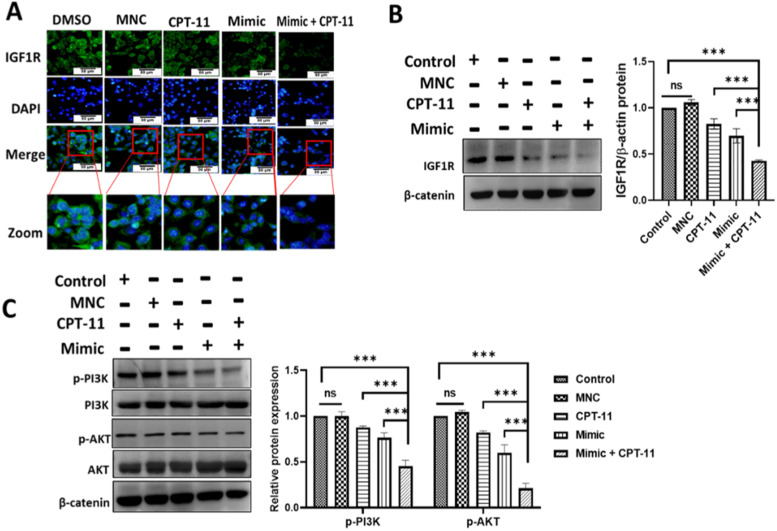
Colorectal cancer (CRC) remains the third most prevalent type of cancer worldwide contributing to an estimated 10 % of all cancer cases. CPT-11 is one of the first-line drugs for CRC treatment. Unfortunately, the development of drug resistance significantly exacerbates the adverse impact of CRC. Consequent tumor recurrences and metastasis, years after treatment are the frequently reported incidences. MicroRNAs (miRNA) are short non-coding RNA with the functionality of gene suppression. The insulin-like growth factor type 1 receptor (IGF1R) is a tyrosine kinase receptor frequently upregulated in cancers and is associated with cell survival and drug resistance. MiRNAs are frequently reported to be dysregulated in cancers including CRC. Evidence suggests that dysregulated miRNAs have direct consequences on the biological processes of their target genes. We previously demonstrated that miRNA-376a-3p is upregulated in CPT-11responsive, CRC cells upon treatment with CPT-11. We therefore aimed to investigate the involvement of miRNA-376a-3p in CPT-11 resistance and its probable association with IGF1R-mediated cancer cell survival. Our experimental approach used knockdown and overexpression experiments supplemented with western blot, RT-qPCR, flow cytometry, MTT, and migration assays to achieve our aim. Our data reveals the mechanism through which IGF1R and miRNA-376a-3p perpetrate and attenuate CPT-11 resistance respectively. MiRNA-376a-3p overexpression negatively regulated the IGF1R-induced cell survival, PI3K/AKT pathway, and reversed the epithelial-mesenchymal transition, hence sensitizing resistant cells to CPT-11. Our findings suggests that the miRNA-376a-3p/IGF1R axis holds promise as a potential target to sensitize CRC to CPT-11 in cases of drug resistance.
结直肠癌(CRC)仍然是全球第三大常见癌症类型,约占所有癌症病例的10%。伊立替康(CPT-11)是CRC治疗的一线药物之一。不幸的是,耐药性的产生显著加剧了CRC的不良影响。治疗数年之后肿瘤复发和转移是经常报道的情况。微小RNA(miRNA)是具有基因抑制功能的短链非编码RNA。胰岛素样生长因子1型受体(IGF1R)是一种酪氨酸激酶受体,在癌症中经常上调,与细胞存活和耐药性相关。经常有报道称miRNA在包括CRC在内的癌症中表达失调。有证据表明,失调的miRNA会对其靶基因的生物学过程产生直接影响。我们之前证明,在用CPT-11处理后,miRNA-376a-3p在对CPT-11敏感的CRC细胞中上调。因此,我们旨在研究miRNA-376a-3p在CPT-11耐药中的作用及其与IGF1R介导的癌细胞存活的可能关联。我们的实验方法采用了敲低和过表达实验,并辅以蛋白质免疫印迹、逆转录定量聚合酶链反应、流式细胞术、MTT和迁移实验来实现我们的目标。我们的数据揭示了IGF1R和miRNA-376a-3p分别导致和减弱CPT-11耐药的机制。miRNA-376a-3p的过表达负向调节IGF1R诱导的细胞存活、PI3K/AKT信号通路,并逆转上皮-间质转化,从而使耐药细胞对CPT-11敏感。我们的研究结果表明,在耐药情况下,miRNA-376a-3p/IGF1R轴有望成为使CRC对CPT-11敏感的潜在靶点。