Department of Pediatric, Preventive Dentistry and Orthodontics, E.V. Borovsky Institute of Dentistry, I.M. Sechenov First Moscow State Medical University (Sechenov University), Moscow, Russian Federation.
MSc in Epidemiology, School of Public Health, Isfahan University of Medical Sciences, Isfahan, Iran.
PLoS One. 2024 Sep 26;19(9):e0310405. doi: 10.1371/journal.pone.0310405. eCollection 2024.
Early childhood caries (ECC), also known as dental caries, poses a significant challenge to the oral health and overall well-being of young children. This study aims to investigate the potential relationship between the mode of delivery and the odds of ECC.
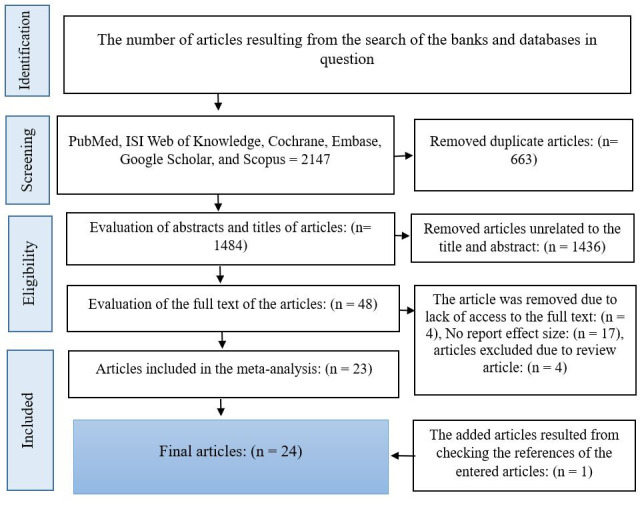
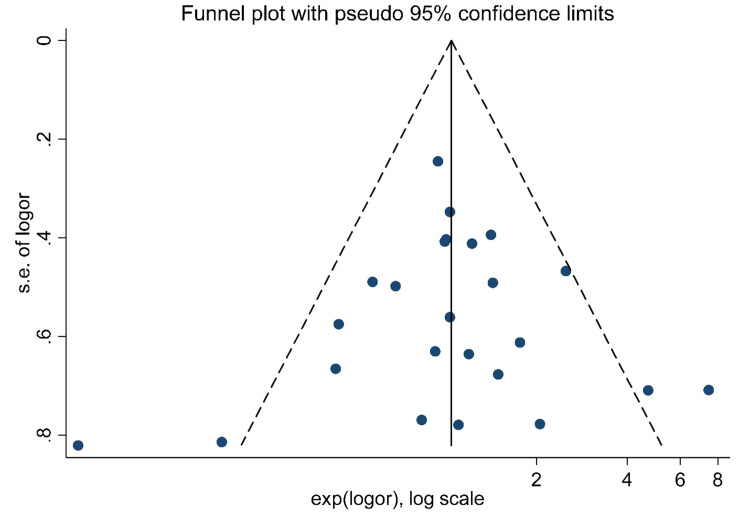
We conducted a meticulous systematic review and meta-analysis, gathering studies from reputable databases, including Web of Science, Scopus, PubMed, Cochrane, Google Scholar, and Embase. The selected studies underwent rigorous evaluation for heterogeneity, utilizing statistical tests such as the Chi-square test, I2, meta-regression analysis, sensitivity analysis, and subgroup analysis. We assessed the presence of publication bias using Begg's and Egger's tests, while the quality of the articles was evaluated using the Newcastle-Ottawa Scale checklist.
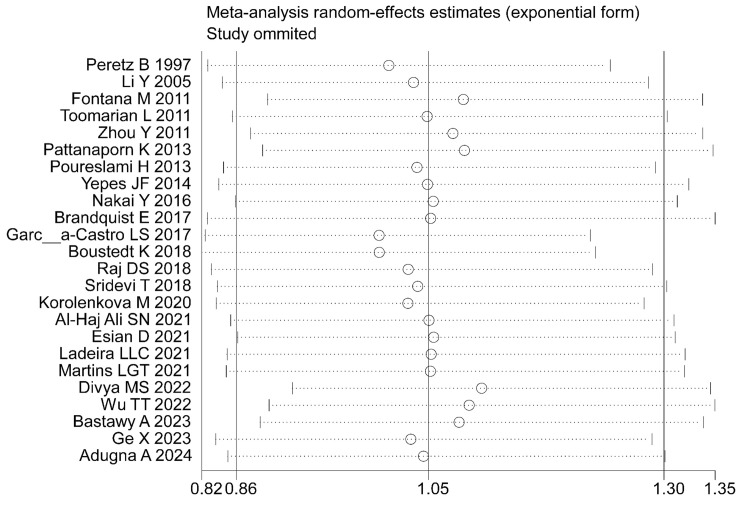
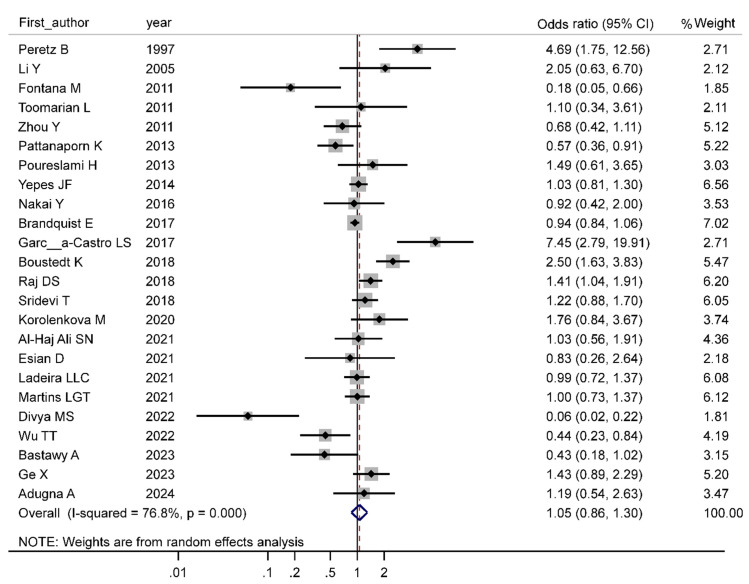
Our analysis included a robust dataset of 24 studies conducted between 1997 and 2024, involving a total of 71,732 participants. The meta-analysis revealed an odds ratio of 1.05 (95% CI: 0.86-1.30; P-value = 0.610) for dental caries in children born via cesarean section. Importantly, we found no evidence of publication bias, as indicated by non-significant results from Begg's test (P-value = 0.568) and Egger's test (P-value = 0.807). Meta-regression analysis did not identify any significant associations between the study variables and the observed heterogeneity (P > 0.10). Sensitivity analysis further confirmed the stability of the study results, with no significant changes detected.
In conclusion, our comprehensive meta-analysis provides compelling evidence that there is no significant association between the mode of delivery and the odds of ECC. These findings enhance our understanding of this important topic and have implications for clinical practice and public health interventions.
婴幼儿龋(ECC),也称为龋齿,对幼儿的口腔健康和整体健康构成了重大挑战。本研究旨在探讨分娩方式与 ECC 发生几率之间的潜在关系。
我们进行了细致的系统评价和荟萃分析,从包括 Web of Science、Scopus、PubMed、Cochrane、Google Scholar 和 Embase 在内的多个知名数据库中收集研究。对所选研究进行了严格的异质性评估,使用了卡方检验、I2、Meta 回归分析、敏感性分析和亚组分析等统计检验。我们使用 Begg 和 Egger 检验评估了发表偏倚的存在,同时使用纽卡斯尔-渥太华量表检查表评估了文章的质量。
我们的分析纳入了 1997 年至 2024 年间进行的 24 项研究,共计 71732 名参与者。荟萃分析显示,剖宫产分娩的儿童发生龋齿的几率比为 1.05(95%CI:0.86-1.30;P 值=0.610)。重要的是,我们没有发现发表偏倚的证据,Begg 检验(P 值=0.568)和 Egger 检验(P 值=0.807)的结果均不显著。Meta 回归分析也未发现研究变量与观察到的异质性之间存在任何显著关联(P>0.10)。敏感性分析进一步证实了研究结果的稳定性,未发现显著变化。
总之,我们的综合荟萃分析提供了有力的证据,表明分娩方式与 ECC 发生几率之间没有显著关联。这些发现增进了我们对这一重要主题的理解,并对临床实践和公共卫生干预具有重要意义。