Department of Health Management, Policy and Economics, School of Public Health, Tehran University of Medical Sciences, Tehran, Iran.
National Center for Health Insurance Research, Tehran, Iran.
J Glob Health. 2024 Sep 27;14:05026. doi: 10.7189/jogh.14.05026.
The pandemic of the coronavirus disease 2019 (COVID-19) led to a global health crisis, prompting widespread vaccination efforts to reduce severe outcomes. In this study, we assessed the impact of mass COVID-19 vaccination on hospitalisation and mortality rates in Iran, where over 83% of the vaccinated population received inactivated virus vaccines.
Using retrospective, cross-sectional analysis, we examined data from the Iran Health Insurance Organisation, covering 41 million individuals from 20 February 2020 to 20 March 2022. We analysed hospital records from 956 Iranian hospitals, focusing on inpatient stays, short-term hospitalisations, and emergency department visits. Study outcomes included COVID-19 hospital admissions and associated mortality. We used negative binomial regression to compare hospital admission rates between periods, while we used a poison regression model with a log link to assess mortality risks before and after vaccination.
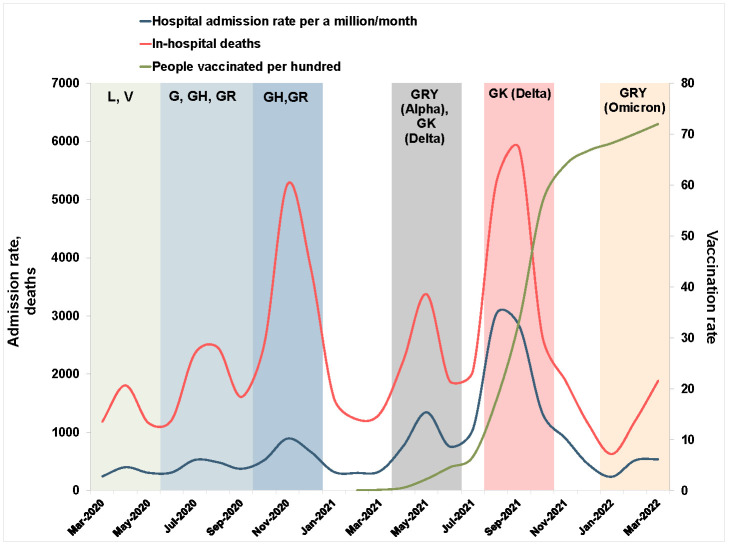
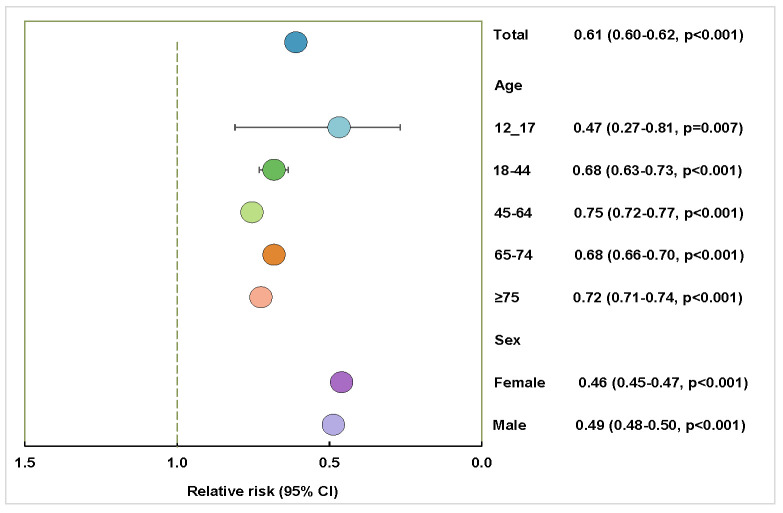
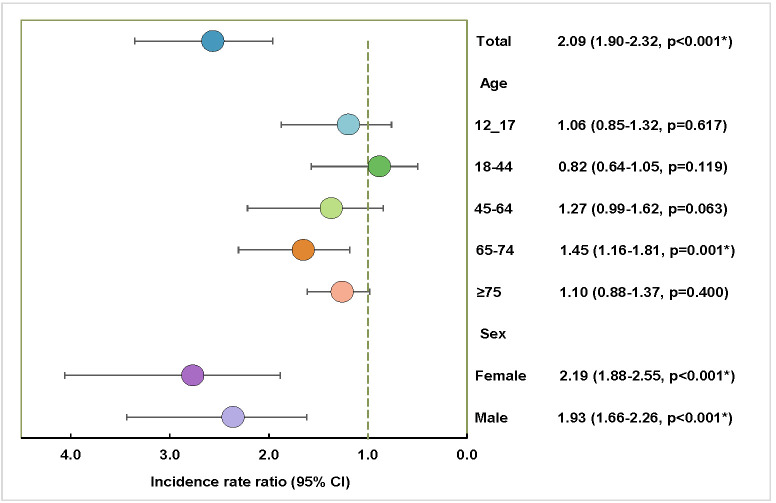
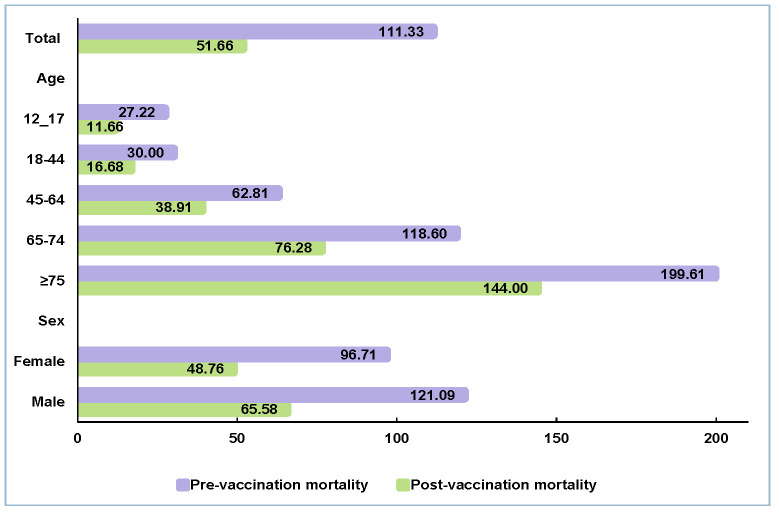
Among 806 076 hospital admissions, 57 599 deaths were recorded. COVID-19 hospitalisations increased with age, and women had slightly higher admission rates than men. Advanced age and male sex correlated with higher mortality rates. Hospital admissions rose to 1178.66 per million population per month post-vaccination compared to 459.78 pre-vaccination. The incidence rate ratio was 2.09 (95% confidence interval (CI) = 1.90-2.32, P < 0.001), mainly due to the Delta variant. In contrast, post-vaccination mortality rates decreased from 111.33 to 51.66 per 1000 admissions per month. Post-vaccination, COVID-19 mortality significantly decreased, with a relative risk being 0.61 (95% CI = 0.60-0.62, P < 0.001) across all age groups and sexes.
The Delta variant increased hospital admissions among vaccinated individuals, but widespread vaccination significantly reduced COVID-19-related mortality.
2019 年冠状病毒病(COVID-19)大流行导致全球卫生危机,促使广泛接种疫苗以降低严重后果。在这项研究中,我们评估了 COVID-19 大规模疫苗接种对伊朗住院和死亡率的影响,伊朗超过 83%的接种人群接种了灭活病毒疫苗。
我们使用回顾性、横断面分析,研究了伊朗健康保险组织的数据,涵盖了 2020 年 2 月 20 日至 2022 年 3 月 20 日的 4100 万人。我们分析了来自 956 家伊朗医院的住院记录,重点关注住院、短期住院和急诊就诊。研究结果包括 COVID-19 住院和相关死亡率。我们使用负二项回归比较了不同时期的住院率,同时使用对数链接的中毒回归模型评估了疫苗接种前后的死亡率风险。
在 806076 例住院中,记录了 57599 例死亡。COVID-19 住院率随年龄增长而增加,女性的住院率略高于男性。高龄和男性与较高的死亡率相关。接种疫苗后,每月每百万人的住院人数增加到 1178.66 人,而接种前为 459.78 人。发病率比值为 2.09(95%置信区间(CI)=1.90-2.32,P<0.001),主要是由于 Delta 变体。相比之下,接种疫苗后,每月每千例入院的死亡率从 111.33 下降到 51.66。接种疫苗后,COVID-19 死亡率显著降低,所有年龄组和性别中相对风险为 0.61(95% CI=0.60-0.62,P<0.001)。
Delta 变体增加了接种人群的住院人数,但广泛接种疫苗显著降低了 COVID-19 相关死亡率。