Arnold Nicole, Chrzan Adam, Chan Kevin, Hess Daniel, Hinkleman Levi, Duquette Stephen, Kelpin John, Bush Tamara Reid
Mechanical Engineering, Michigan State University, East Lansing, MI 48824, USA.
Orthopedic Hand and Upper Extremity Surgery, Corewell Health West, Grand Rapids, MI 49546, USA.
Bioengineering (Basel). 2024 Sep 22;11(9):948. doi: 10.3390/bioengineering11090948.
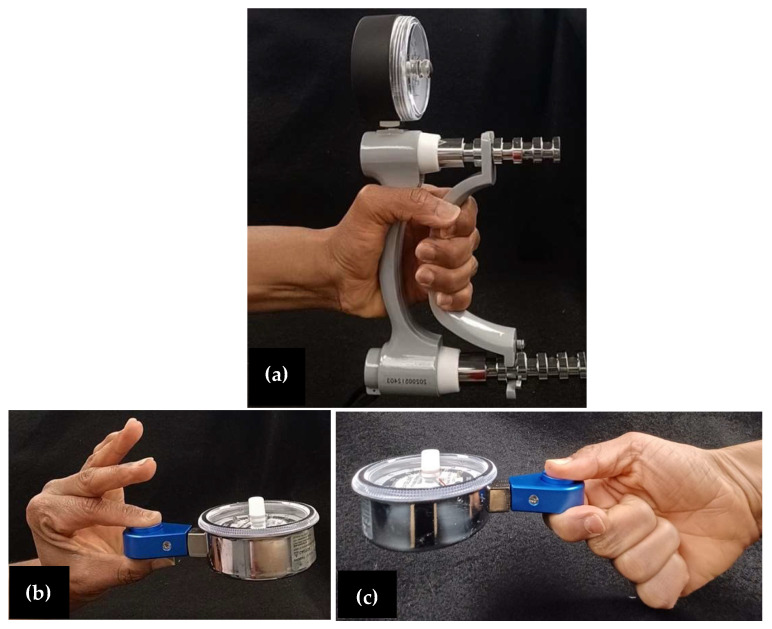
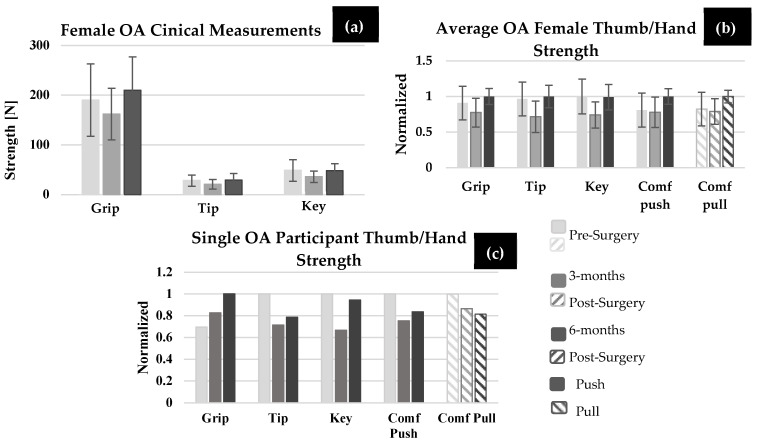
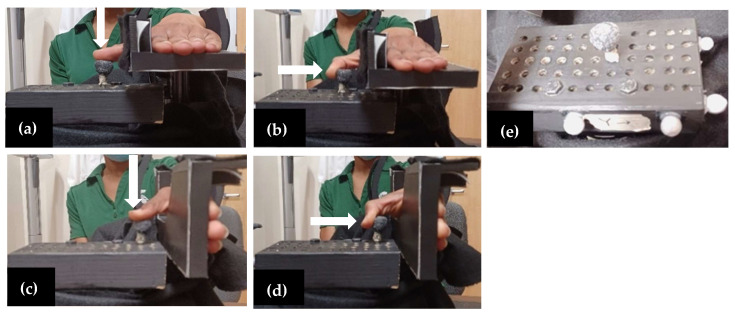
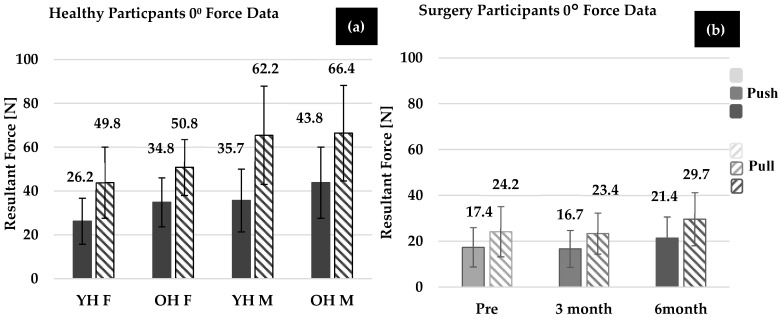
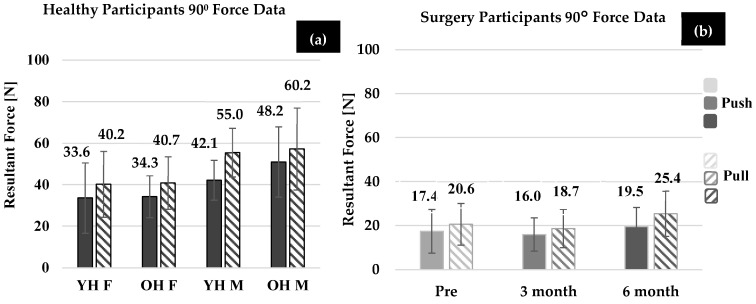
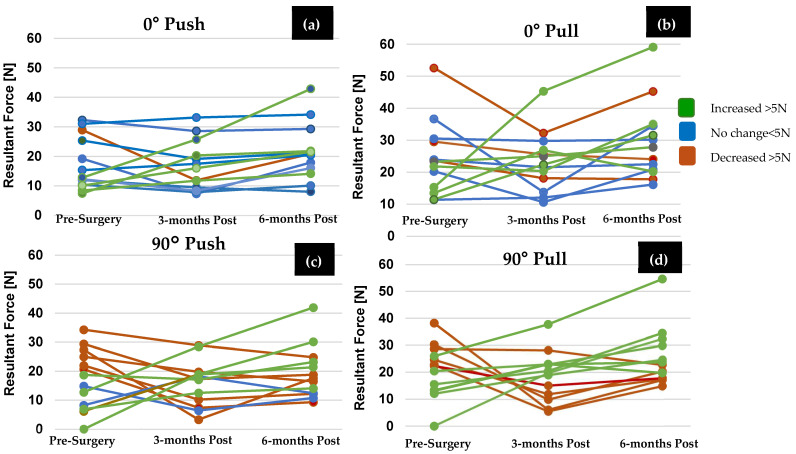
Thumb carpometacarpal (CMC) osteoarthritis (OA) is caused by the degeneration of joint surfaces at the base of the thumb. If conservative treatments have failed, surgery may be needed to improve symptoms. Typically, standard clinical tools, such as the pinch gauge, are used to measure thumb force. However, these devices have utilized multiple digits and do not represent forces specifically generated by the thumb. Therefore, different devices are necessary to accurately measure isolated thumb force. The primary objective was to research the effect of thumb force after ligament reconstruction with tendon interposition surgery. To accomplish this, several sub-objectives were implemented: (1) create a testing device to collect isolated thumb forces, (2) collect a normative thumb force data set of males and females to compare the impact of aging and surgery, (3) collect and compare clinical data to see if these data sets matched isolated thumb forces, (4) determine the effect of wrist position on isolated thumb force data in different wrist positions, and (5) collect thumb force in directions that mimic daily activities, a directional force downward (push) and inward (pull). On average, older participants generated statistically larger forces than younger participants. Additionally, only 50% of CMC OA participants showed greater than 5 N of improvement at 6-months post-surgery compared to pre-surgery, but did not reach healthy force levels. When evaluating wrist rotation, OA participants' push and pull decreased by 8 N and 7 N in the horizontal wrist position, and their push and pull increased by 2 N and 5 N in the vertical wrist position. Evaluation and results with standard clinical tools showed different post-surgery trends than isolated force data, which suggested the clinical approach has mixed results and may be under- or over-estimating the recovery process. These data sets allow surgeons and hand therapists to identify changes in isolated thumb force generation to create specialized therapies and treatment options, which is an improvement upon current clinical measurement tools.
拇指腕掌关节(CMC)骨关节炎(OA)是由拇指基部关节面退变引起的。如果保守治疗失败,可能需要手术来改善症状。通常,会使用诸如捏力计等标准临床工具来测量拇指力量。然而,这些设备使用了多个手指,不能代表拇指专门产生的力量。因此,需要不同的设备来准确测量孤立的拇指力量。主要目的是研究肌腱植入重建韧带手术后拇指力量的变化。为实现这一目标,实施了几个子目标:(1)创建一个测试设备来收集孤立的拇指力量;(2)收集男性和女性的拇指力量标准数据集,以比较衰老和手术的影响;(3)收集并比较临床数据,看这些数据集是否与孤立的拇指力量相匹配;(4)确定腕部位置对不同腕部位置孤立拇指力量数据的影响;(5)在模拟日常活动的方向上收集拇指力量,即向下(推)和向内(拉)的方向力。平均而言,年长参与者产生的力量在统计学上大于年轻参与者。此外,与术前相比,只有50%的CMC OA参与者在术后6个月时改善超过5 N,但未达到健康力量水平。在评估腕部旋转时,OA参与者在水平腕部位置的推和拉力分别减少了8 N和7 N,在垂直腕部位置的推和拉力分别增加了2 N和5 N。使用标准临床工具的评估和结果显示出与孤立力量数据不同的术后趋势,这表明临床方法的结果不一,可能低估或高估了恢复过程。这些数据集使外科医生和手部治疗师能够识别孤立拇指力量产生的变化,从而制定专门的治疗方法和治疗方案,这是对当前临床测量工具的一种改进。