Department of Anesthesiology and Intensive Care Medicine, Jena University Hospital, 07747 Jena, Germany.
Septomics Research Center, Jena University Hospital, 07745 Jena, Germany.
Toxins (Basel). 2024 Sep 20;16(9):409. doi: 10.3390/toxins16090409.
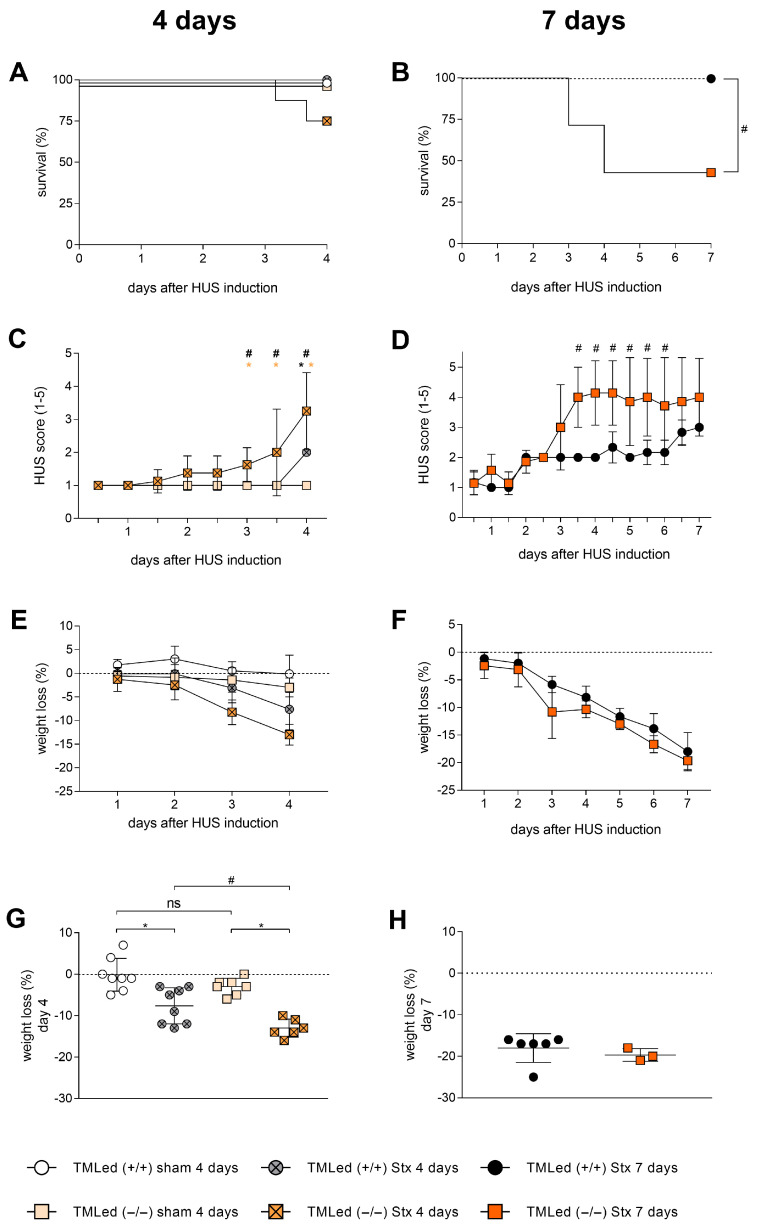
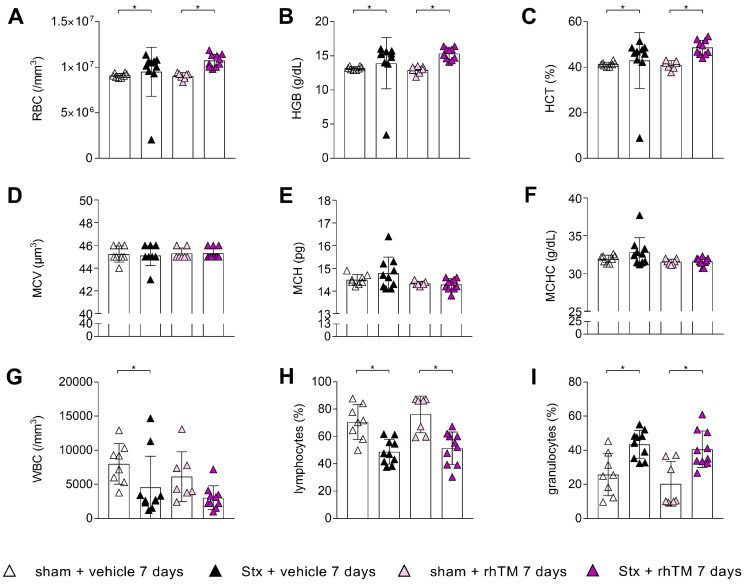
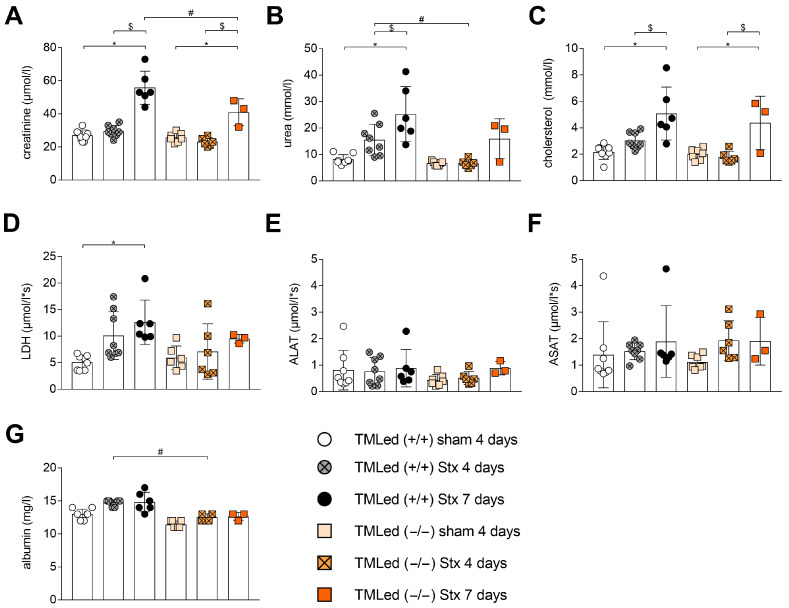
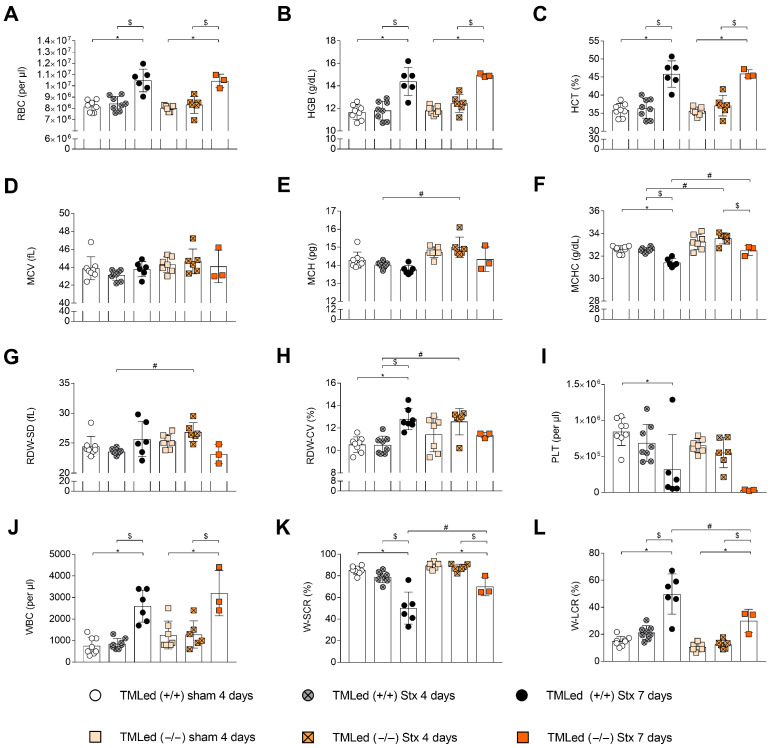
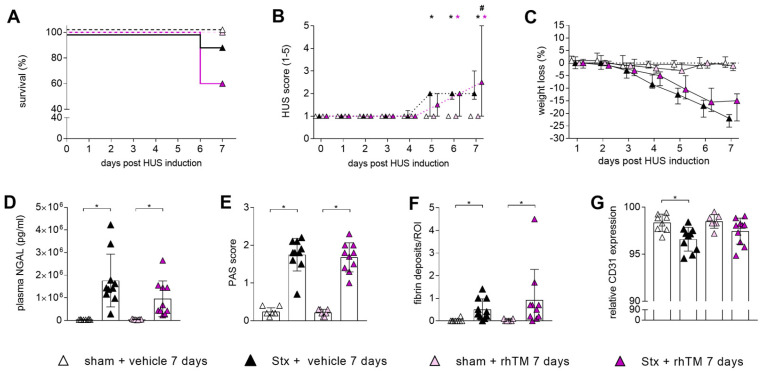
Hemolytic-uremic syndrome (HUS) is a rare complication of an infection with Shiga toxin (Stx)-producing (STEC-HUS), characterized by severe acute kidney injury, thrombocytopenia and microangiopathic hemolytic anemia, and specific therapy is still lacking. Thrombomodulin (TM) is a multi-domain transmembrane endothelial cell protein and its N-terminal domain has been implicated in the pathophysiology of some cases of HUS. Indeed, the administration of recombinant human TM (rhTM) may have efficacy in HUS. We used a Stx-based murine model of HUS to characterize the role of the N-terminal domain of TM. We show that mice lacking that domain (TMLed (-/-)) are more sensitive to Stx, with enhanced HUS progression seen at 4 days and increased mortality at 7 days post-HUS induction. In spite of these changes, renal function was less affected in surviving Stx-challenged TMLed (-/-) mice compared to their wild-type counterparts TMLed (+/+) at 7 days. Contrary to few clinical case reports from Japan, the administration of rhTM (0.06 mg/kg) to wild-type mice (C57BL/6J) with HUS did not protect against disease progression. This overall promising, but also contradictory body of evidence, requires further systematic preclinical and clinical investigations to clarify the role of TM in HUS as a potential therapeutic strategy.
溶血性尿毒症综合征 (HUS) 是由产志贺毒素 (Stx) 的大肠杆菌 (STEC-HUS) 感染引起的罕见并发症,其特征为严重的急性肾损伤、血小板减少症和微血管病性溶血性贫血,目前仍缺乏特异性治疗方法。血栓调节蛋白 (TM) 是一种具有多个结构域的跨膜内皮细胞蛋白,其 N 端结构域与某些 HUS 病例的病理生理学有关。事实上,重组人 TM (rhTM) 的给药可能对 HUS 有效。我们使用基于 Stx 的 HUS 小鼠模型来描述 TM 的 N 端结构域的作用。我们发现缺乏该结构域的小鼠 (TMLed (-/-)) 对 Stx 更为敏感,在 Stx 诱导后第 4 天 HUS 进展更为明显,第 7 天死亡率增加。尽管存在这些变化,但与野生型对照 TMLed (+/+) 相比,在 7 天时,幸存的 Stx 挑战 TMLed (-/-) 小鼠的肾功能受影响较小。与来自日本的少数临床病例报告相反,rhTM (0.06mg/kg) 给药对 HUS 野生型小鼠 (C57BL/6J) 没有起到疾病进展的保护作用。尽管这一证据总体上有希望,但也存在矛盾,需要进一步进行系统的临床前和临床研究,以阐明 TM 在 HUS 中的作用,作为一种潜在的治疗策略。