Püsküllüoğlu Miroslawa, Pieniążek Małgorzata, Las-Jankowska Manuela, Streb Joanna, Ziobro Marek, Pacholczak-Madej Renata, Kilian-Van Miegem Paulina, Rudzińska Agnieszka, Grela-Wojewoda Aleksandra, Łacko Aleksandra, Jarząb Michał, Polakiewicz-Gilowska Anna
Department of Clinical Oncology, Maria Sklodowska-Curie National Research Institute of Oncology, Kraków Branch, Kraków, Poland.
Department of Oncology, Wrocław Medical University, Plac Hirszfelda 12, 53-413, Wrocław, Poland.
Oncol Ther. 2024 Dec;12(4):787-801. doi: 10.1007/s40487-024-00307-1. Epub 2024 Sep 27.
Sacituzumab govitecan (SG) is approved for patients with previously treated metastatic or locally advanced triple-negative breast cancer (TNBC), as per the ASCENT trial results. Real-world studies (RWSs) cover more diverse patients than clinical trials, offering crucial data for healthcare policies. This study aimed to investigate the safety and efficacy of SG in real-world Polish patients with previously treated metastatic TNBC.
In this ambispective multicenter cohort study, we collected demographic and clinical data. Premedication, adjustments in SG dosage, and treatment regimen adhered to the product's characteristics.
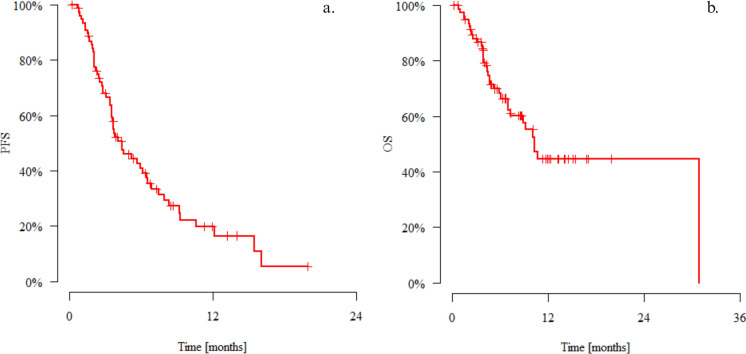
We included 79 female patients. The median age at SG initiation was 53 years; 32% of patients were initially diagnosed with a non-TNBC subtype. The median number of previous palliative lines was 2. Seven patients presented with brain metastases. The median overall survival was 10.3 months, and the median progression-free survival (PFS) was 4.4 months. The overall response rate was 35%, with a median time to response of 2 months. SG was discontinued by 70% of patients, primarily due to disease progression (95%). Treatment delays due to adverse events (AEs) occurred in 67% and dose reductions in 25% of patients, with neutropenia being the most common. Grade ≥ 2 AEs included neutropenia (43%), anemia (10.1%), and diarrhea (4%). A longer interval between breast cancer diagnosis and SG initiation or between metastasis diagnosis and SG initiation correlated with improved PFS, likely reflecting the disease's biological aggressiveness rather than treatment efficacy.
In this RWS, SG demonstrated effectiveness and safety in patients with previously treated metastatic TNBC, consistent with ASCENT trial outcomes. Further research is needed to explore the efficacy of SG in different patient populations and healthcare systems.
根据ASCENT试验结果,戈沙妥珠单抗(SG)已被批准用于先前接受过治疗的转移性或局部晚期三阴性乳腺癌(TNBC)患者。真实世界研究(RWS)涵盖的患者比临床试验更多样化,为医疗政策提供关键数据。本研究旨在调查SG在波兰先前接受过治疗的转移性TNBC真实世界患者中的安全性和有效性。
在这项回顾性多中心队列研究中,我们收集了人口统计学和临床数据。预处理、SG剂量调整和治疗方案均符合该产品的特性。
我们纳入了79名女性患者。开始使用SG时的中位年龄为53岁;32%的患者最初被诊断为非TNBC亚型。先前姑息治疗线的中位数量为2条。7名患者出现脑转移。中位总生存期为10.3个月,中位无进展生存期(PFS)为4.4个月。总缓解率为35%,中位缓解时间为2个月。70%的患者停用了SG,主要原因是疾病进展(95%)。67%的患者因不良事件(AE)导致治疗延迟,25%的患者出现剂量减少,最常见的是中性粒细胞减少。≥2级AE包括中性粒细胞减少(43%)、贫血(10.1%)和腹泻(4%)。乳腺癌诊断与开始使用SG之间或转移诊断与开始使用SG之间的间隔时间较长与PFS改善相关,这可能反映了疾病的生物学侵袭性而非治疗效果。
在这项RWS中,SG在先前接受过治疗的转移性TNBC患者中显示出有效性和安全性,与ASCENT试验结果一致。需要进一步研究以探索SG在不同患者群体和医疗系统中的疗效。