Department of Veterinary Medicine, University of Perugia, Perugia, Italy.
Department of Veterinary Medicine, University of Sassari, Sassari, Italy.
Vet Res Commun. 2024 Dec;48(6):3889-3897. doi: 10.1007/s11259-024-10555-1. Epub 2024 Sep 27.
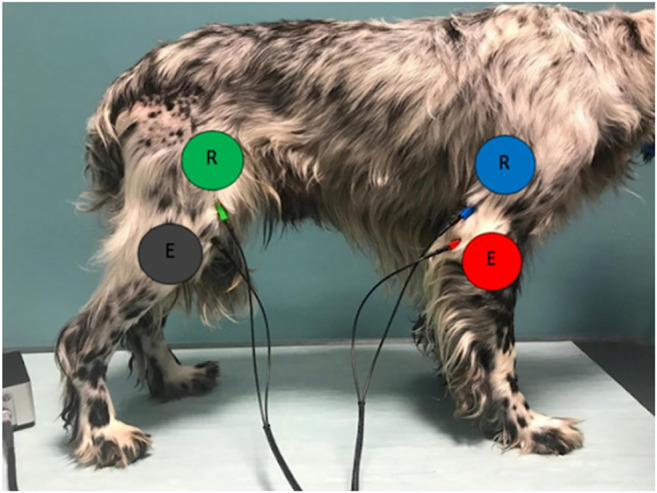
Using raw parameters of bioelectrical impedance analysis (BIA) and derived Phase Angle (PhA) has emerged as an alternative to conventional predictive BIA for body fluid volumes and body composition estimation in human patients, offering an approach independent of predictive equations. Classic predictive equation-based BIA remains unsuitable for veterinary clinical practice due to the high morphological variability within the canine species. This study aimed to validate the feasibility of BIA in dogs and assess its utility in detecting changes in body fluid volumes, particularly in blood donation. Sixty healthy blood donor dogs and ten controls were longitudinally assessed using BIA raw parameters with a portable analyzer at a 50 kHz frequency. Measurements were performed before and after blood donation in donor dogs, whereas in controls, they were carried out at two time points, approximating the timing of a donation. Significant increases in raw bioelectrical parameters were observed after blood donation in the donor group, while differences were not statistically significant in controls. Hematocrit values did not significantly differ between the two time points in both groups. These findings suggest the feasibility of using BIA to detect changes in body fluid volumes in dogs undergoing blood donation, highlighting its potential application in veterinary medicine. Further research should explore the applicability of BIA in spontaneous pathological conditions involving fluid loss or retention and investigate the potential utility of PhA as a prognostic or monitoring tool in veterinary clinical practice. This study provides valuable insights into using BIA in canine medicine, paving the way for enhanced diagnostic and monitoring strategies in clinical practice.
使用生物电阻抗分析(BIA)的原始参数和衍生的相位角(PhA)已经成为替代传统预测性 BIA 来估算人体患者体液量和身体成分的方法,提供了一种独立于预测方程的方法。经典的基于预测方程的 BIA 由于犬种内形态变异较大,仍然不适合兽医临床实践。本研究旨在验证 BIA 在犬中的可行性,并评估其在检测体液量变化方面的效用,特别是在献血中。
六十只健康献血犬和十只对照犬通过便携式分析仪以 50 kHz 的频率使用 BIA 原始参数进行了纵向评估。在献血犬中,在献血前后进行测量,而在对照犬中,在两个时间点进行测量,接近献血时间。在献血组中,献血后观察到原始生物电阻抗参数显著增加,而对照组中差异无统计学意义。两组的血细胞比容值在两个时间点均无显著差异。
这些发现表明 BIA 可用于检测接受献血的犬的体液量变化,突出了其在兽医医学中的潜在应用。进一步的研究应探索 BIA 在涉及液体丢失或保留的自发性病理情况下的适用性,并研究 PhA 作为兽医临床实践中预后或监测工具的潜在效用。本研究为犬医学中的 BIA 应用提供了有价值的见解,为临床实践中的诊断和监测策略提供了新的途径。