
使用提升算法对哌嗪水溶液中CO溶解度进行预测建模以实现碳捕获目标。
Predictive modeling of CO solubility in piperazine aqueous solutions using boosting algorithms for carbon capture goals.
作者信息
Mohammadi Mohammad-Reza, Larestani Aydin, Schaffie Mahin, Hemmati-Sarapardeh Abdolhossein, Ranjbar Mohammad
机构信息
Department of Petroleum Engineering, Shahid Bahonar University of Kerman, Kerman, Iran.
State Key Laboratory of Petroleum Resources and Prospecting, China University of Petroleum (Beijing), Beijing, China.
出版信息
Sci Rep. 2024 Sep 27;14(1):22112. doi: 10.1038/s41598-024-73070-y.
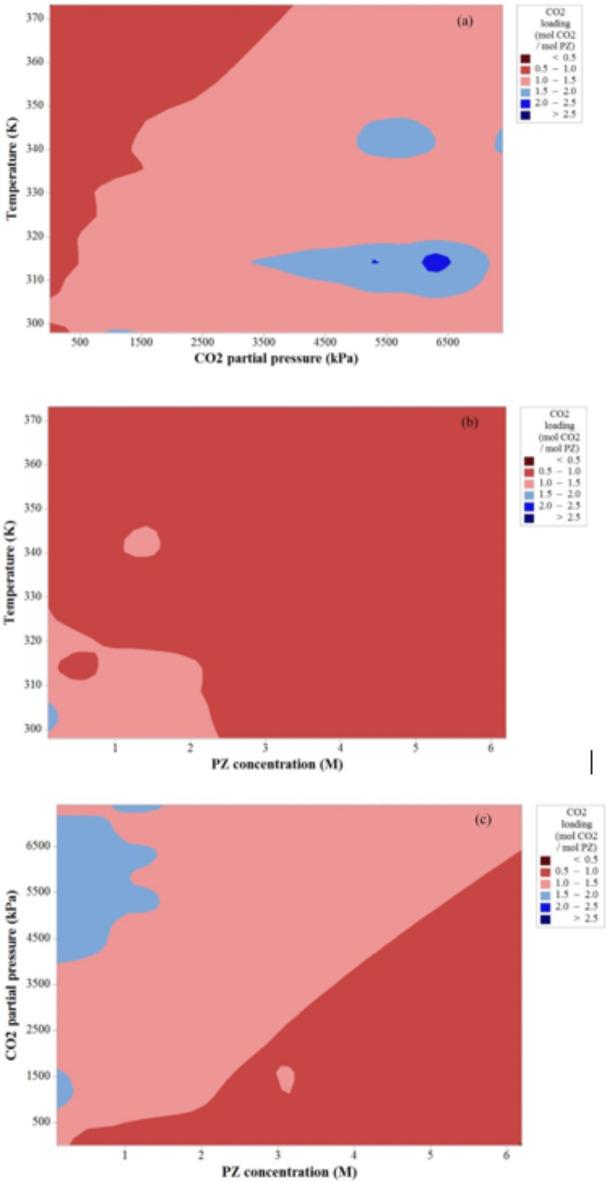
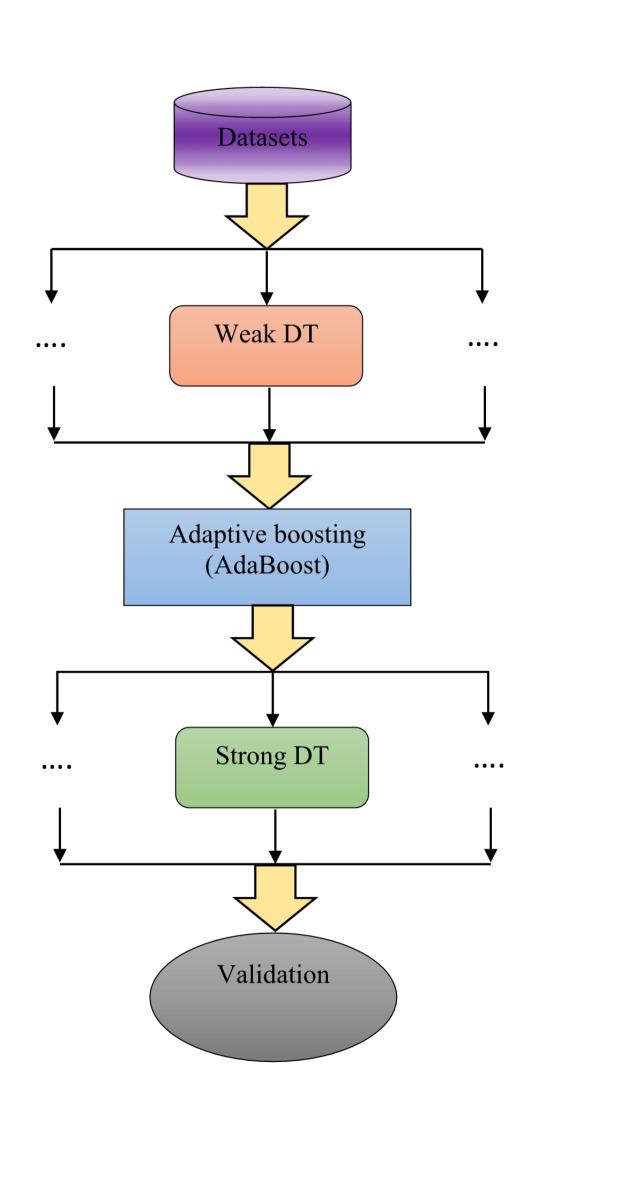
Carbon dioxide (CO) is the main greenhouse gas that drives global warming, climate change, and other environmental issues. CO absorption using amine solvents stands out as one of the most well-known industrial technologies of CO capture. However, accurate prediction of CO absorption in aqueous amine solutions under different operating conditions is crucial for designing an efficient amine scrubbing system in power plants. In this work, CO solubility in aqueous piperazine (PZ) solutions was modeled using 517 experimental data points covering a temperature range of 298 to 373 K, PZ concentration of 0.1 to 6.2 mol/L (M), and CO partial pressure of 0.03 to 7399 kPa. To this end, four robust machine learning algorithms, including gradient boosting with categorical features support (CatBoost), light gradient boosting machine (LightGBM), extreme gradient boosting (XGBoost), and adaptive boosting decision trees (AdaBoost-DT) were utilized. Among the developed models, the CatBoost model presented the highest accuracy with an overall determination coefficient (R) of 0.9953 and an average absolute relative error of 2.36%. Sensitivity analysis revealed that CO partial pressure had the greatest influence on CO absorption in aqueous PZ solutions, followed by PZ concentration and temperature. Moreover, CO partial pressure positively influenced CO absorption in aqueous PZ solutions, while PZ concentration and temperature exhibited negative effects. Finally, the leverage technique indicated that both the experimental data bank used for modeling and the model's estimates were statistically acceptable and valid showing only 8 points (∼1.5% of total data) as possible suspected data.
二氧化碳(CO₂)是导致全球变暖、气候变化及其他环境问题的主要温室气体。使用胺溶剂吸收CO₂是最著名的CO₂捕集工业技术之一。然而,准确预测不同操作条件下胺水溶液中CO₂的吸收情况对于设计高效的电厂胺洗涤系统至关重要。在本研究中,利用涵盖298至373 K温度范围、0.1至6.2 mol/L(M)的哌嗪(PZ)浓度以及0.03至7399 kPa的CO₂分压的517个实验数据点,对CO₂在PZ水溶液中的溶解度进行了建模。为此,使用了四种强大的机器学习算法,包括带分类特征支持的梯度提升(CatBoost)、轻量级梯度提升机(LightGBM)、极端梯度提升(XGBoost)和自适应增强决策树(AdaBoost-DT)。在开发的模型中,CatBoost模型的准确性最高,总体决定系数(R²)为0.9953,平均绝对相对误差为2.36%。敏感性分析表明,CO₂分压对PZ水溶液中CO₂吸收的影响最大,其次是PZ浓度和温度。此外,CO₂分压对PZ水溶液中CO₂吸收有正向影响,而PZ浓度和温度则呈现负面影响。最后,杠杆技术表明,用于建模的实验数据库和模型估计值在统计上都是可接受且有效的,仅显示8个点(约占总数据的1.5%)为可能的可疑数据。





 Zotero 插件