
一种创新多组分制剂通过影响氧化和炎症途径对抗人皮肤成纤维细胞衰老的功效
Efficacy of an Innovative Poly-Component Formulation in Counteracting Human Dermal Fibroblast Aging by Influencing Oxidative and Inflammatory Pathways.
作者信息
Augello Francesca Rosaria, Lombardi Francesca, Ciafarone Alessia, Ciummo Valeria, Altamura Serena, Giuliani Maurizio, Cinque Benedetta, Palumbo Paola
机构信息
Department of Life, Health and Environmental Sciences, University of L'Aquila, 67100 L'Aquila, Italy.
Department of Innovative Technologies in Medicine and Dentistry, University "G. D'Annunzio", 66100 Chieti, Italy.
出版信息
Biomedicines. 2024 Sep 5;12(9):2030. doi: 10.3390/biomedicines12092030.
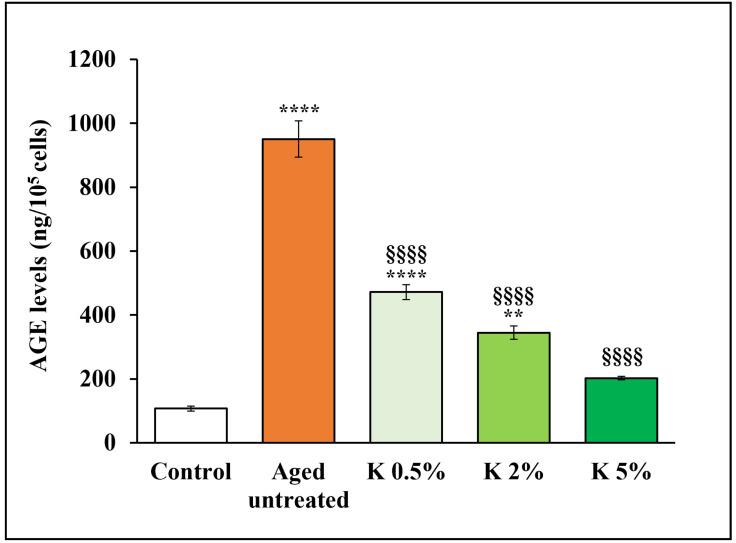
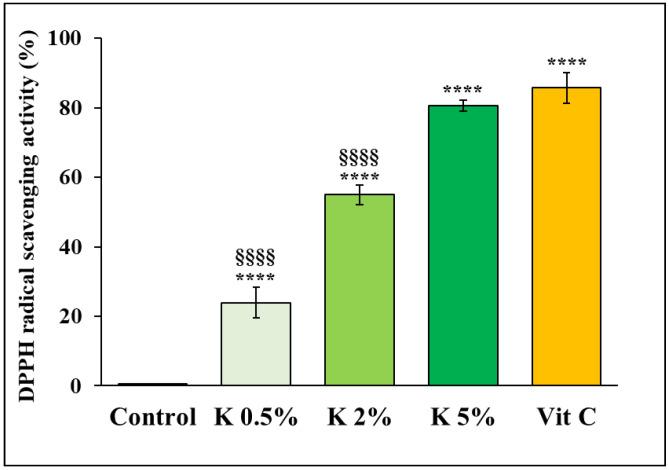
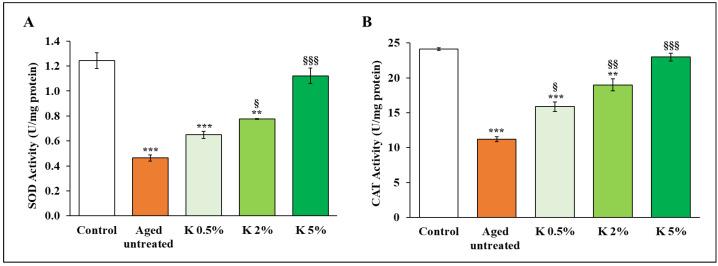
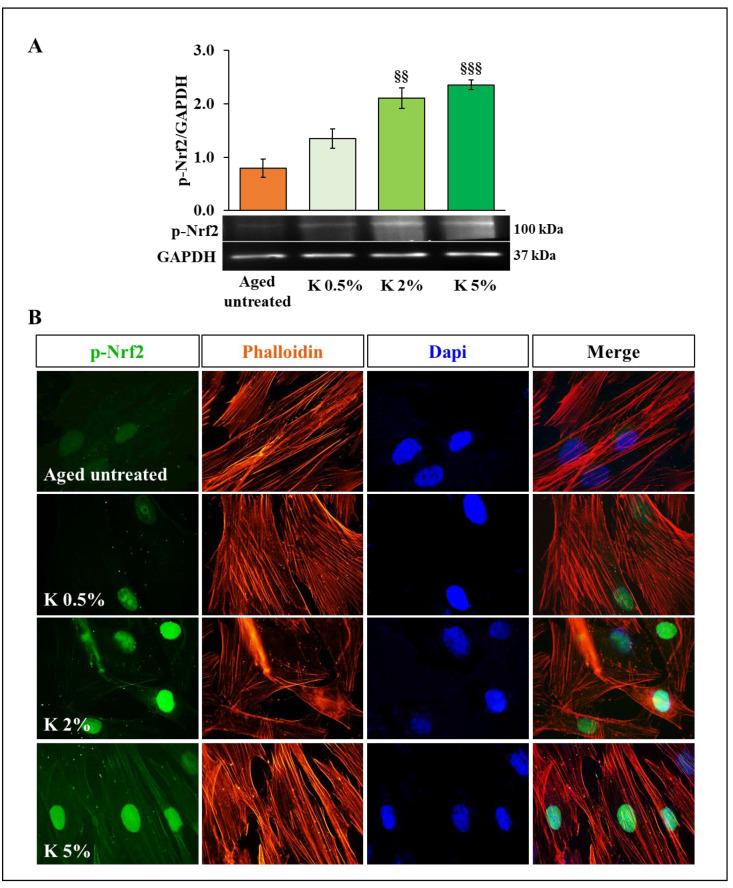
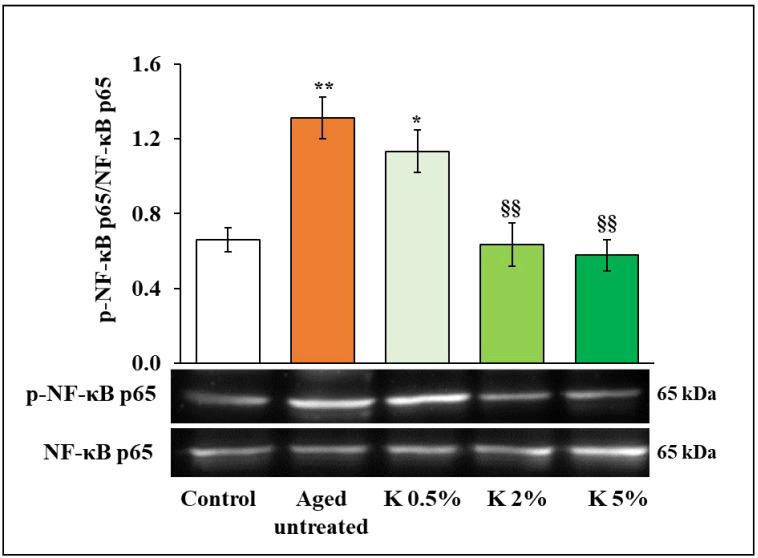
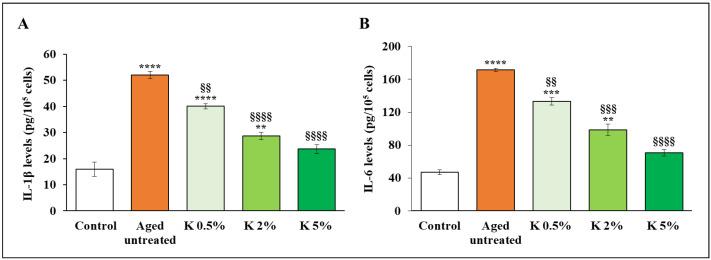
Skin aging is characterized by reactive oxygen species (ROS) accumulation, principal players in triggering events associated with aging. Our recent data on the ability of an innovative poly-component formulation (KARISMA Rh Collagen FACE: K formulation) to suppress the biomolecular events associated with oxidative stress-induced aging prompted us to deepen the mechanisms underlying the observed effects on aged human dermal fibroblasts (HDFs). Here, we evaluated K's ability to perform a direct free radical-scavenging action and modulate anti-oxidant systems by counteracting the inflammatory process in an HO-induced cellular senescence model. Standard methods were used to measure scavenging capacity and enzymatic anti-oxidant system activities. Nuclear factor E2-related factor 2 (Nrf2) and nuclear factor kappa-B (NF-κB) levels were analyzed by Western blot. We assessed pro-inflammatory cytokines, matrix metalloproteinases (MMPs), and advanced glycation end-products (AGEs). Our results show that K counteracted stress-induced aging in a dose-dependent manner by exerting a direct scavenging action and increasing anti-oxidant systems, such as superoxide dismutase (SOD) and catalase (CAT) up to control values. These findings could be associated with increased phospho-Nrf2 (p-Nrf2) expression, generally reduced in aged HDFs following exposure to different concentrations of K formulation. Moreover, K formulation caused a reduction of pro-inflammatory cytokines, interleukin-1β and -6, MMP-1 and -9, and AGE levels, events related to a downregulation of p-NF-κB level. The results indicate that K formulation re-established the normal physiology of HDFs by reducing p-NF-κB expression and restoring Nrf2 activation, thus supporting its efficacious reparative and regenerative action in treating skin aging.
皮肤老化的特征是活性氧(ROS)积累,ROS是引发与衰老相关事件的主要因素。我们最近获得的数据表明,一种创新的多组分配方(KARISMA Rh胶原蛋白面霜:K配方)能够抑制与氧化应激诱导的衰老相关的生物分子事件,这促使我们深入研究其对老年人类真皮成纤维细胞(HDFs)产生观察到的效果的潜在机制。在此,我们在HO诱导的细胞衰老模型中,评估了K配方通过对抗炎症过程来进行直接自由基清除作用和调节抗氧化系统的能力。使用标准方法测量清除能力和酶抗氧化系统活性。通过蛋白质免疫印迹法分析核因子E2相关因子2(Nrf2)和核因子κB(NF-κB)的水平。我们评估了促炎细胞因子、基质金属蛋白酶(MMPs)和晚期糖基化终产物(AGEs)。我们的结果表明,K配方通过发挥直接清除作用并增加抗氧化系统(如超氧化物歧化酶(SOD)和过氧化氢酶(CAT))至对照值,以剂量依赖的方式对抗应激诱导的衰老。这些发现可能与磷酸化Nrf2(p-Nrf2)表达增加有关,在暴露于不同浓度的K配方后,老年HDFs中的p-Nrf2表达通常会降低。此外,K配方导致促炎细胞因子白细胞介素-1β和-6、MMP-1和-9以及AGE水平降低,这些事件与p-NF-κB水平下调有关。结果表明,K配方通过降低p-NF-κB表达和恢复Nrf2激活,重新建立了HDFs的正常生理功能,从而支持其在治疗皮肤老化方面的有效修复和再生作用。


 Zotero 插件