Laboratory of Virology, Rocky Mountain Laboratories, National Institute of Allergy and Infectious Diseases, National Institutes of Health, Hamilton, MT 59840, USA.
Laboratory of Neurological Infections and Immunity, Rocky Mountain Laboratories, National Institute of Allergy and Infectious Diseases, National Institutes of Health, Hamilton, MT 59840, USA.
Viruses. 2024 Aug 29;16(9):1377. doi: 10.3390/v16091377.
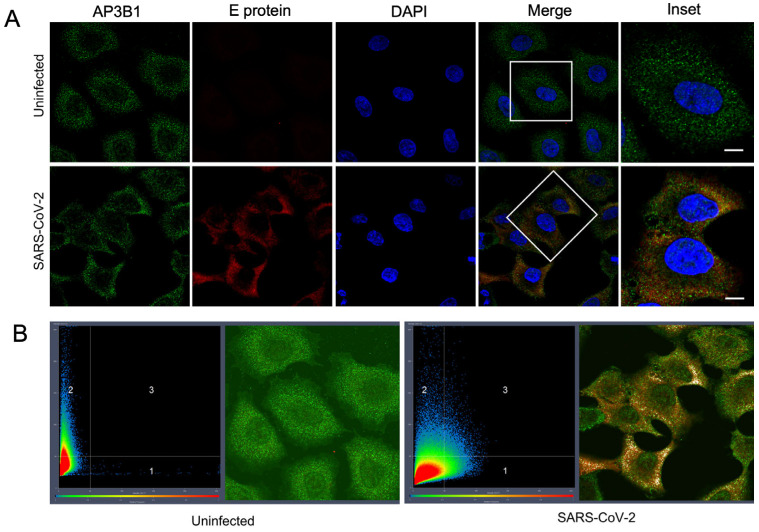
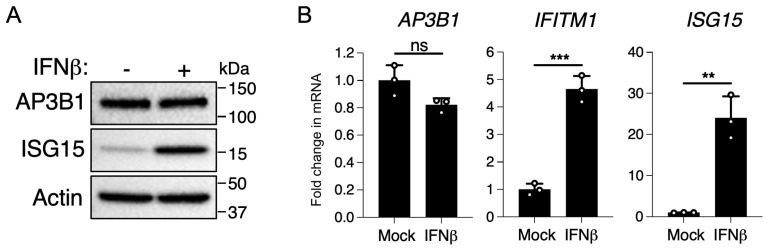
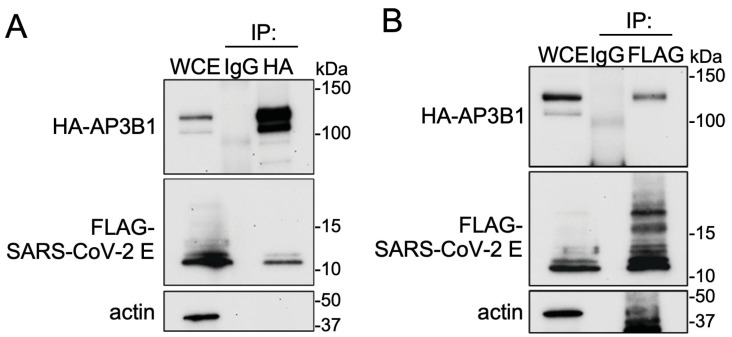
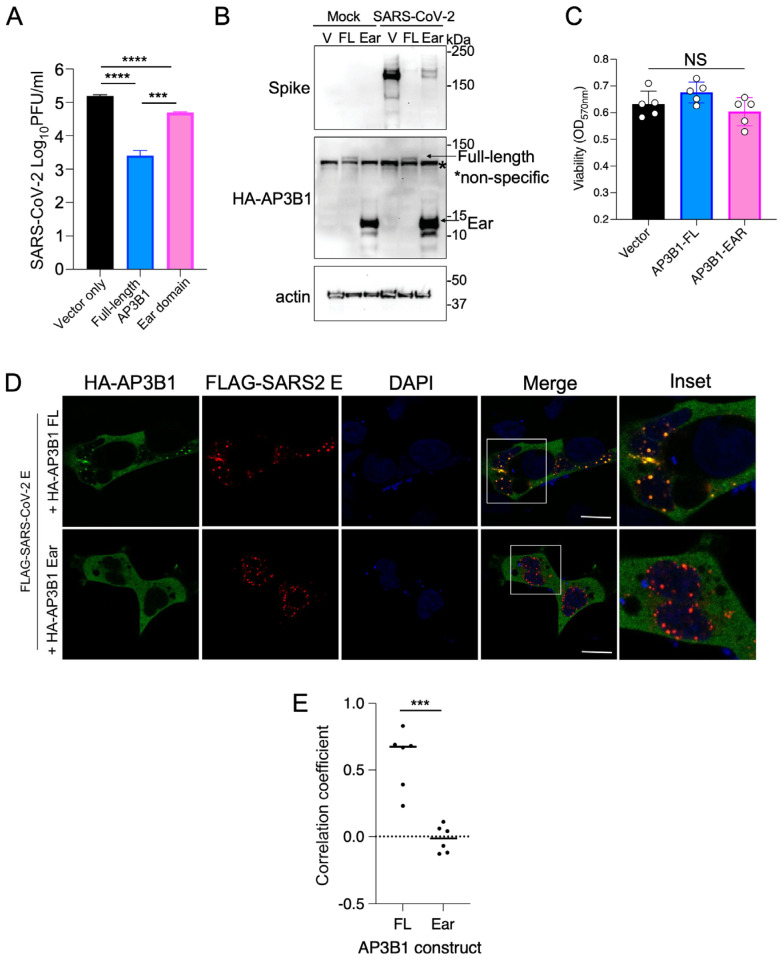
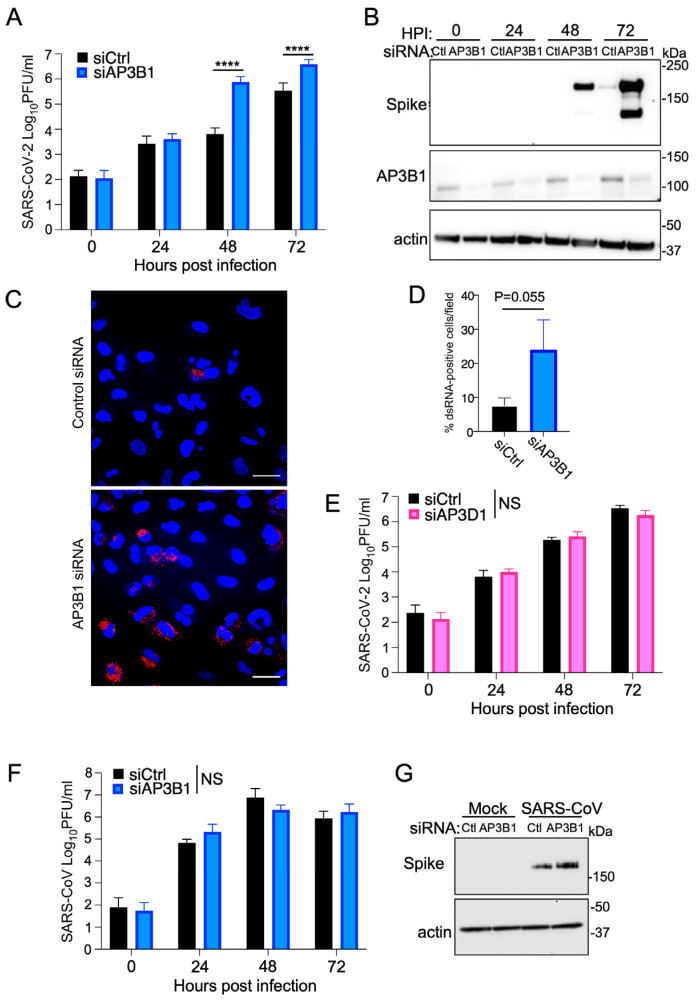
The unprecedented research effort associated with the emergence of severe acute respiratory syndrome coronavirus-2 (SARS-CoV-2) included several extensive proteomic studies that identified host proteins that interact with individual viral gene products. However, in most cases, the consequences of those virus-host interactions for virus replication were not experimentally pursued, which is a necessary step in determining whether the interactions represent pro- or anti-viral events. One putative interaction commonly identified in multiple studies was between the host adaptor protein complex 3 (AP-3) subunit B1 (AP3B1) and the SARS-CoV-2 envelope protein (E). AP3B1 is one subunit of AP-3 required for the biogenesis of lysosomal-related organelles (LROs), and its function impacts important disease processes including inflammation and vascular health. Thus, interactions between AP3B1 and SARS-CoV-2 might influence the clinical outcomes of infection. To determine if AP3B1 has a role in the SARS-CoV-2 replication cycle, we first confirmed the interaction in virus-infected cells using immunoprecipitation (IP) and immunofluorescence assays (IFA). AP3B1 is required by multiple viruses to aid in the replication cycle and therefore may be a therapeutic target. However, we found that the overexpression of AP3B1 suppressed SARS-CoV-2 replication, whereas the siRNA-mediated depletion of AP3B1 increased the release of infectious virus, suggesting an antiviral role for AP3B1. Together, our findings suggest that AP3B1 is an intrinsic barrier to SARS-CoV-2 replication through interactions with the viral E protein. Our work justifies further investigations of LRO trafficking in SARS-CoV-2 target cells and their role in viral pathogenesis.
与严重急性呼吸综合征冠状病毒 2(SARS-CoV-2)的出现相关的前所未有的研究工作包括几项广泛的蛋白质组学研究,这些研究确定了与单个病毒基因产物相互作用的宿主蛋白。然而,在大多数情况下,这些病毒-宿主相互作用对病毒复制的后果并未通过实验来探索,这是确定相互作用是促进病毒还是抑制病毒事件的必要步骤。在多项研究中通常会发现一种假定的相互作用,即宿主衔接蛋白复合物 3(AP-3)亚基 B1(AP3B1)与 SARS-CoV-2 包膜蛋白(E)之间的相互作用。AP3B1 是 AP-3 的一个亚基,是溶酶体相关细胞器(LRO)发生所必需的,其功能影响包括炎症和血管健康在内的重要疾病过程。因此,AP3B1 与 SARS-CoV-2 之间的相互作用可能会影响感染的临床结果。为了确定 AP3B1 是否在 SARS-CoV-2 复制周期中起作用,我们首先使用免疫沉淀(IP)和免疫荧光分析(IFA)在感染病毒的细胞中证实了这种相互作用。AP3B1 被多种病毒所需以帮助复制周期,因此可能是一个治疗靶标。然而,我们发现 AP3B1 的过表达抑制了 SARS-CoV-2 的复制,而 AP3B1 的 siRNA 介导的耗竭增加了感染性病毒的释放,表明 AP3B1 具有抗病毒作用。总之,我们的发现表明,AP3B1 通过与病毒 E 蛋白的相互作用,成为 SARS-CoV-2 复制的内在障碍。我们的工作证明了进一步研究 SARS-CoV-2 靶细胞中 LRO 运输及其在病毒发病机制中的作用是合理的。