World Health Organization Lao PDR, Vientiane, Lao People's Democratic Republic
World Health Organization Lao PDR, Vientiane, Lao People's Democratic Republic.
BMJ Glob Health. 2024 Sep 28;9(9):e015409. doi: 10.1136/bmjgh-2024-015409.
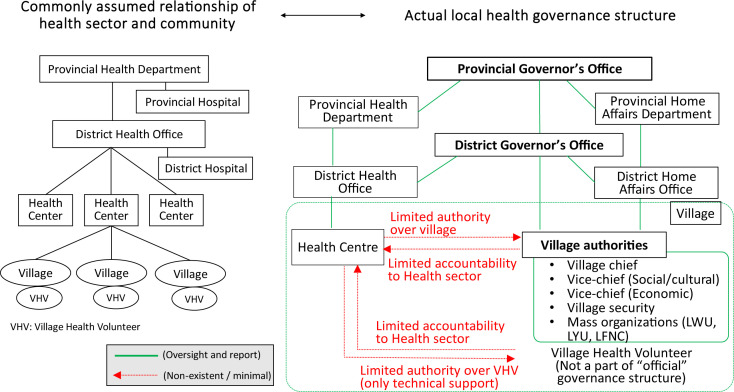
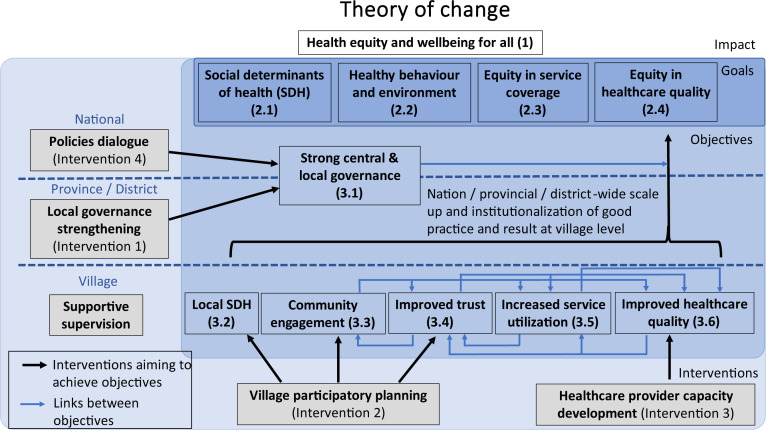
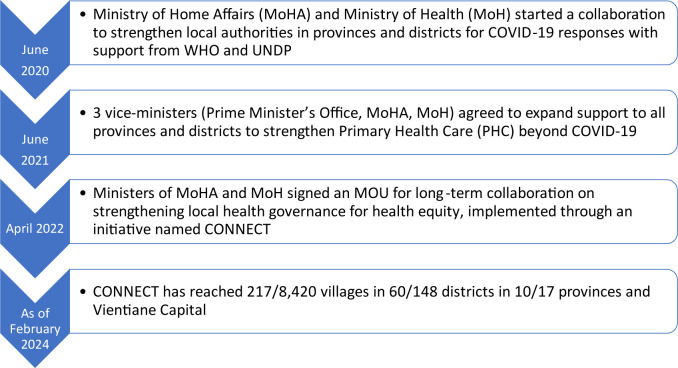
Community engagement and local governance are important components of health interventions aiming to empower local populations. Yet, there is limited evidence on how to effectively engage with communities and codevelop interventions, especially in Southeast Asian contexts. Despite rapid progress, the Lao People's Democratic Republic (Lao PDR) still has high maternal and child mortality, with essential service coverage showing significant disparities across socioeconomic strata. Long-standing challenges in community health were exacerbated by the COVID-19 pandemic and reinforced by poor trust between users and health providers. However, the pandemic also provided an opportunity to develop approaches for enhanced community engagement and local governance capacity to tackle health inequities. The Community Network Engagement for Essential Healthcare and COVID-19 Responses through Trust (CONNECT) Initiative, developed by the Lao PDR government, WHO and partners, has resulted in initial positive outcomes in community health such as increased vaccination uptake, facility births and trust in health providers. This case study describes the iterative, adaptive process by which the CONNECT Initiative was developed, and how the core components, key stakeholders, theory of change and evaluation framework evolved from grounded observations and hypotheses. Lessons learnt include (1) awareness of entry points and existing structures to strengthen local governance for health through mutually beneficial intersectoral collaboration; (2) building relationships and trust with an adaptive, grounds-up approach for sustainability and scalability. As a model which can be adapted to other settings, this case study provides evidence on how to engage with communities, strengthen local governance and codevelop interventions towards greater health equity.
社区参与和地方治理是旨在增强地方民众权能的卫生干预措施的重要组成部分。然而,在如何有效地与社区接触并共同制定干预措施方面,尤其是在东南亚背景下,证据有限。尽管老挝人民民主共和国(老挝)取得了快速进展,但孕产妇和儿童死亡率仍然很高,基本服务覆盖范围在社会经济阶层之间存在显著差异。长期存在的社区卫生挑战因新冠肺炎疫情而加剧,并因用户与卫生提供者之间信任度低而加剧。然而,疫情也为增强社区参与和地方治理能力以解决卫生不平等问题提供了机会。老挝政府、世界卫生组织及其合作伙伴制定的“通过信任促进基本医疗保健和新冠肺炎应对的社区网络参与”倡议(CONNECT 倡议),在社区卫生方面取得了初步积极成果,如增加疫苗接种率、在医疗设施分娩和对卫生提供者的信任。本案例研究描述了 CONNECT 倡议的迭代、适应性发展过程,以及核心组成部分、主要利益攸关方、变革理论和评估框架如何从实地观察和假设中演变而来。经验教训包括:(1) 通过互利的跨部门合作,认识到加强卫生地方治理的切入点和现有结构;(2) 采用适应性、自下而上的方法建立关系和信任,以实现可持续性和可扩展性。作为一种可以适应其他环境的模式,本案例研究提供了有关如何与社区接触、加强地方治理和共同制定干预措施以实现更大程度的卫生公平的证据。