Mastroiacovo Giorgio, Pirola Sergio, Sciarra Luigi, Rosati Fabrizio, Petrungaro Mattia, Nanci Giuseppe, Fileccia Daniele, Bonomi Alice, Tondo Claudio, Polvani Gianluca
Department of Cardiovascular Surgery, IRCCS Centro Cardiologico Monzino, Milan, Italy.
Department of Cardiology, Policlinic Casilino, Rome, Italy.
J Cardiovasc Electrophysiol. 2024 Dec;35(12):2296-2303. doi: 10.1111/jce.16413. Epub 2024 Sep 29.
Postoperative atrial fibrillation (POAF) is the most frequent cardiac arrhythmia following cardiac operations. It has been associated with an increased risk of postoperative cerebrovascular complications, morbidity and mortality. The aim of this study is to evaluate if the type of venous cannulation to institute the cardiopulmonary bypass (CPB) during major cardiac surgery procedures can influence the rate of POAF and late FA onset.
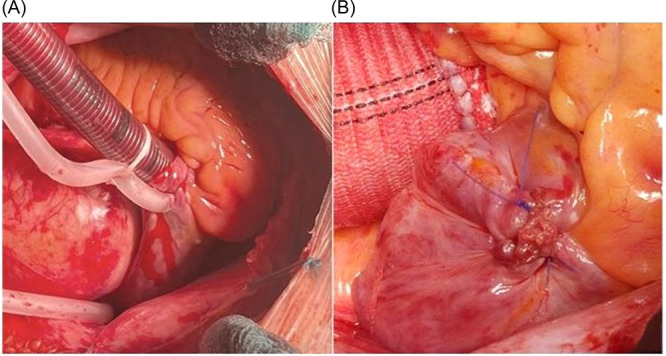
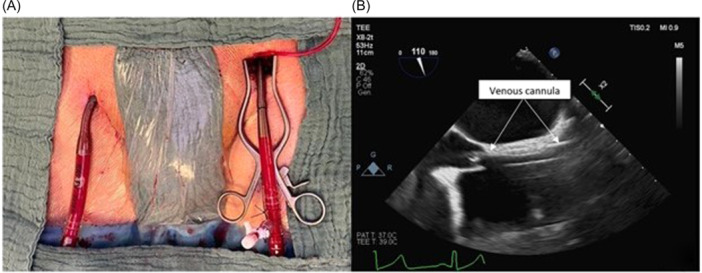
We collected data from 2087 consecutive patients who have been operated at our Institution from January 2016 to December 2018. To obtain two homogenous groups we performed a propensity match analyzes: Group 1 for whom the blood drain of the CPB has been granted via peripheral cannulation (PC) through the right common femoral vein and Group 2 with patients who underwent central cannulation (CC) with insertion of a drainage cannula in the right atrium or in the superior and inferior vein cava.
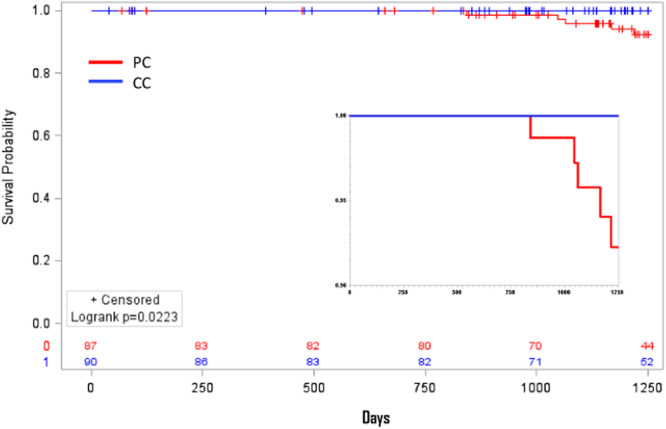
POAF has been observed as statistically similar between the two groups. At 1250-day follow-up, While the incidence of POAF was 2.9% and 8.7% in the PC and CC groups, respectively (p = .04).
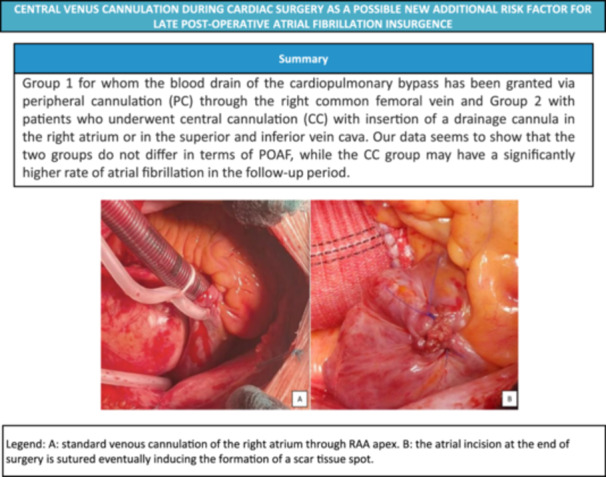
our data seems to show that the two groups do not differ in terms of POAF, while the CC group may have a significantly higher rate of atrial fibrillation in the follow-up period.
术后房颤(POAF)是心脏手术后最常见的心律失常。它与术后脑血管并发症、发病率和死亡率的风险增加有关。本研究的目的是评估在心脏大手术过程中建立体外循环(CPB)时静脉插管的类型是否会影响POAF的发生率和晚期房颤的发生。
我们收集了2016年1月至2018年12月在我院连续接受手术的2087例患者的数据。为了获得两个同质组,我们进行了倾向匹配分析:第1组通过右股总静脉经外周插管(PC)进行CPB的血液引流,第2组为在右心房或上下腔静脉插入引流管进行中心插管(CC)的患者。
两组之间的POAF在统计学上相似。在1250天的随访中,PC组和CC组的POAF发生率分别为2.9%和8.7%(p = 0.04)。
我们的数据似乎表明两组在POAF方面没有差异,而CC组在随访期间房颤发生率可能明显更高。