
从多元迷走神经理论视角看肠-脑交互障碍
Disorders of gut-brain interaction through the lens of polyvagal theory.
作者信息
Porges Stephen W
机构信息
Indiana University Bloomington, Bloomington, Indiana, USA.
University of North Carolina at Chapel Hill, Chapel Hill, North Carolina, USA.
出版信息
Neurogastroenterol Motil. 2025 Mar;37(3):e14926. doi: 10.1111/nmo.14926. Epub 2024 Sep 30.
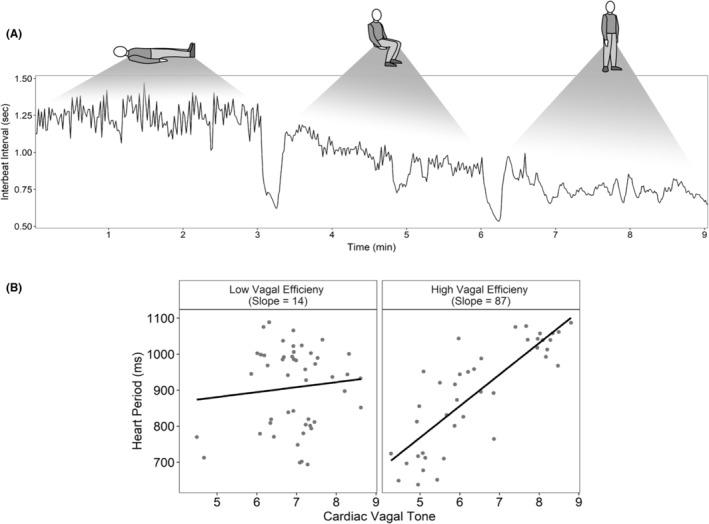
This paper introduces a metric capable of tracking a hypothetical brainstem "switching" mechanism involved in regulating the afferent influence of blood pressure on the vagal efferent control of heart rate. In theory, this metric could be applied to evaluate the "efficiency" of brainstem pathways involved in common mechanisms of autonomic function involving the vagal influences on the gut as well as the heart. Thus, by exploring the dynamic "efficiency" of the brainstem feedback circuit linking heart rate to posture, a clinically relevant index of vagal flexibility might be extracted that would provide a generalizable window into the vagal regulation of both the heart and gut. Recent research supports this contention and has documented that this metric, VE, appears to covary with disorders of the gut. Clinical application of this metric might identify individual vulnerabilities that frequently reflect symptoms assumed to have features of a dysregulated autonomic nervous system (i.e., dysautonomia). If this is confirmed by additional research, then this objective measure of neural regulation of autonomic function might provide insight into the pathogenesis of disorders of gut-brain interaction.
本文介绍了一种度量方法,该方法能够追踪一种假设的脑干“切换”机制,该机制参与调节血压对心率迷走神经传出控制的传入影响。从理论上讲,这种度量方法可用于评估脑干通路的“效率”,这些通路参与了涉及迷走神经对肠道和心脏影响的自主功能共同机制。因此,通过探索将心率与姿势联系起来的脑干反馈回路的动态“效率”,可能会提取出一个与临床相关的迷走神经灵活性指标,该指标将为心脏和肠道的迷走神经调节提供一个可推广的窗口。最近的研究支持这一观点,并已证明该度量指标VE似乎与肠道疾病相关。该度量方法的临床应用可能会识别出个体易感性,这些易感性通常反映出被认为具有自主神经系统调节异常(即自主神经功能障碍)特征的症状。如果这一点得到更多研究的证实,那么这种自主神经功能神经调节的客观测量方法可能会为肠脑相互作用障碍的发病机制提供见解。
 Zotero 插件