Jia Qi, Young Drew, Zhang Qixin, Sieburth Derek
Development, Stem Cells and Regenerative Medicine PhD program, Keck School of Medicine, University of Southern California, Los Angeles, CA 90033.
Neuromedicine Graduate Program, University of Southern California, Los Angeles, CA 90089.
bioRxiv. 2024 Sep 22:2024.04.03.587937. doi: 10.1101/2024.04.03.587937.
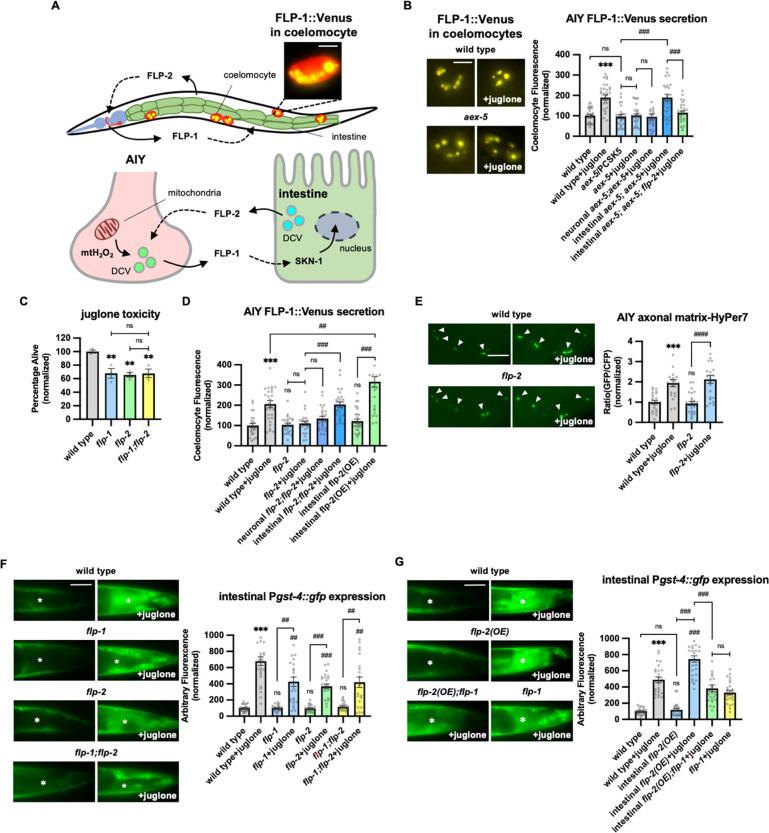
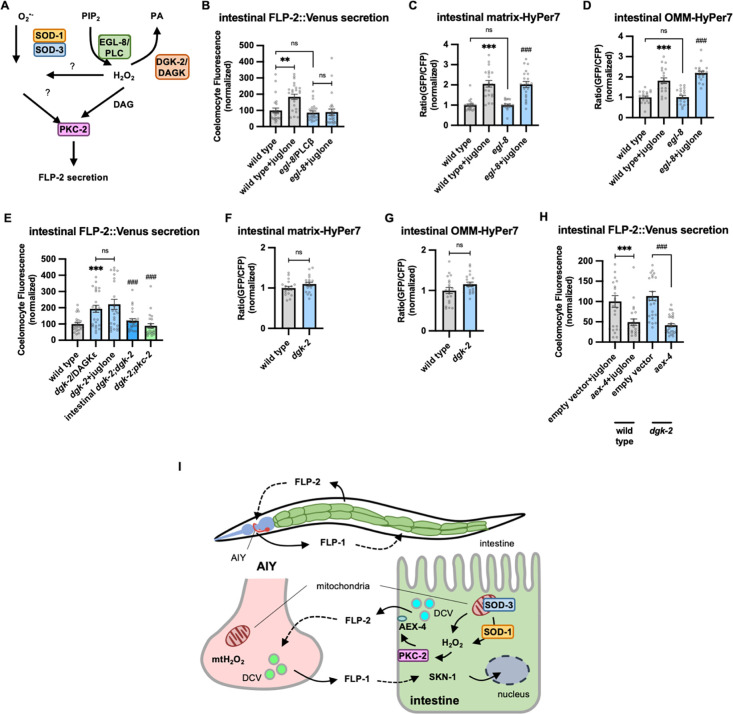
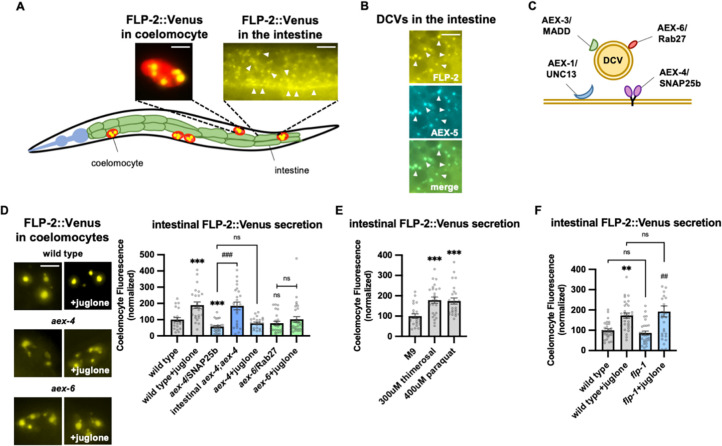
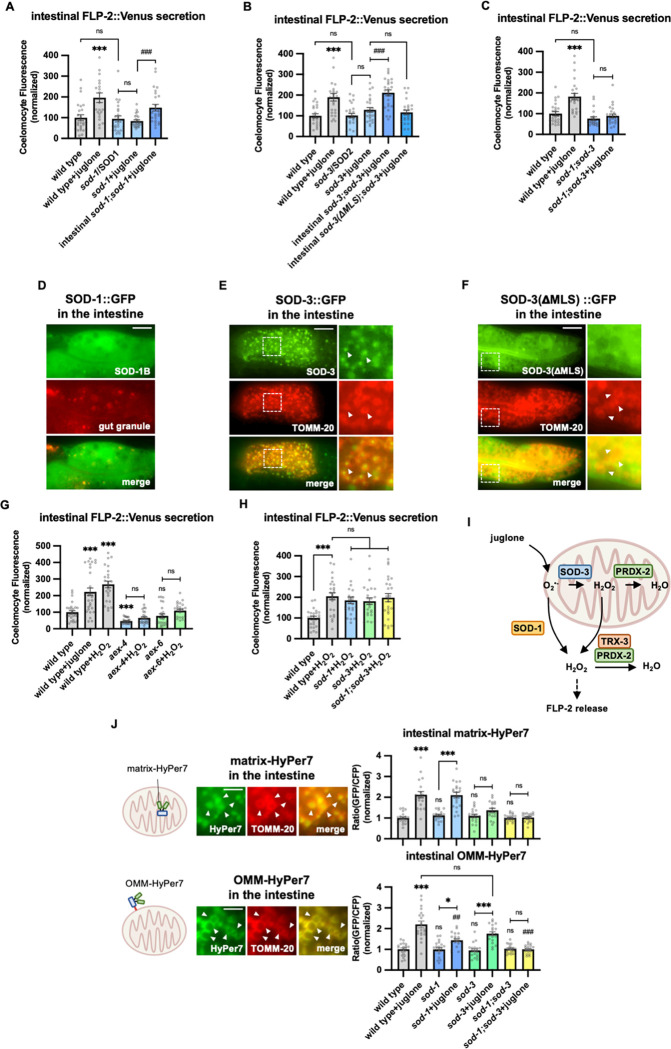
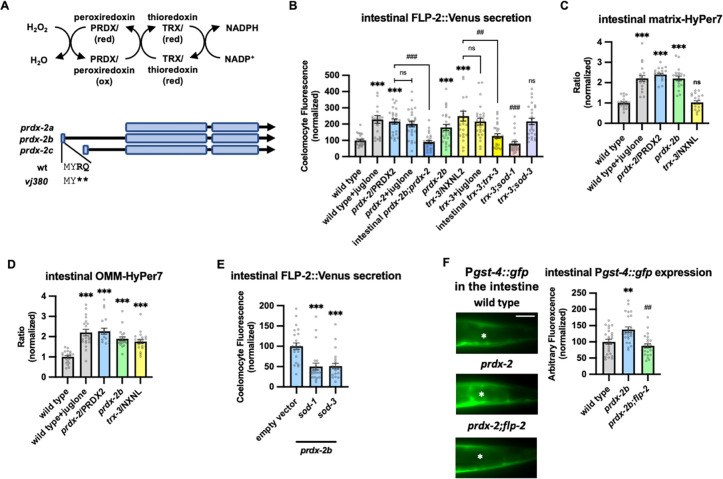
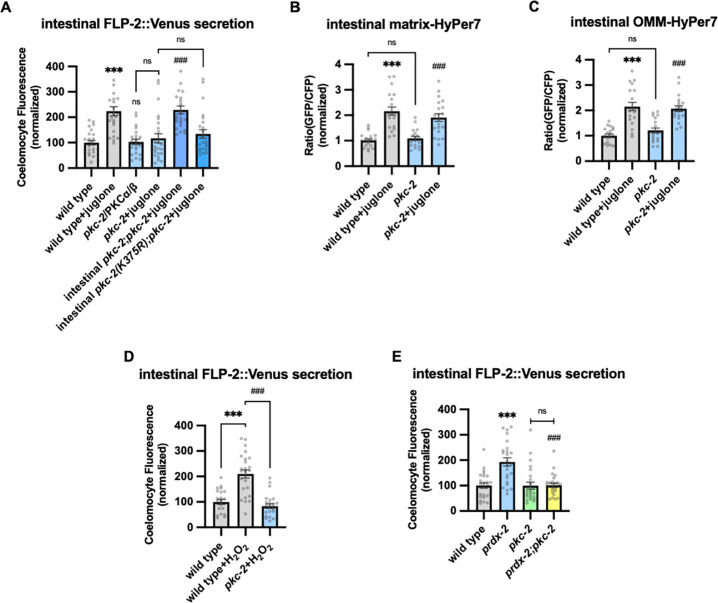
The gut-brain axis mediates bidirectional signaling between the intestine and the nervous system and is critical for organism-wide homeostasis. Here we report the identification of a peptidergic endocrine circuit in which bidirectional signaling between neurons and the intestine potentiates the activation of the antioxidant response in in the intestine. We identify a FMRF-amide-like peptide, FLP-2, whose release from the intestine is necessary and sufficient to activate the intestinal oxidative stress response by promoting the release of the antioxidant FLP-1 neuropeptide from neurons. FLP-2 secretion from the intestine is positively regulated by endogenous hydrogen peroxide (HO) produced in the mitochondrial matrix by /superoxide dismutase, and is negatively regulated by /peroxiredoxin, which depletes HO in both the mitochondria and cytosol. HO promotes FLP-2 secretion through the DAG and calciumdependent protein kinase C family member and by the SNAP25 family member in the intestine. Together, our data demonstrate a role for intestinal HO in promoting inter-tissue antioxidant signaling through regulated neuropeptide-like protein exocytosis in a gut-brain axis to activate the oxidative stress response.
肠-脑轴介导肠道与神经系统之间的双向信号传递,对机体整体内稳态至关重要。在此,我们报告鉴定出一种肽能内分泌回路,其中神经元与肠道之间的双向信号传递增强了肠道内抗氧化反应的激活。我们鉴定出一种类FMRF酰胺肽FLP-2,其从肠道释放对于通过促进神经元释放抗氧化FLP-1神经肽来激活肠道氧化应激反应是必要且充分的。肠道中FLP-2的分泌受到线粒体基质中由超氧化物歧化酶产生的内源性过氧化氢(H₂O₂)的正调控,并受到过氧化物酶的负调控,过氧化物酶会消耗线粒体和细胞质中的H₂O₂。H₂O₂通过二酰基甘油和钙依赖性蛋白激酶C家族成员以及肠道中的SNAP25家族成员促进FLP-2的分泌。总之,我们的数据证明了肠道H₂O₂在通过肠-脑轴中受调控的神经肽样蛋白胞吐作用促进组织间抗氧化信号传递以激活氧化应激反应中的作用。