Chew Lindsey A, Grigsby Daniel, Hester C Garren, Amason Joshua, McPherson W Kyle, Flynn Edward J, Visel Meike, Flannery John G, Rickman Catherine Bowes
Department of Ophthalmology, Duke Eye Center, Duke University Medical Center, Durham, NC 27710.
Department of Cell Biology, Duke University Medical Center, Durham, NC 27710.
bioRxiv. 2024 Sep 21:2024.09.17.613471. doi: 10.1101/2024.09.17.613471.
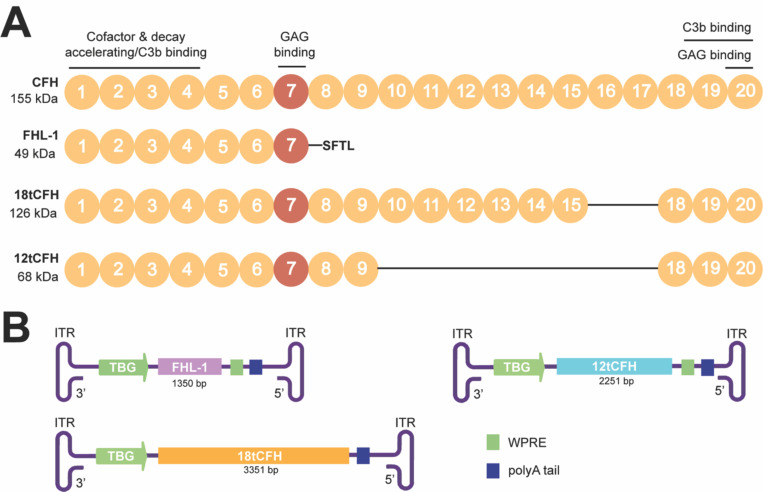
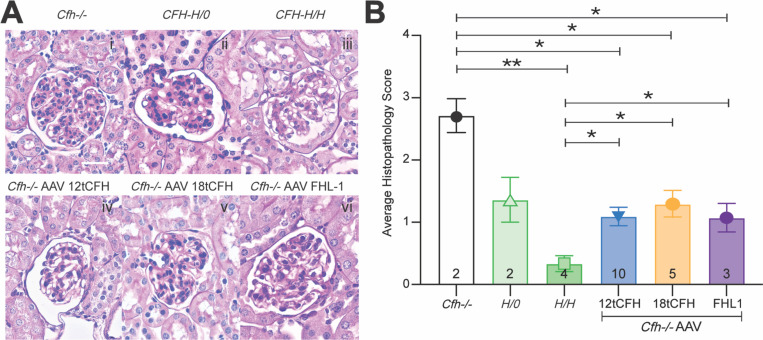
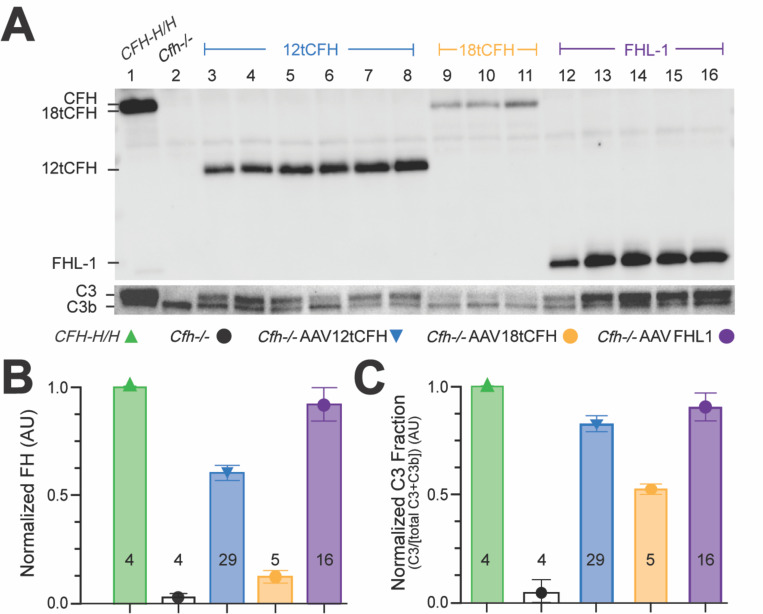
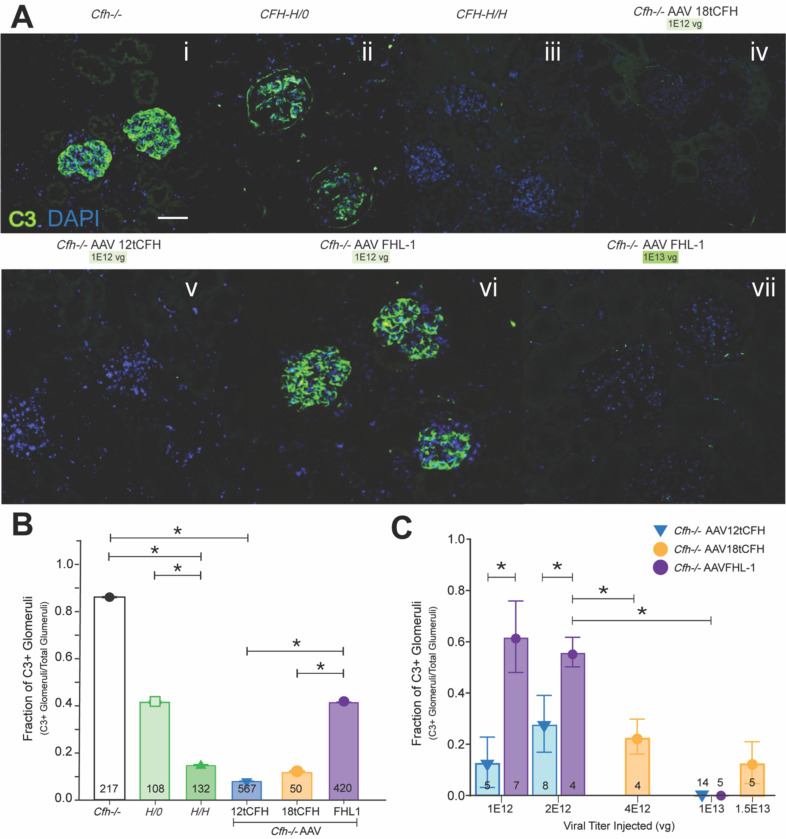
Patients with both age-related macular degeneration (AMD) and C3 glomerulonephritis (C3G) are challenged by the absence of effective therapies to reverse and eliminate their disease burden. Capitalizing on complement dysregulation as both a significant risk factor for AMD and the known pathophysiology of C3G, we investigated the potential for adeno-associated virus (AAV) delivery of complement factor H (CFH) to rescue C3G in a -/- mouse model of C3G. While past efforts to treat C3G using exogenous human CFH resulted in limited success before immune rejection led to a foreign protein response, our findings demonstrate the capacity for long-term AAV-mediated delivery of truncated CFH (tCFH) to restore inhibition of the alternative pathway of complement and ultimately reverse C3G without immune rejection. Comparing results from the administration of several tCFH vectors also revealed significant differences in their relative efficiency and efficacy. These discoveries pave the way for subsequent development of AAV-mediated tCFH replacement therapy for patients with C3G, while simultaneously demonstrating proof of concept for a parallel AAV-mediated tCFH gene augmentation therapy for patients with AMD.
患有年龄相关性黄斑变性(AMD)和C3肾小球肾炎(C3G)的患者面临着缺乏有效疗法来逆转和消除其疾病负担的挑战。鉴于补体失调既是AMD的一个重要风险因素,也是C3G已知的病理生理学机制,我们研究了在C3G的-/-小鼠模型中,通过腺相关病毒(AAV)递送补体因子H(CFH)来挽救C3G的潜力。虽然过去使用外源性人CFH治疗C3G的努力在免疫排斥导致外源蛋白反应之前取得的成功有限,但我们的研究结果表明,长期AAV介导的截短型CFH(tCFH)递送能够恢复对补体替代途径的抑制,并最终在无免疫排斥的情况下逆转C3G。比较几种tCFH载体给药的结果还发现了它们相对效率和效力的显著差异。这些发现为后续开发用于C3G患者的AAV介导的tCFH替代疗法铺平了道路,同时也为用于AMD患者的平行AAV介导的tCFH基因增强疗法提供了概念验证。