Kavya P, Theijeswini R C, Gayathri M
Department of Bio Medical Sciences, School of Bio Sciences and Technology, Vellore Institute of Technology, Vellore, Tamil Nadu, India.
Department of Biotechnology, School of Bio Sciences and Technology, Vellore Institute of Technology, Vellore, Tamil Nadu, India.
Front Chem. 2024 Sep 13;12:1458505. doi: 10.3389/fchem.2024.1458505. eCollection 2024.
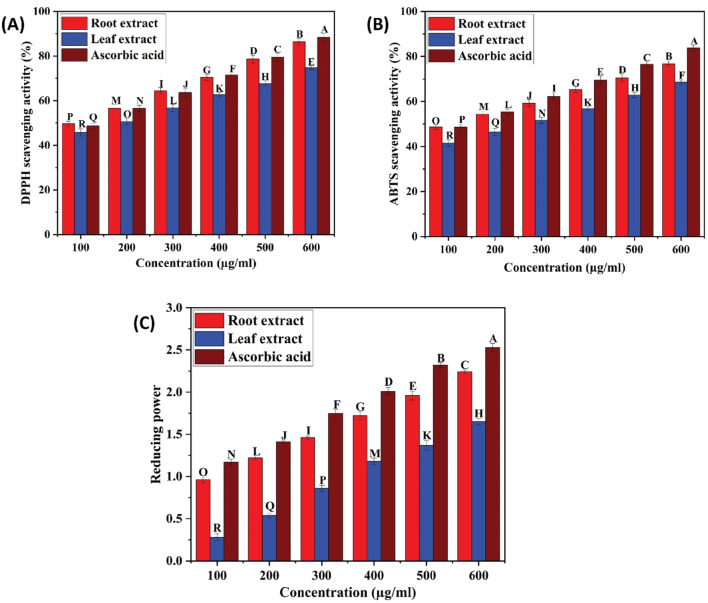
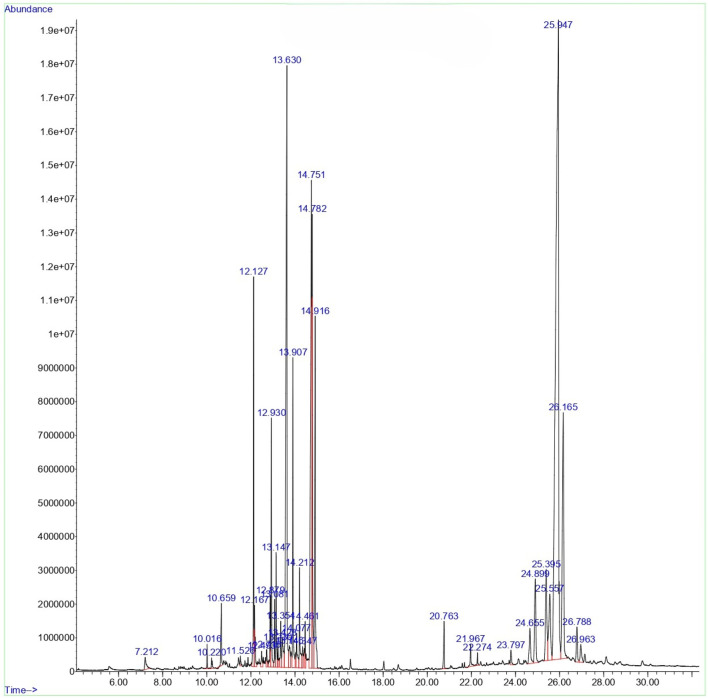
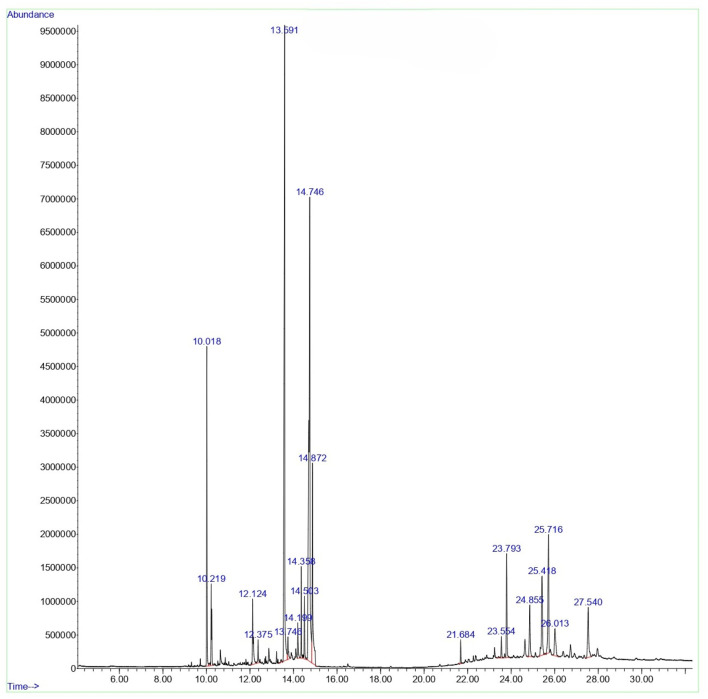
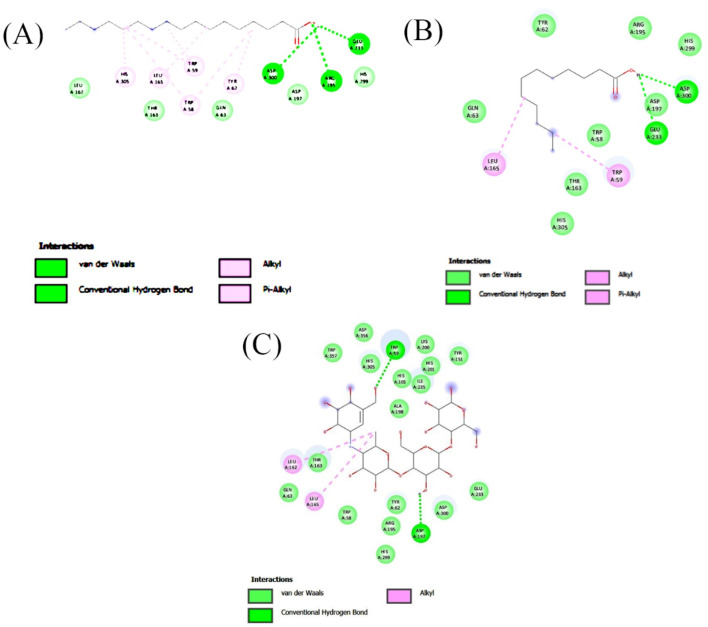
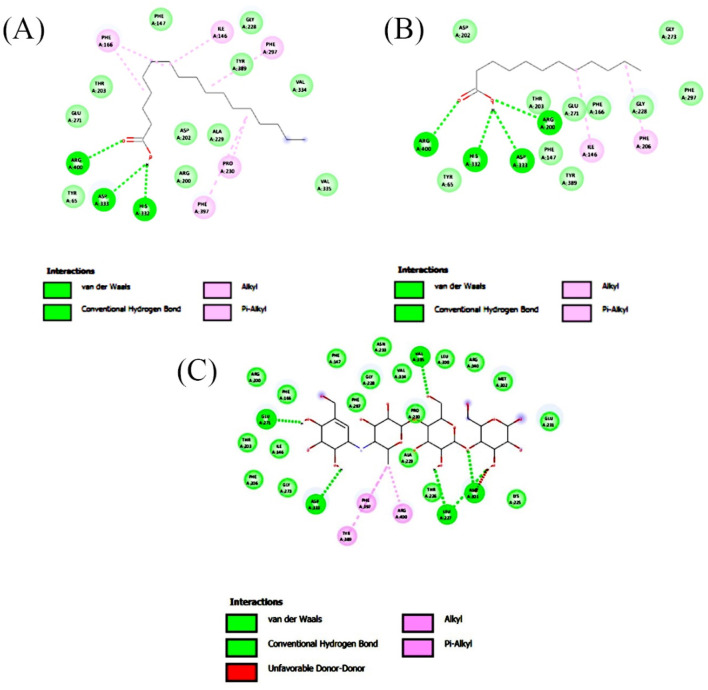
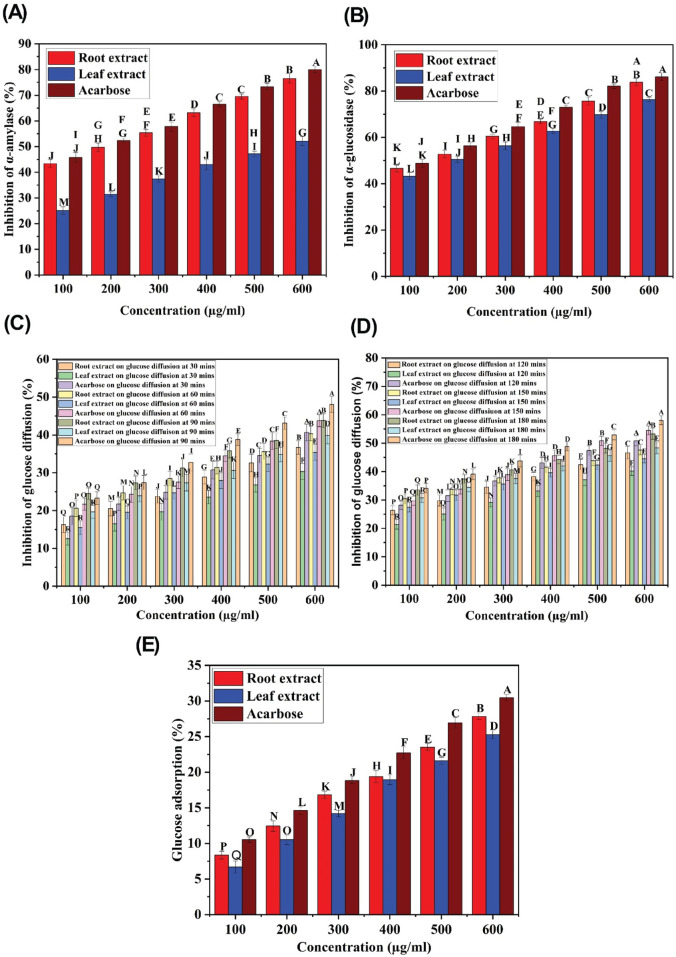
is a plant with medicinal potential traditionally used to treat different diseases. The present study aimed to determine the bioactive compounds, hypoglycemic and antioxidant potential of root and leaf. The ethyl acetate extracts of root and leaf were analyzed by GC-MS to determine the bioactive compounds. The hypoglycemic potential of the extracts was evaluated by α-amylase, α-glucosidase, glucose diffusion inhibitory assays, and glucose adsorption assay. The ethyl acetate extract of root inhibited α-amylase, α-glucosidase, and glucose diffusion in a concentration-dependent manner with IC values of 205.39 ± 0.15, 179.34 ± 0.3 and 535.248 μg/mL, respectively, and the leaf extract inhibited α-amylase and α-glucosidase enzymes with IC values of 547.99 ± 0.09, and 198.18 ± 0.25 μg/mL respectively. root and leaf extracts also improved glucose adsorption. Heptadecanoic acid and dodecanoic acid were identified as potential compounds with hypoglycemic properties through molecular docking. The extracts were also assessed for their antioxidant activity using DPPH, ABTS, and FRAP assays. root and leaf extracts were also able to scavenge DPPH radicals with IC values of 108.37 ± 0.06 and 181.79 ± 0.09 µM and ABTS radicals with IC values of 126.24 ± 0.13 and 264.409 ± 0.08 µM, respectively. The root and leaf extracts also reduced the ferricyanide complex to ferrocyanide with higher reducing powers of 2.24 ± 0.02 and 1.65 ± 0.03, respectively. The results showed that the ethyl acetate extract of root has significant antioxidant and hypoglycemic potential compared to the leaf extract. Thus, it can also be studied to isolate the potential compounds with antihyperglycemic activities.
是一种具有药用潜力的植物,传统上用于治疗各种疾病。本研究旨在确定其根和叶的生物活性化合物、降血糖和抗氧化潜力。通过气相色谱 - 质谱联用仪(GC - MS)分析根和叶的乙酸乙酯提取物,以确定生物活性化合物。通过α - 淀粉酶、α - 葡萄糖苷酶、葡萄糖扩散抑制试验和葡萄糖吸附试验评估提取物的降血糖潜力。根的乙酸乙酯提取物以浓度依赖性方式抑制α - 淀粉酶、α - 葡萄糖苷酶和葡萄糖扩散,IC值分别为205.39±0.15、179.34±0.3和535.248μg/mL,叶提取物抑制α - 淀粉酶和α - 葡萄糖苷酶的IC值分别为547.99±0.09和198.18±0.25μg/mL。根和叶提取物还改善了葡萄糖吸附。通过分子对接鉴定出十七烷酸和十二烷酸为具有降血糖特性的潜在化合物。还使用DPPH、ABTS和FRAP试验评估提取物的抗氧化活性。根和叶提取物也能够清除DPPH自由基,IC值分别为108.37±0.06和181.79±0.09μM,清除ABTS自由基的IC值分别为126.24±0.13和264.409±0.08μM。根和叶提取物还将铁氰化物络合物还原为亚铁氰化物,还原能力分别更高,为2.24±0.02和1.65±0.03。结果表明,与叶提取物相比,根的乙酸乙酯提取物具有显著的抗氧化和降血糖潜力。因此,也可以对其进行研究以分离具有抗高血糖活性的潜在化合物。