Piskovská A, Kraszewska K, Hauptman K, Chloupek J, Linhart P, Jekl V
Jekl & Hauptman Veterinary Clinic, Brno, Czechia.
Department of Pharmacology and Pharmacy, Faculty of Veterinary Medicine, VETUNI, Brno, Czechia.
Front Vet Sci. 2024 Sep 13;11:1394291. doi: 10.3389/fvets.2024.1394291. eCollection 2024.
Rat thoracic ultrasound (RATTUS) is a non-invasive, easy-to-perform method for the evaluation of the pleural space and lungs in pet rats. The aim of the article is to present species-specific differences in the sonographic diagnosis of pneumothorax (PTX) in pet rats.
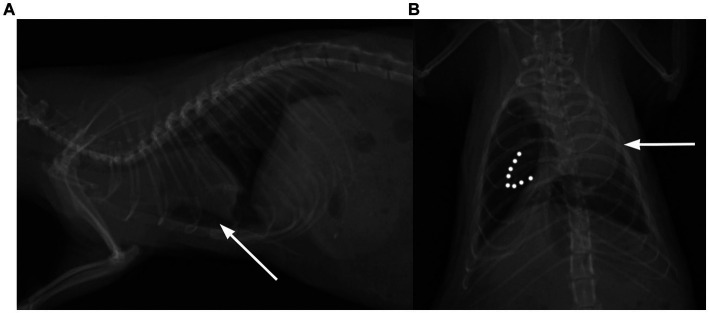
In total, 158 client-owned pet rats were examined during the period from July 2023 to January 2024. PTX was diagnosed in 20 of the examined rats (13.25%, the age of the animals ranged from 2 months to 32 months (19.08 ± 6.93 months; mean ± SD) and their body weight ranged from 97 g to 885 g (461.27 ± 138.97 g; mean ± SD). Radiographic confirmation of PTX was performed in all these 20 rats, in the control group radiography was used to confirm that PTX was not present.
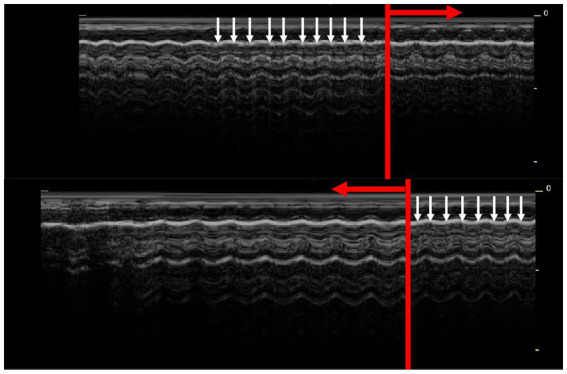
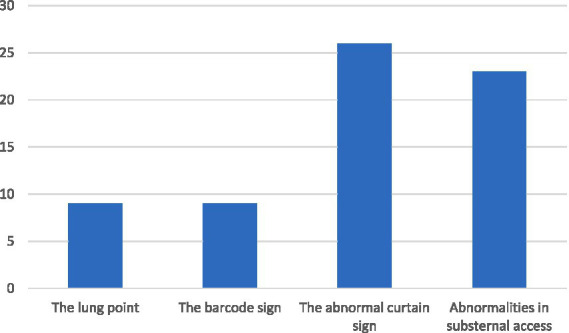
The lung point and the barcode sign was found in 7/20 animals with sensitivity of 33.3% (95% CI, 0.16-0.59) and specificity of 100% (95% CI, 0.97-1.0). The abnormal curtain sign was found in 19/20 of animals with the sensitivity of 95% (95% CI, 0.73-0.99.7) and the specificity of 89% (95% CI, 0.82-0.93). The abnormalities in the substernal access were in 17/20 of animals with the sensitivity of 85% (95% CI, 0.61-0.96) and the specificity of 71% (95% CI, 0.62-0.78).
In conclusion, RATTUS is a non-invasive method for the diagnosis of PTX in rats. Lung point and barcode sign are specific but not easily diagnosed signs. The curtain sign in RATTUS is not specific for PTX, as there are e.g. geriatric rats (rats older than 1,5 years) in which the abnormal curtain sign is visible without the presence of PTX. The presence of moderate to severe PTX can be assessed by the substernal approach based on the presence of cardiac displacement toward the collapsed lung lobe, and on evaluation of the lung inflation symmetry. This sign is not specific for PTX but in conjunction with other ultrasonic signs described makes the RATTUS a feasible tool for PTX diagnosis in rats.
大鼠胸部超声检查(RATTUS)是一种用于评估宠物大鼠胸膜腔和肺部的非侵入性、易于操作的方法。本文旨在介绍宠物大鼠气胸(PTX)超声诊断中的物种特异性差异。
在2023年7月至2024年1月期间,共检查了158只客户拥有的宠物大鼠。在检查的大鼠中有20只被诊断为气胸(13.25%),这些动物的年龄在2个月至32个月之间(19.08±6.93个月;平均值±标准差),体重在97克至885克之间(461.27±138.97克;平均值±标准差)。对所有这20只大鼠进行了气胸的X线确认,在对照组中,使用X线检查确认不存在气胸。
在20只动物中有7只发现了肺点和条形码征,敏感性为33.3%(95%可信区间,0.16 - 0.59),特异性为100%(95%可信区间,0.97 - 1.0)。在20只动物中有19只发现了异常帷幕征,敏感性为95%(95%可信区间,0.73 - 0.997),特异性为89%(95%可信区间,0.82 - 0.93)。在20只动物中有17只发现胸骨下通路异常,敏感性为85%(95%可信区间,0.61 - 0.96),特异性为71%(95%可信区间,0.62 - 0.78)。
总之,RATTUS是一种用于诊断大鼠气胸的非侵入性方法。肺点和条形码征具有特异性,但不易诊断。RATTUS中的帷幕征并非气胸所特有,例如在老年大鼠(年龄超过1.5岁)中,即使没有气胸也可见异常帷幕征。中度至重度气胸的存在可通过胸骨下途径评估,基于心脏向塌陷肺叶的移位以及肺膨胀对称性的评估。该征象并非气胸所特有,但与所描述的其他超声征象结合,使RATTUS成为诊断大鼠气胸的可行工具。