Department of Radiation Oncology of Puning People's Hospital, Department of Chemistry of Jinan University, State Key Laboratory of Bioactive Molecules and Druggalibility Assessment, MOE Key Laboratory of Tumor Molecular Biology, Jinan University, Guangdong, China.
Adv Sci (Weinh). 2024 Nov;11(44):e2403918. doi: 10.1002/advs.202403918. Epub 2024 Sep 30.
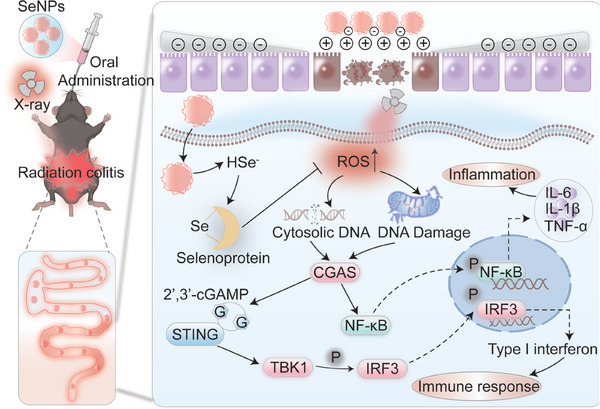
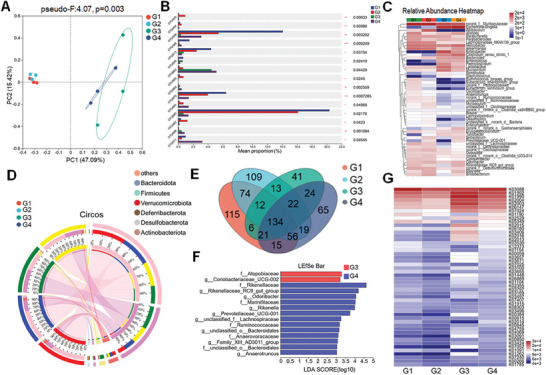
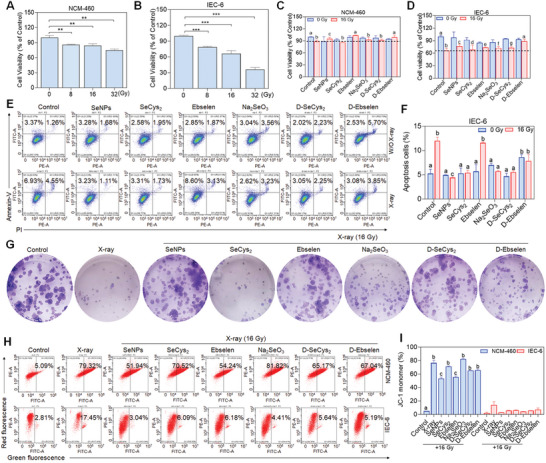
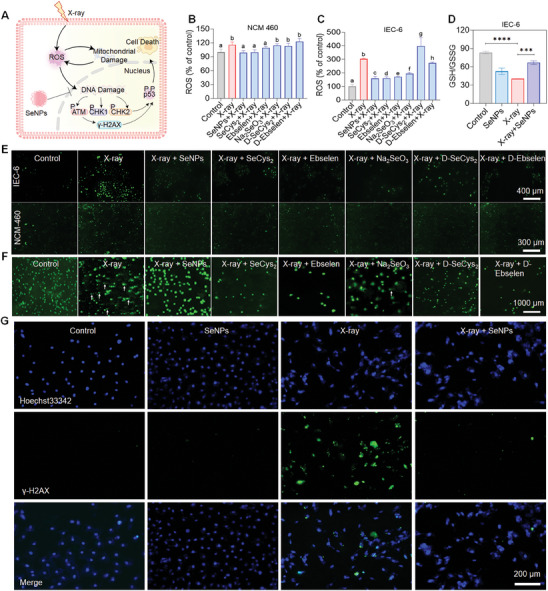
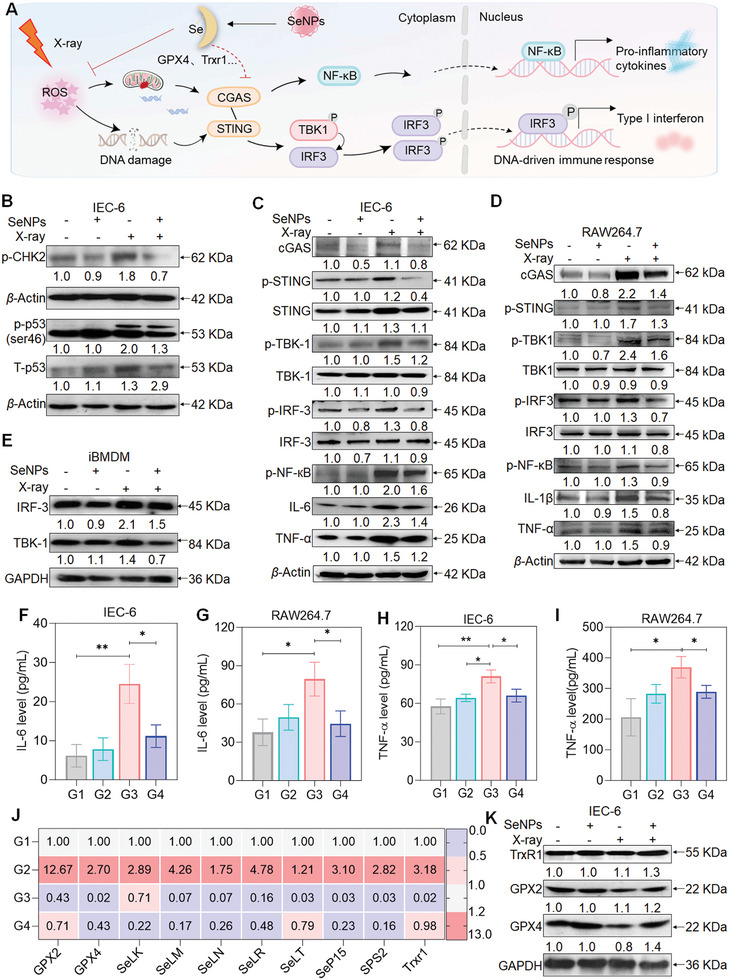
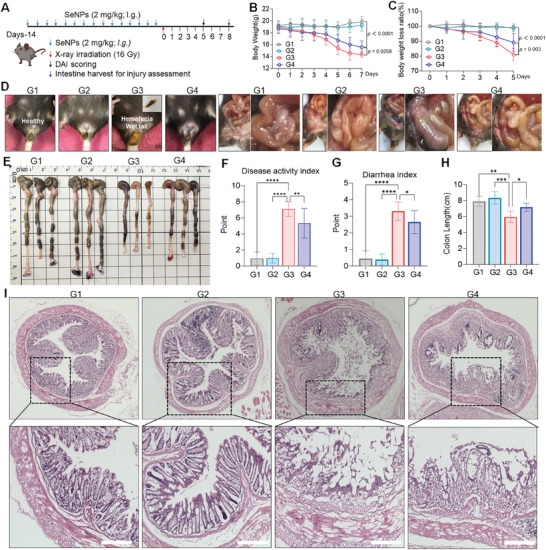
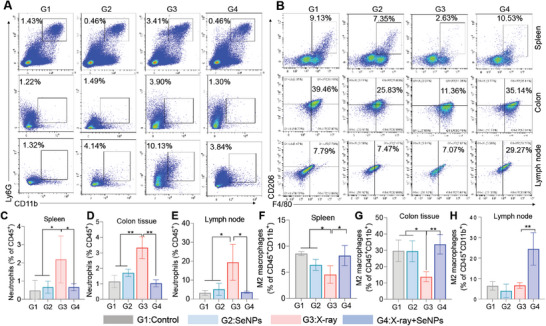
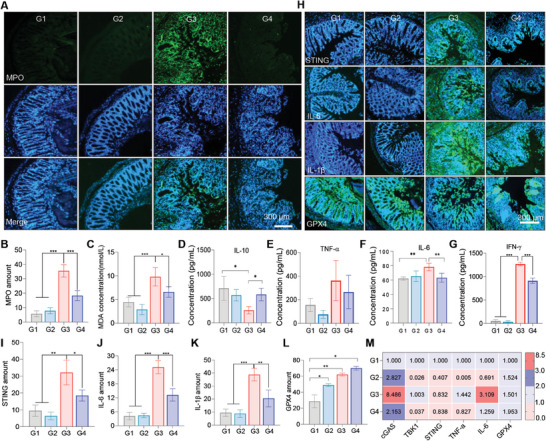
Radiation colitis is one of the most common complications in patients undergoing pelvic radiotherapy and there is no effective treatment in the clinic. Therefore, searching for effective agents for the treatment of radiation colitis is urgently needed. Herein, it is found that the essential element selenium (Se) is protective against radiation colitis through inhibiting X-ray-induced apoptosis, cell cycle arrest, and inflammation with the involvement of balancing the generation of reactive oxygen species after the irradiation. Mechanistically, Se, especially for selenium nanoparticles (SeNPs), induced selenoprotein expression and then functioned to effectively restrain DNA damage response, which reduced X-ray-induced intestinal injury. Additionally, SeNPs treatment also restrained the cyclic GMP-AMP synthas (cGAS)- stimulator of interferon genes (STING)-TBK1-IRF3 signaling pathway cascade, thereby blocking the transcription of inflammatory cytokine gene, IL-6 and TNF-α, and thus alleviating inflammation. Moreover, inducing selenoprotein expression, such as GPX4, with SeNPs in vivo can regulate intestinal microenvironment immunity and gut microbiota to attenuate radiation-induced colitis by inhibiting oxidative stress and maintaining microenvironment immunity homeostasis. Together, these results unravel a previously unidentified modulation role that SeNPs restrained radiation colitis with the involvement of inducing selenoprotein expression but suppressing cGAS-STING-TBK1-IRF3 cascade.
放射性结肠炎是盆腔放疗患者最常见的并发症之一,临床上尚无有效的治疗方法。因此,迫切需要寻找治疗放射性结肠炎的有效药物。本文发现,微量元素硒(Se)通过抑制 X 射线诱导的细胞凋亡、细胞周期停滞和炎症,在维持照射后活性氧生成平衡方面,对放射性结肠炎具有保护作用。其机制为,硒(尤其是硒纳米颗粒(SeNPs))诱导了硒蛋白的表达,从而有效地抑制了 DNA 损伤反应,减轻了 X 射线引起的肠道损伤。此外,SeNPs 处理还抑制了环鸟苷酸-腺苷酸合成酶(cGAS)-干扰素基因刺激物(STING)-T 细胞激酶 1(TBK1)-干扰素调节因子 3(IRF3)信号通路级联反应,从而阻断了炎症细胞因子基因 IL-6 和 TNF-α的转录,进而缓解炎症。此外,体内用 SeNPs 诱导硒蛋白(如 GPX4)的表达,可通过抑制氧化应激和维持微环境免疫稳态来调节肠道微环境免疫和肠道菌群,从而减轻放射性结肠炎。总之,这些结果揭示了一个以前未知的调节作用,即 SeNPs 通过诱导硒蛋白表达而抑制 cGAS-STING-TBK1-IRF3 级联反应来抑制放射性结肠炎。