Department of Pharmacology and Toxicology, Heliopolis University for Sustainable Development (HU), Cairo, Egypt.
Department of Pharmacology and Toxicology, German University in Cairo (GUC), Cairo, Egypt.
BMC Gastroenterol. 2024 Sep 30;24(1):337. doi: 10.1186/s12876-024-03413-6.
Proteoglycans are important tumor microenvironment extracellular matrix components. The regulation of key proteoglycans, such as decorin (DCN), by miRNAs has drawn attention since they have surfaced as novel therapeutic targets in cancer. Accordingly, this study aimed at identifying the impact of miR-181a in liver cancer and its regulatory role on the extracellular matrix proteoglycan, DCN, and hence on downstream oncogenes and tumor suppressor genes.
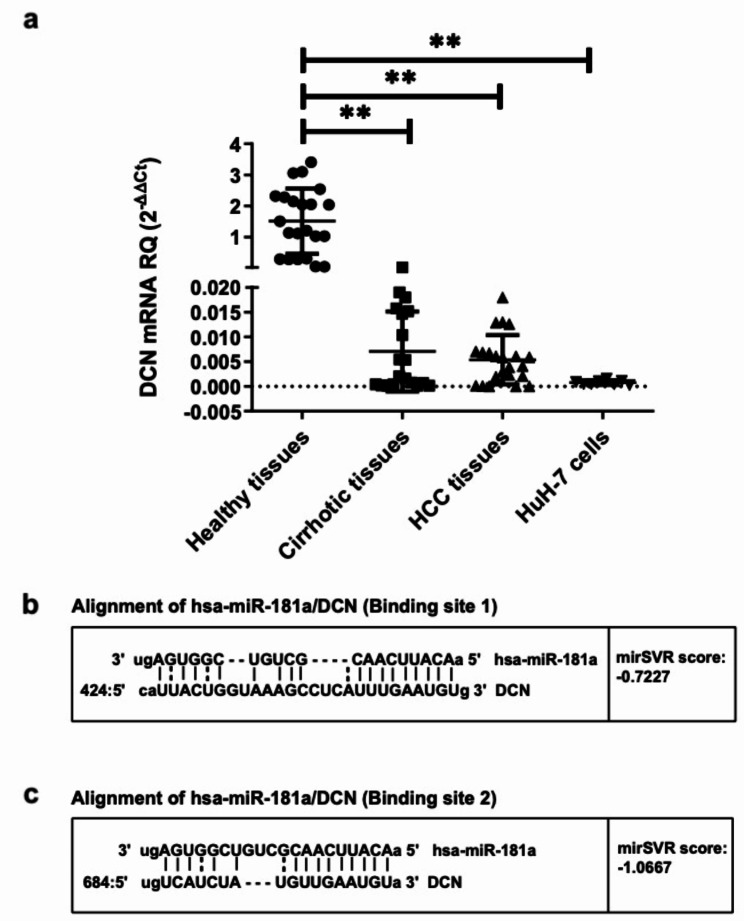
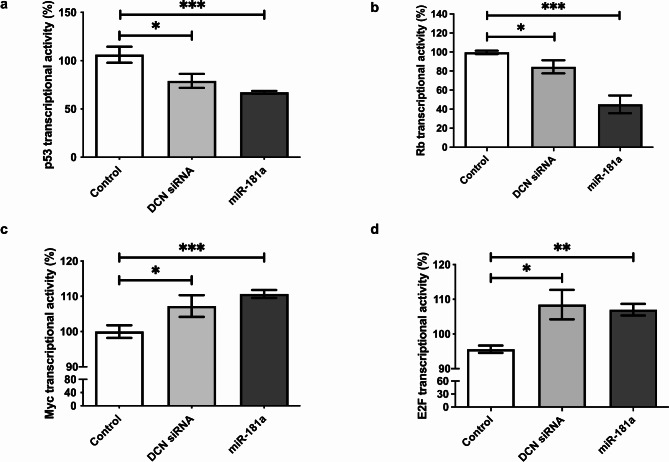
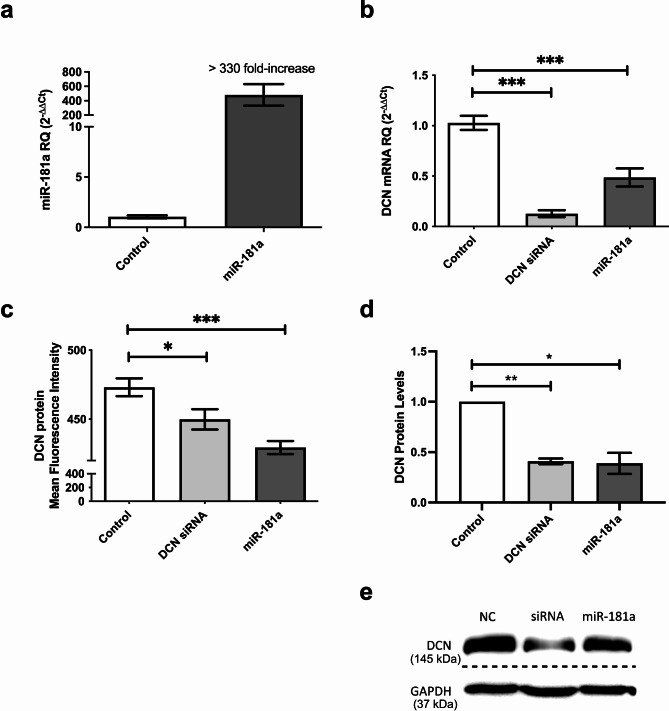
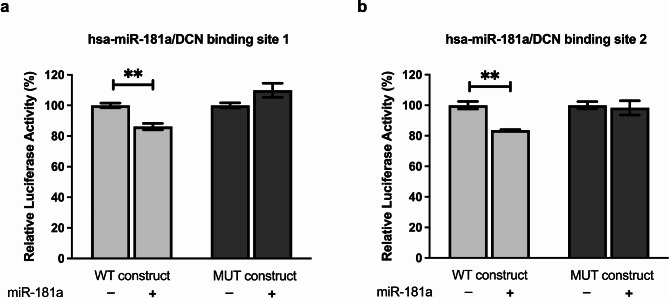
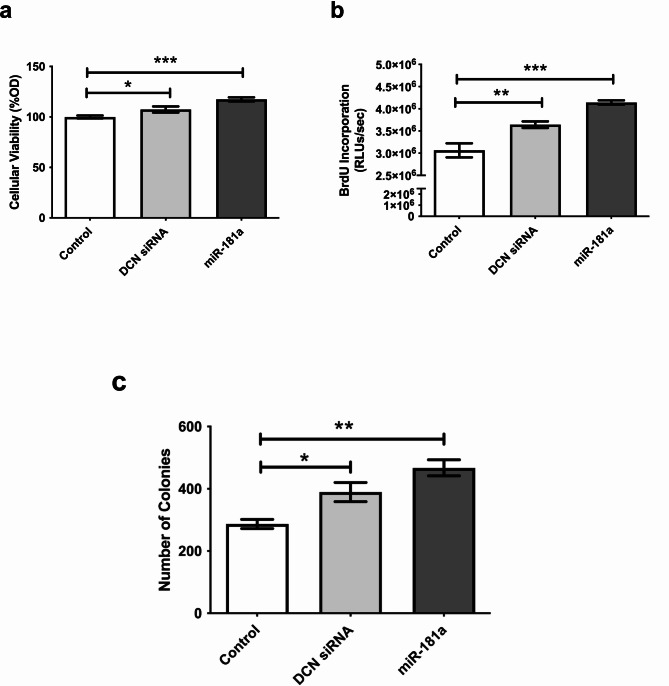
DCN was under-expressed in 22 cirrhotic and HCC liver tissues compared to that in 11 healthy tissues of liver transplantation donors. Conversely, miR-181a was over-expressed in HCC liver tissues compared to that in healthy liver tissues. In silico analysis predicted that DCN 3'UTR harbors two high-score oncomiR-181a binding regions. This was validated by pmiRGLO luciferase reporter assay. Ectopic miR-181a expression into HuH-7 cells repressed the transcript and protein levels of DCN as assessed fluorometrically and by western blotting. DCN siRNAs showed similar results to miR-181a, where they both enhanced the cellular viability, proliferation, and clonogenicity. They also increased Myc and E2F and decreased p53 and Rb signaling as assessed using reporter vectors harboring p53, Rb, Myc, and E2F response elements. Our findings demonstrated that miR-181a directly downregulated the expression of its direct downstream target DCN, which in turn affected downstream targets related to cellular proliferation and apoptosis.
To our knowledge, this is the first study to unveil the direct targeting of DCN by oncomiR-181a. We also highlighted that miR-181a affects targets related to cellular proliferation in HCC which may be partly mediated through inhibition of DCN transcription. Thus, miR-181a could be a promising biomarker for the early detection and monitoring of liver cancer progression. This would pave the way for the future targeting of the oncomiR-181a as a therapeutic approach in liver cancer, where miR-181a-based therapy approach could be potentially combined with chemotherapy and immunotherapy for the management of liver cancer.
蛋白聚糖是肿瘤微环境细胞外基质的重要组成部分。miRNA 对核心蛋白聚糖(如饰胶蛋白聚糖(DCN))的调控作用已引起关注,因为它们已成为癌症治疗的新靶点。因此,本研究旨在确定 miR-181a 在肝癌中的作用及其对细胞外基质蛋白聚糖 DCN 的调控作用,进而对下游癌基因和抑癌基因产生影响。
与 11 例肝移植供体的正常肝组织相比,22 例肝硬化和 HCC 肝组织中的 DCN 表达下调。相反,与正常肝组织相比,HCC 肝组织中 miR-181a 表达上调。生物信息学分析预测 DCN 3'UTR 含有两个高得分的 oncomiR-181a 结合区域。这通过 pmirGLO 荧光素酶报告基因检测得到了验证。在 HuH-7 细胞中外源性表达 miR-181a 可抑制 DCN 的转录和蛋白水平,通过荧光法和 Western blot 进行评估。DCN siRNA 与 miR-181a 具有相似的结果,均能增强细胞活力、增殖和集落形成能力。它们还增加了 Myc 和 E2F,降低了 p53 和 Rb 信号,使用含有 p53、Rb、Myc 和 E2F 反应元件的报告载体进行评估。我们的研究结果表明,miR-181a 直接下调其直接下游靶标 DCN 的表达,进而影响与细胞增殖和凋亡相关的下游靶标。
据我们所知,这是首次揭示 oncomiR-181a 对 DCN 的直接靶向作用。我们还强调,miR-181a 影响 HCC 中与细胞增殖相关的靶点,这可能部分是通过抑制 DCN 转录来实现的。因此,miR-181a 可能成为肝癌早期检测和监测进展的有前途的生物标志物。这将为靶向 oncomiR-181a 作为肝癌治疗方法铺平道路,miR-181a 为基础的治疗方法可能与化疗和免疫疗法相结合,用于肝癌的治疗。