Zhu Hengzhou, Zhao Wenyue, Chen Haoyan, Zhu Xiaodan, You Jianliang, Jin Chunhui
Department of Oncology, Wuxi Hospital Affiliated to Nanjing University of Chinese Medicine, Wuxi, China.
Department of Respiratory, Wuxi Hospital Affiliated to Nanjing University of Chinese Medicine, Wuxi, China.
Front Immunol. 2024 Sep 17;15:1468440. doi: 10.3389/fimmu.2024.1468440. eCollection 2024.
Hepatocellular carcinoma (HCC) is a leading cause of cancer-related mortality globally, particularly when diagnosed at an unresectable stage. Traditional treatments for advanced HCC have limited efficacy, prompting the exploration of combination therapies. This systematic review and meta-analysis evaluate the effectiveness and safety of combining PD-1/PD-L1 inhibitors with anti-angiogenic agents in patients with unresectable HCC.
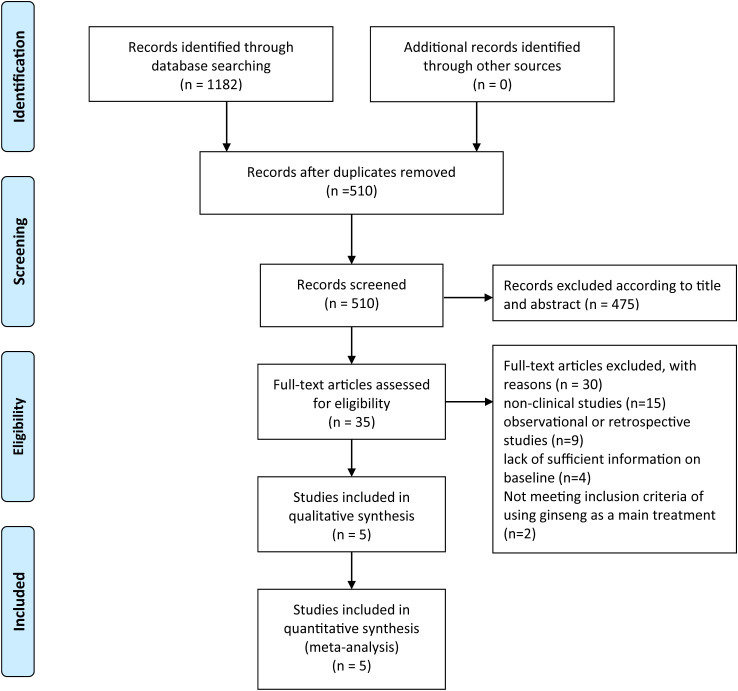
A comprehensive literature search was conducted in PubMed, Embase, Cochrane Central Register of Controlled Trials (CENTRAL), and Web of Science, including studies up to June 2024. Randomized controlled trials (RCTs) comparing combination therapy (PD-1/PD-L1 inhibitors with anti-angiogenic agents) to monotherapy or standard treatments in unresectable HCC patients were included. Data were synthesized using random-effects models, with pooled hazard ratios (HRs) for overall survival (OS) and progression-free survival (PFS), and risk ratios (RRs) for objective response rate (ORR) and adverse events (AEs).
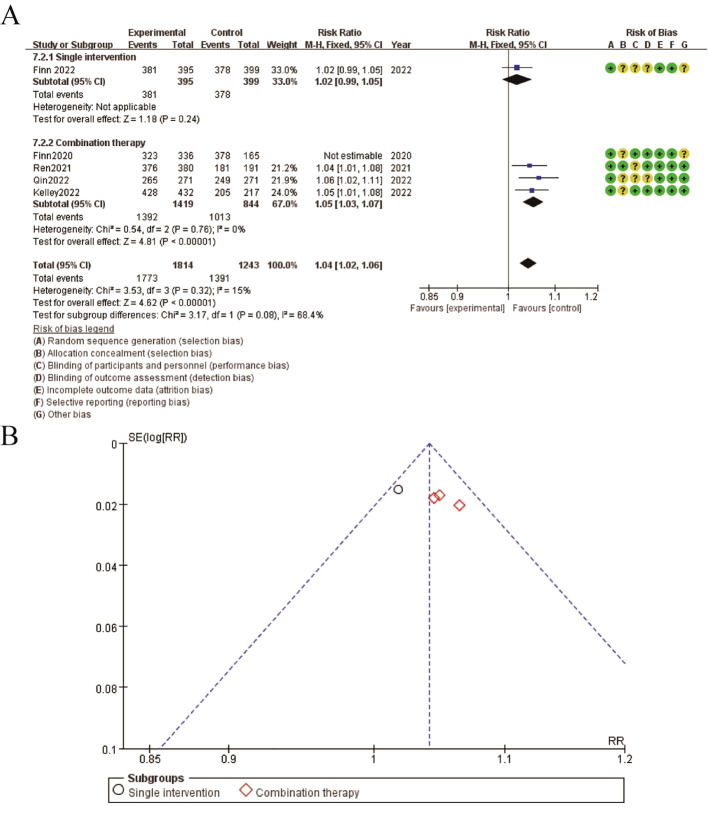
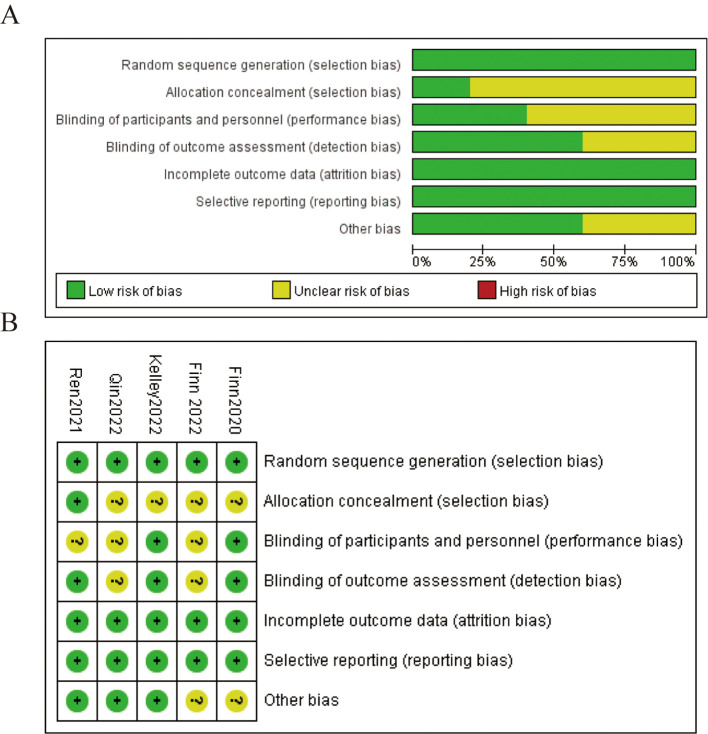
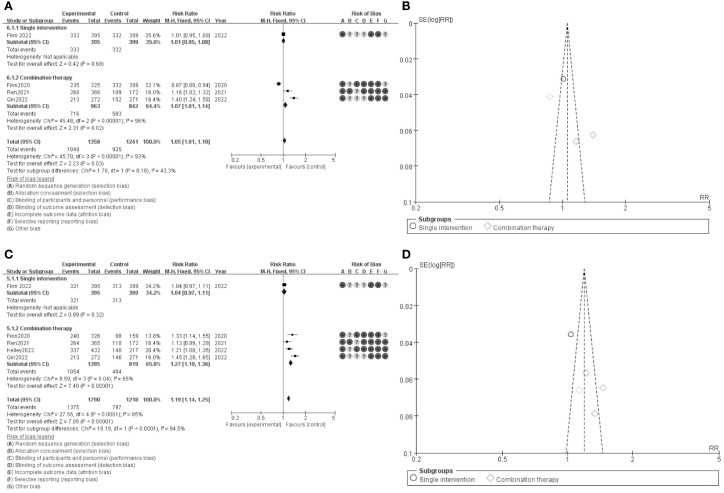
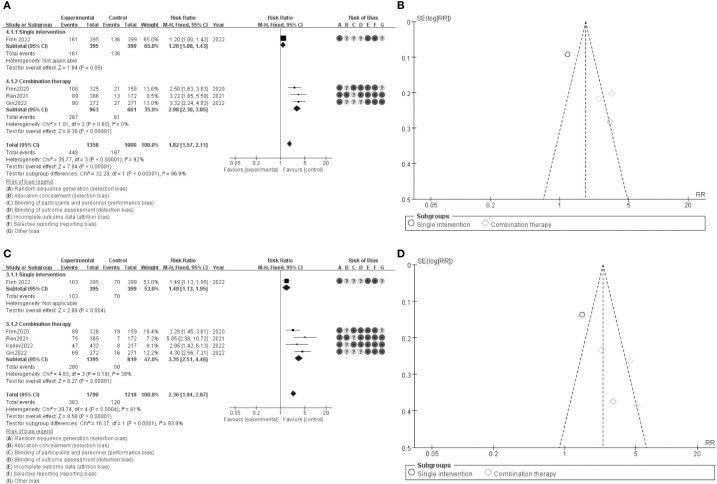
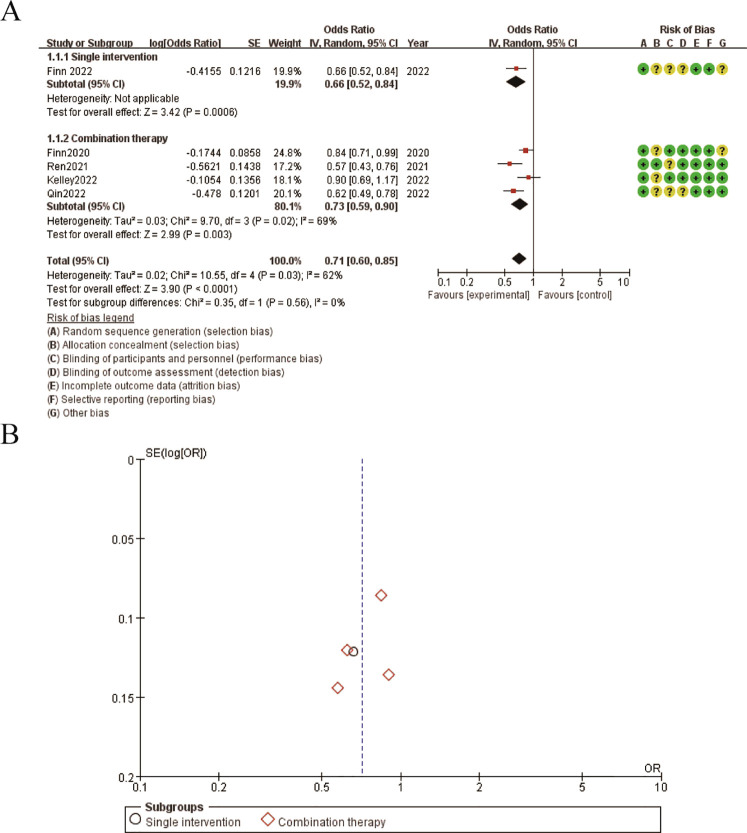
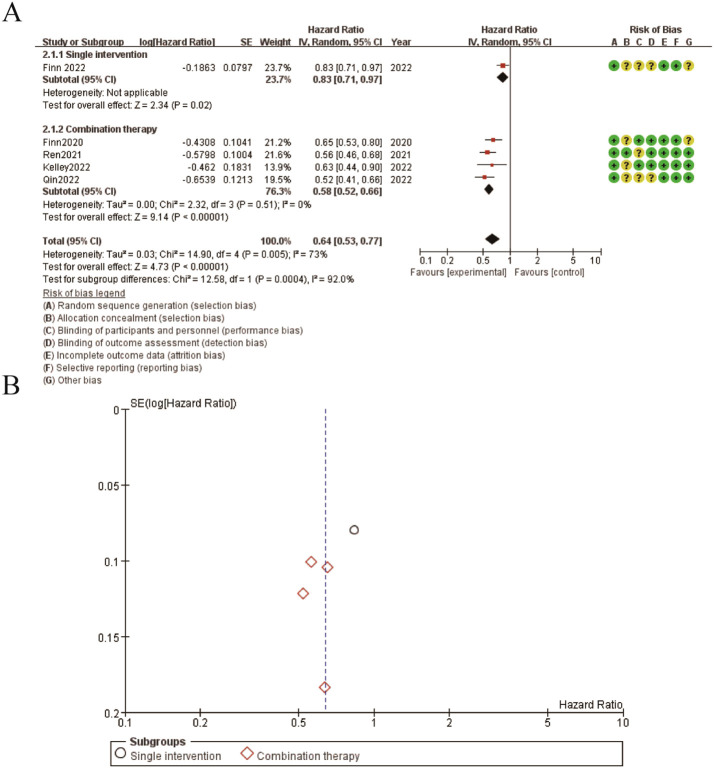
Five Phase III RCTs involving 1515 patients were included. Combination therapy significantly improved OS (HR: 0.71, 95% CI: 0.60-0.85) and PFS (HR: 0.64, 95% CI: 0.53-0.77) compared to monotherapy or standard treatments. The pooled OR for ORR was 1.27 (95% CI: 1.57-2.11), indicating a higher response rate with combination therapy. However, the risk of AEs was also higher in the combination therapy group (RR: 1.04, 95% CI: 1.02-1.06). Subgroup analyses revealed consistent benefits across different types of PD-1/PD-L1 inhibitors and anti-angiogenic agents, with no significant publication bias detected.
The combination of PD-1/PD-L1 inhibitors with anti-angiogenic agents offers significant benefits in improving OS and PFS in patients with unresectable HCC, although it is associated with an increased risk of adverse events.
肝细胞癌(HCC)是全球癌症相关死亡的主要原因,尤其是在诊断为不可切除阶段时。晚期HCC的传统治疗效果有限,这促使人们探索联合治疗方法。本系统评价和荟萃分析评估了在不可切除的HCC患者中,将PD-1/PD-L1抑制剂与抗血管生成药物联合使用的有效性和安全性。
在PubMed、Embase、Cochrane对照试验中央登记册(CENTRAL)和Web of Science上进行了全面的文献检索,包括截至2024年6月的研究。纳入了比较联合治疗(PD-1/PD-L1抑制剂与抗血管生成药物)与单药治疗或标准治疗在不可切除HCC患者中的随机对照试验(RCT)。使用随机效应模型对数据进行综合分析,汇总总生存期(OS)和无进展生存期(PFS)的风险比(HR),以及客观缓解率(ORR)和不良事件(AE)的风险比(RR)。
纳入了五项涉及1515例患者的III期RCT。与单药治疗或标准治疗相比,联合治疗显著改善了OS(HR:0.71,95%CI:0.60-0.85)和PFS(HR:0.64,95%CI:0.53-0.77)。汇总的ORR的OR为1.27(95%CI:1.57-2.11),表明联合治疗的缓解率更高。然而,联合治疗组的AE风险也更高(RR:1.04,95%CI:1.02-1.06)。亚组分析显示,在不同类型的PD-1/PD-L1抑制剂和抗血管生成药物中均有一致的益处,未检测到明显的发表偏倚。
PD-1/PD-L1抑制剂与抗血管生成药物联合使用在改善不可切除HCC患者的OS和PFS方面具有显著益处,尽管其与不良事件风险增加有关。