Dong Yijun, Zhang Zongliang, Luan Siyuan, Zheng Meijun, Wang Zeng, Chen Yongdong, Chen Xiaoting, Tong Aiping, Yang Hui
Department of Otolaryngology-Head & Neck Surgery, West China Hospital of Sichuan University, Chengdu, Sichuan, China.
State Key Laboratory of Biotherapy and Cancer Center, Research Unit of Gene and Immunotherapy, Chinese Academy of Medical Sciences, Collaborative Innovation Center of Biotherapy, West China Hospital, Sichuan University, Chengdu, Sichuan, China.
J Immunother Cancer. 2024 Oct 2;12(10):e009710. doi: 10.1136/jitc-2024-009710.
Antibody-drug conjugates (ADCs) offer a promising approach, combining monoclonal antibodies with chemotherapeutic drugs to target cancer cells effectively while minimizing toxicity.
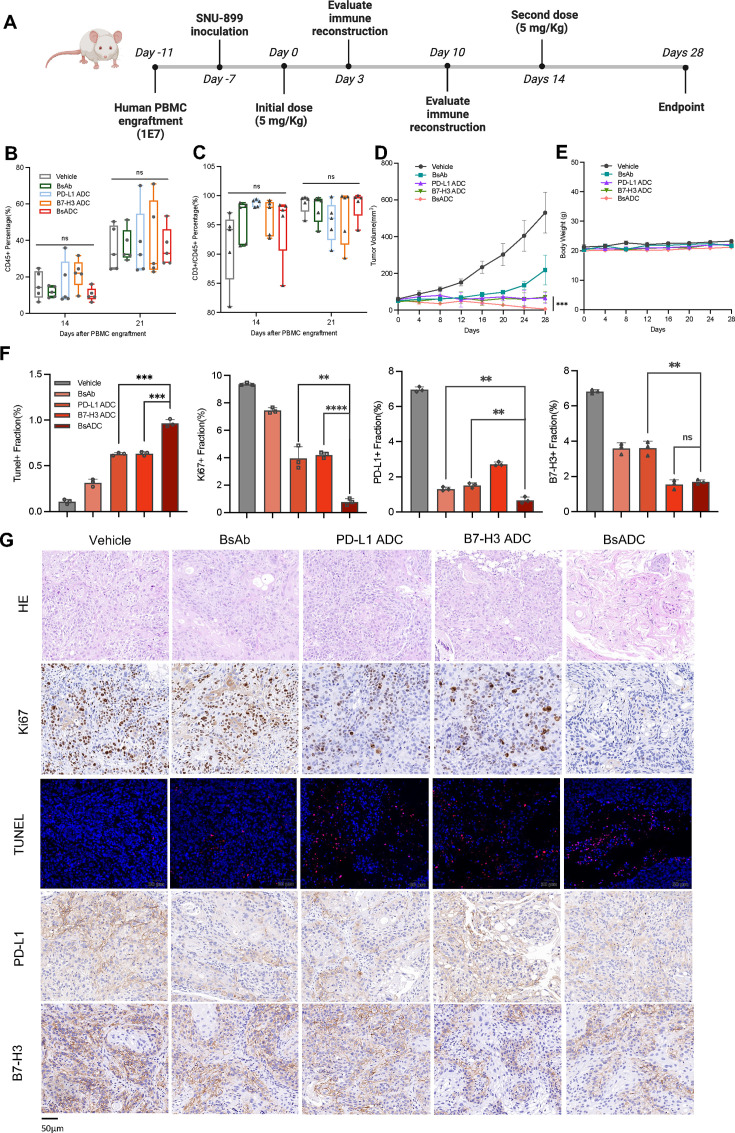
This study examined the therapeutic efficacy and potential mechanisms of a bispecific ADC (BsADC) in laryngeal squamous cell carcinoma. This BsADC selectively targets the immune checkpoints programmed cell death ligand-1 (PD-L1) and B7-H3, and the precise delivery of the small-molecule toxin monomethyl auristatin E.
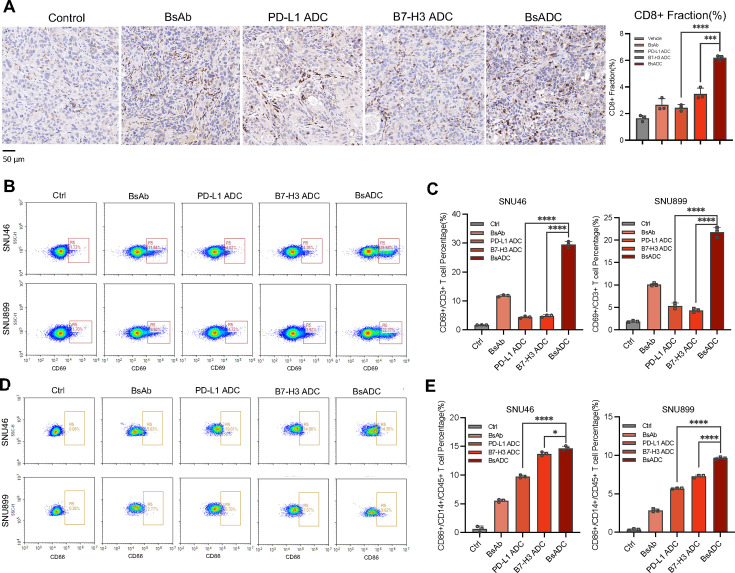
Our findings demonstrated that the BsADC outperformed its bispecific antibody and PD-L1 or B7-H3 ADC counterparts, particularly in terms of in vitro/in vivo tumor cytotoxicity, demonstrating remarkable immune cytotoxicity. Additionally, we observed potent activation of tumor-specific immunity and significant induction of markers of immunogenic cell death (ICD) and potential endoplasmic reticulum stress.
In conclusion, this novel BsADC, through immune checkpoint inhibition and promotion of ICD, amplified durable tumor immune cytotoxicity, providing novel insights and potential avenues for future cancer treatments and overcoming resistance.
抗体药物偶联物(ADCs)提供了一种很有前景的方法,将单克隆抗体与化疗药物相结合,以有效靶向癌细胞,同时将毒性降至最低。
本研究检测了一种双特异性ADC(BsADC)在喉鳞状细胞癌中的治疗效果和潜在机制。这种BsADC选择性靶向免疫检查点程序性细胞死亡配体1(PD-L1)和B7-H3,并精确递送小分子毒素单甲基澳瑞他汀E。
我们的研究结果表明,BsADC优于其双特异性抗体和PD-L1或B7-H3 ADC同类物,特别是在体外/体内肿瘤细胞毒性方面,表现出显著的免疫细胞毒性。此外,我们观察到肿瘤特异性免疫的有效激活以及免疫原性细胞死亡(ICD)标志物和潜在内质网应激的显著诱导。
总之,这种新型BsADC通过免疫检查点抑制和促进ICD,增强了持久的肿瘤免疫细胞毒性,为未来癌症治疗和克服耐药性提供了新的见解和潜在途径。