Fragala Maren S, Keogh Murray, Goldberg Steven E, Lorenz Raymond A, Shaman Jeffrey A
Quest Diagnostics, Secaucus, NJ, USA.
Coriell Life Sciences, Philadelphia, PA, USA.
Pharmacogenomics J. 2024 Oct 2;24(5):30. doi: 10.1038/s41397-024-00350-1.
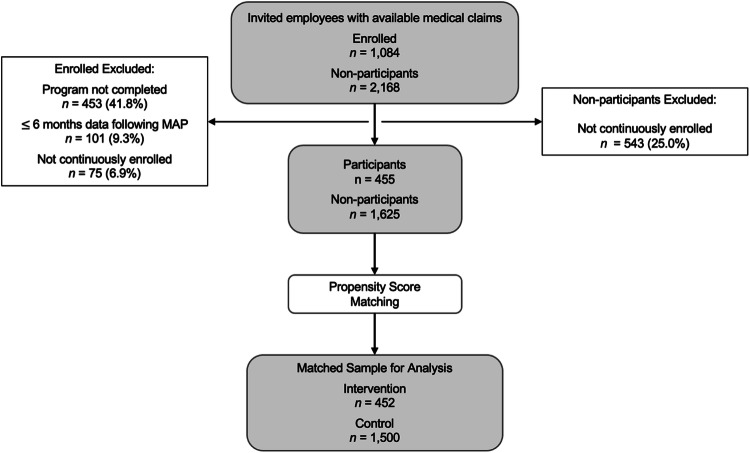
Clinical and economic outcomes from a pharmacogenomics-enriched comprehensive medication management program were evaluated over 26 months in a self-insured U.S. employee population (n = 452 participants; n = 1500 controls) using propensity matched pre-post design with adjusted negative binomial and linear regression models. After adjusting for baseline covariates, program participation was associated with 39% fewer inpatient (p = 0.05) and 39% fewer emergency department (p = 0.002) visits, and with 21% more outpatient visits (p < 0.001) in the follow-up period compared to the control group. Results show pharmacogenomics-enriched comprehensive medication management can favorably impact healthcare utilization in a self-insured employer population by reducing emergency department and inpatient visits and can offer the potential for cost savings. Self-insured employers may consider implementing pharmacogenomics-enriched comprehensive medication management to improve the healthcare of their employees.
在美国一个自我投保的员工群体(n = 452名参与者;n = 1500名对照)中,采用倾向匹配前后设计及调整后的负二项式和线性回归模型,对一项富含药物基因组学的综合药物管理计划的临床和经济结果进行了为期26个月的评估。在对基线协变量进行调整后,与对照组相比,参与该计划的人员在随访期间住院次数减少了39%(p = 0.05),急诊就诊次数减少了39%(p = 0.002),门诊就诊次数增加了21%(p < 0.001)。结果表明,富含药物基因组学的综合药物管理可以通过减少急诊和住院就诊次数,对自我投保雇主群体的医疗保健利用产生有利影响,并有可能节省成本。自我投保的雇主可能会考虑实施富含药物基因组学的综合药物管理,以改善其员工的医疗保健状况。