Center of Molecular Immunology, 15th Avenue and 216 Street, Siboney, Playa, Havana, Cuba.
National Center of Medical Genetics, 31st Avenue, N°3102 and 146 Street, Cubanacán, Playa, Havana, Cuba.
J Immunol Res. 2024 Sep 25;2024:7112940. doi: 10.1155/2024/7112940. eCollection 2024.
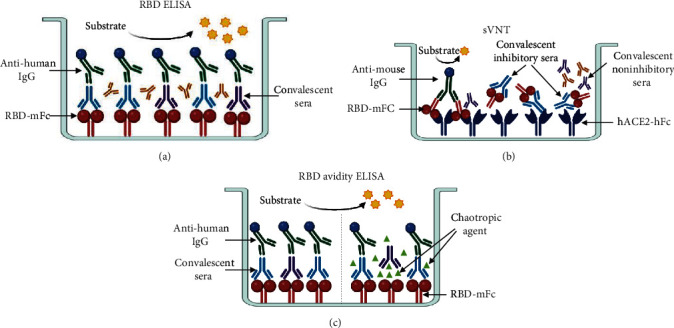
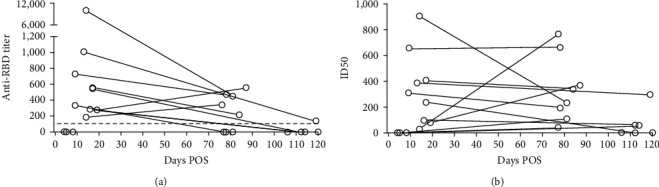
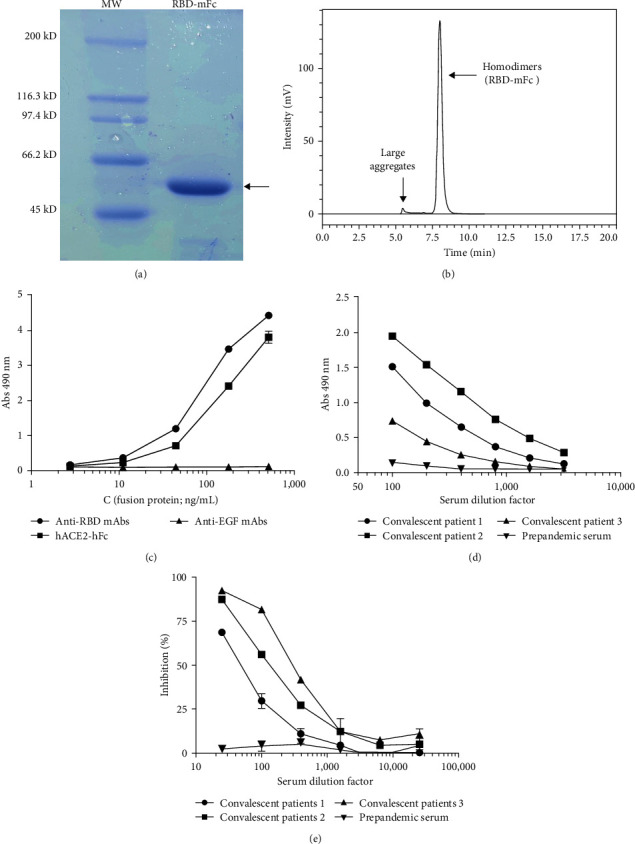
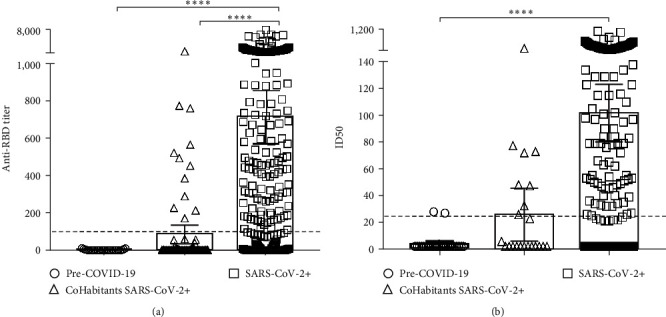
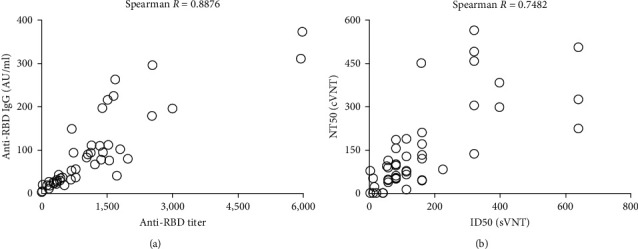
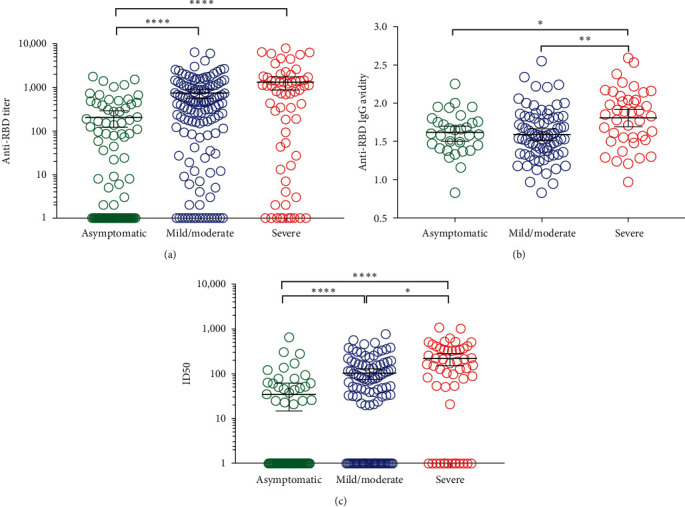
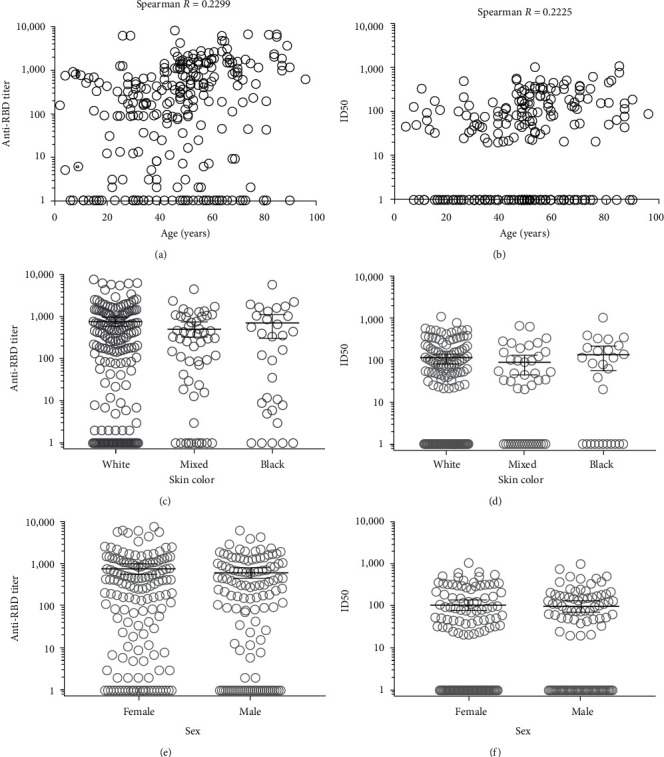
Understanding the immune response generated by SARS-CoV-2 is critical for assessing efficient therapeutic protocols and gaining insights into the durability of protective immunity. The current work was aimed at studying the specific humoral responses against SARS-CoV-2 in Cuban COVID-19 convalescents. We developed suitable tools and methods based on ELISA methodology, for supporting this evaluation. Here, we describe the development of an ELISA for the quantification of anti-RBD IgG titers in a large number of samples and a similar test in the presence of NHSCN as chaotropic agent for estimating the RBD specific antibody avidity. Additionally, a simple and rapid ELISA based on antibody-mediated blockage of the binding RBD-ACE2 was implemented for detecting, as a surrogate of conventional test, the levels of anti-RBD inhibitory antibodies in convalescent sera. In a cohort of 273 unvaccinated convalescents, we identified higher anti-RBD IgG titer (1 : 1,330, < 0.0001) and higher levels of inhibitory antibodies blocking RBD-ACE2 binding (1 : 216, < 0.05) among those who had recovered from severe illness. Our results suggest that disease severity, and not demographic features such as age, sex, and skin color, is the main determinant of the magnitude and neutralizing ability of the anti-RBD antibody response. An additional paired longitudinal assessment in 14 symptomatic convalescents revealed a decline in the antiviral antibody response and the persistence of neutralizing antibodies for at least 4 months after the onset of symptoms. Overall, SARS-CoV-2 infection elicits different levels of antibody response according to disease severity that declines over time and can be monitored using our homemade serological assays.
了解 SARS-CoV-2 引发的免疫反应对于评估有效的治疗方案和深入了解保护性免疫的持久性至关重要。本研究旨在研究古巴 COVID-19 康复者对 SARS-CoV-2 的特异性体液反应。我们开发了基于 ELISA 方法的合适工具和方法,以支持这一评估。在这里,我们描述了一种 ELISA 的开发,用于定量大量样本中的抗 RBD IgG 滴度,以及在 NHSCN 作为变构剂存在的情况下进行类似的测试,以估计 RBD 特异性抗体亲和力。此外,还实施了一种基于抗体介导阻断 RBD-ACE2 结合的简单快速 ELISA,作为常规检测的替代方法,用于检测恢复期血清中抗 RBD 抑制性抗体的水平。在 273 名未接种疫苗的康复者队列中,我们发现严重疾病患者的抗 RBD IgG 滴度(1:1330,<0.0001)和阻断 RBD-ACE2 结合的抑制性抗体水平(1:216,<0.05)更高。我们的结果表明,疾病严重程度而不是年龄、性别和肤色等人口统计学特征是决定抗 RBD 抗体反应的幅度和中和能力的主要因素。在 14 名有症状的康复者中进行的额外配对纵向评估显示,抗病毒抗体反应下降,并且在症状出现后至少 4 个月内仍存在中和抗体。总体而言,SARS-CoV-2 感染会根据疾病严重程度引发不同水平的抗体反应,这些反应会随着时间的推移而下降,并且可以使用我们自制的血清学检测进行监测。