Division of Nephrology and Hypertension, Department of Medicine, Vanderbilt University Medical Center and Vanderbilt University School of Medicine, Nashville, Tennessee, USA.
Research and Medical Services, Department of Veterans Affairs, Tennessee Valley Healthcare System, Nashville, Tennessee, USA.
JCI Insight. 2024 Nov 22;9(22):e182087. doi: 10.1172/jci.insight.182087.
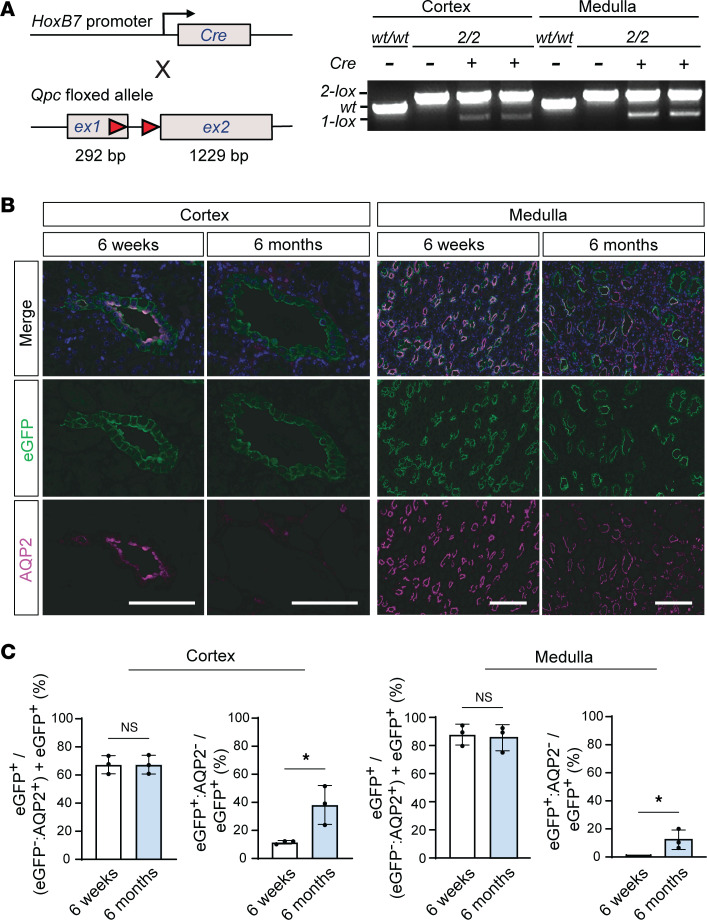
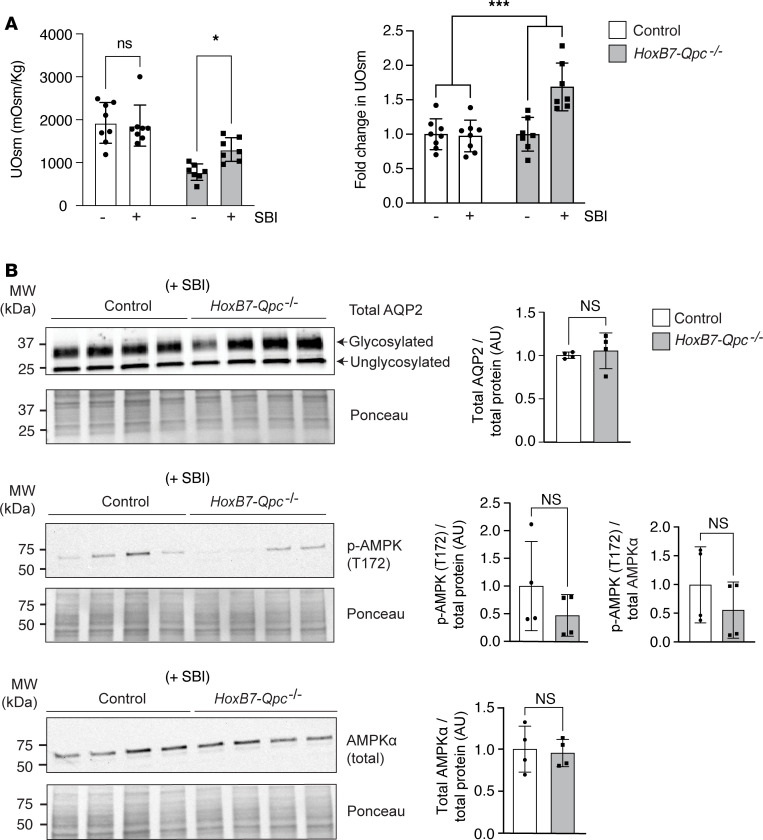
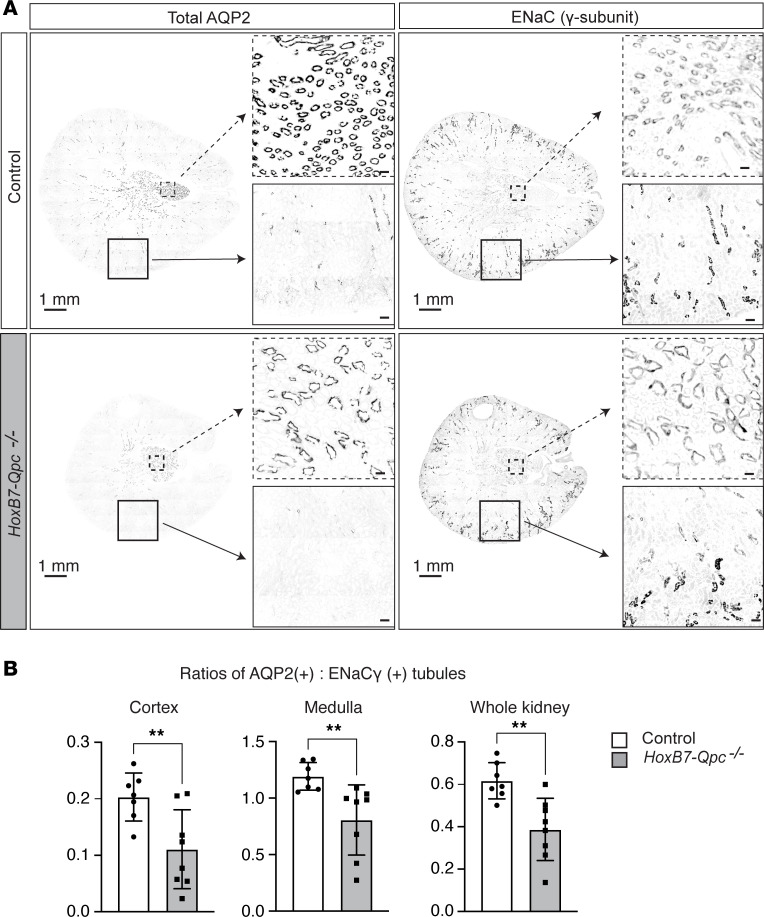
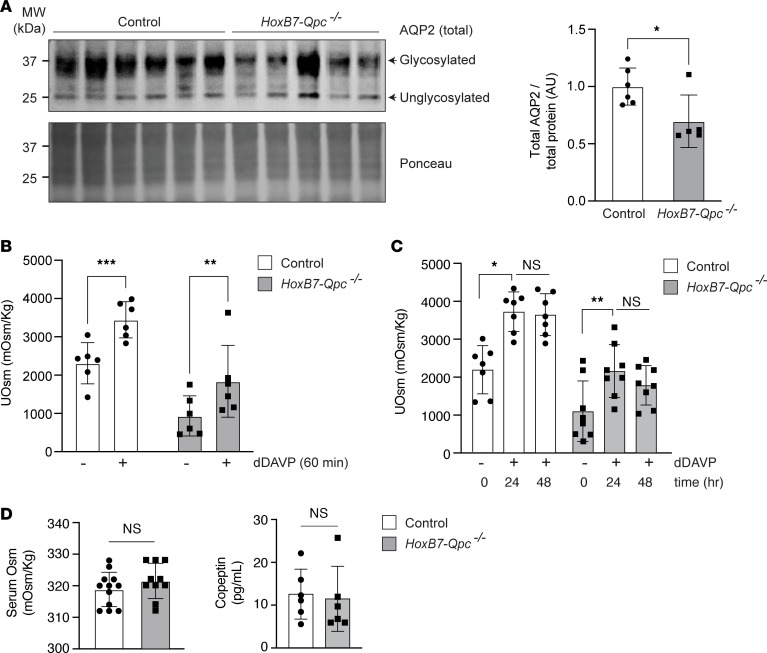
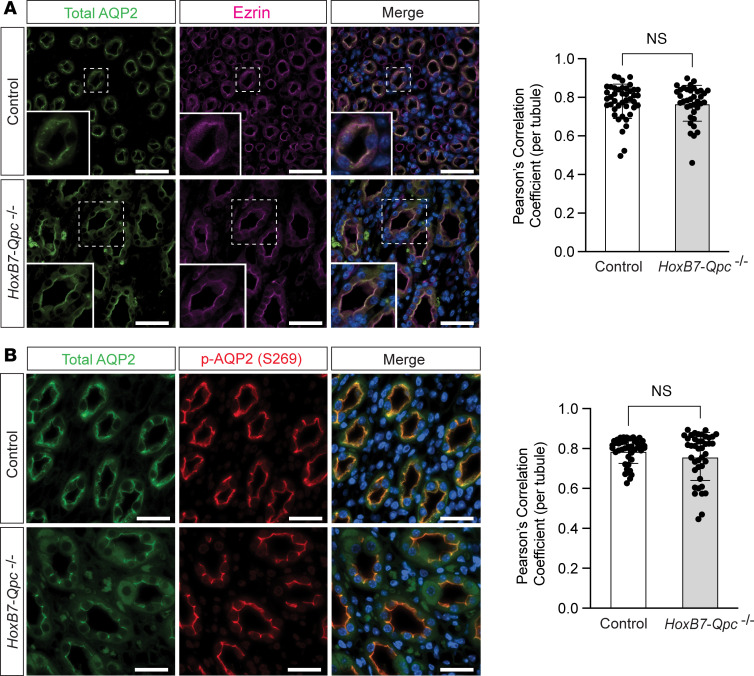
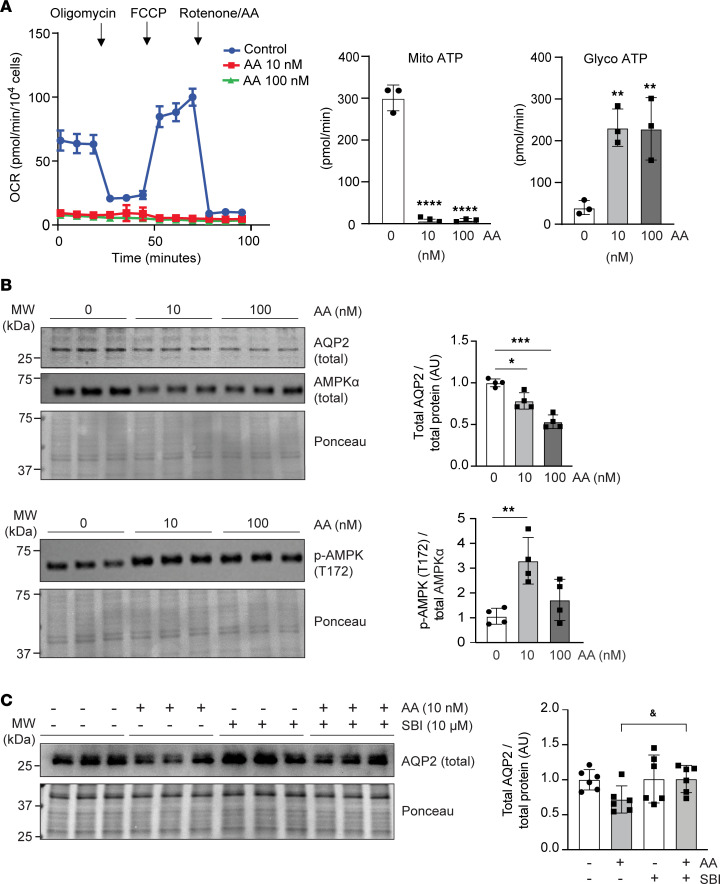
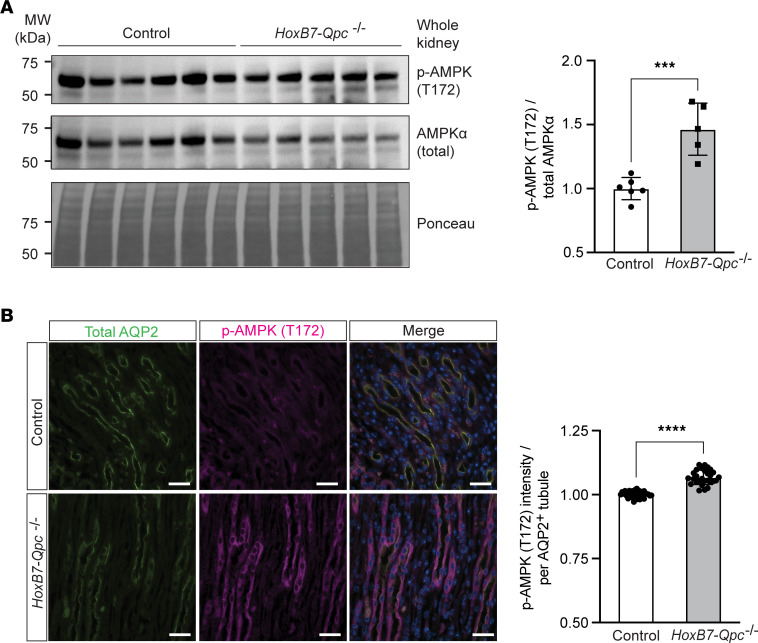
Urinary concentration is an energy-dependent process that minimizes body water loss by increasing aquaporin 2 (AQP2) expression in collecting duct (CD) principal cells. To investigate the role of mitochondrial (mt) ATP production in renal water clearance, we disrupted mt electron transport in CD cells by targeting ubiquinone (Q) binding protein QPC (UQCRQ), a subunit of mt complex III essential for oxidative phosphorylation. QPC-deficient mice produced less concentrated urine than controls, both at baseline and after type 2 vasopressin receptor stimulation with desmopressin. Impaired urinary concentration in QPC-deficient mice was associated with reduced total AQP2 protein levels in CD tubules, while AQP2 phosphorylation and membrane trafficking remained unaffected. In cultured inner medullary CD cells treated with mt complex III inhibitor antimycin A, the reduction in AQP2 abundance was associated with activation of 5' adenosine monophosphate-activated protein kinase (AMPK) and was reversed by treatment with AMPK inhibitor SBI-0206965. In summary, our studies demonstrated that the physiological regulation of AQP2 abundance in principal CD cells was dependent on mt electron transport. Furthermore, our data suggested that oxidative phosphorylation in CD cells was dispensable for maintaining water homeostasis under baseline conditions, but necessary for maximal stimulation of AQP2 expression and urinary concentration.
尿浓缩是一个能量依赖的过程,通过增加集合管(CD)主细胞中水通道蛋白 2(AQP2)的表达来最小化身体水分流失。为了研究线粒体(mt)ATP 产生在肾脏水清除中的作用,我们通过靶向定位泛醌(Q)结合蛋白 QPC(UQCRQ),一种 mt 复合物 III 的亚基,来破坏 CD 细胞中的 mt 电子传递,mt 复合物 III 对氧化磷酸化至关重要。与对照组相比,QPC 缺陷型小鼠在基础状态和用去氨加压素刺激 2 型血管加压素受体后产生的浓缩尿液更少。QPC 缺陷型小鼠尿浓缩受损与 CD 管中总 AQP2 蛋白水平降低有关,而 AQP2 磷酸化和膜转运保持不变。在经 mt 复合物 III 抑制剂安密霉素 A 处理的培养的内髓质 CD 细胞中,AQP2 丰度的降低与 5' 腺苷单磷酸激活蛋白激酶(AMPK)的激活有关,并用 AMPK 抑制剂 SBI-0206965 处理可逆转。总之,我们的研究表明,主 CD 细胞中 AQP2 丰度的生理调节依赖于 mt 电子传递。此外,我们的数据表明,CD 细胞中的氧化磷酸化在维持基础条件下水稳态方面不是必需的,但对于最大刺激 AQP2 表达和尿浓缩是必需的。