Department of Health Technology, Section for Bioinformatics, Technical University of Denmark, Kongens Lyngby, Denmark.
Centre For Ancient Environmental Genomics, Globe Institute, University of Copenhagen, Copenhagen K, Denmark.
Mol Biol Evol. 2024 Oct 4;41(10). doi: 10.1093/molbev/msae203.
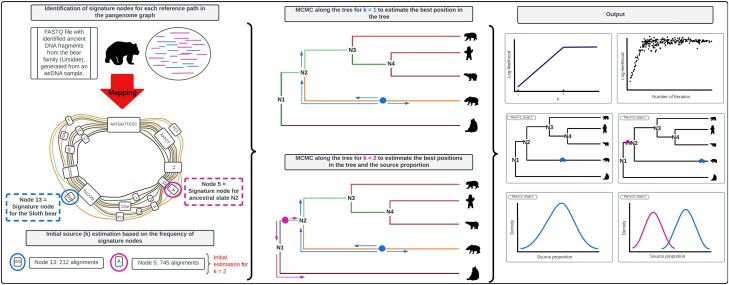
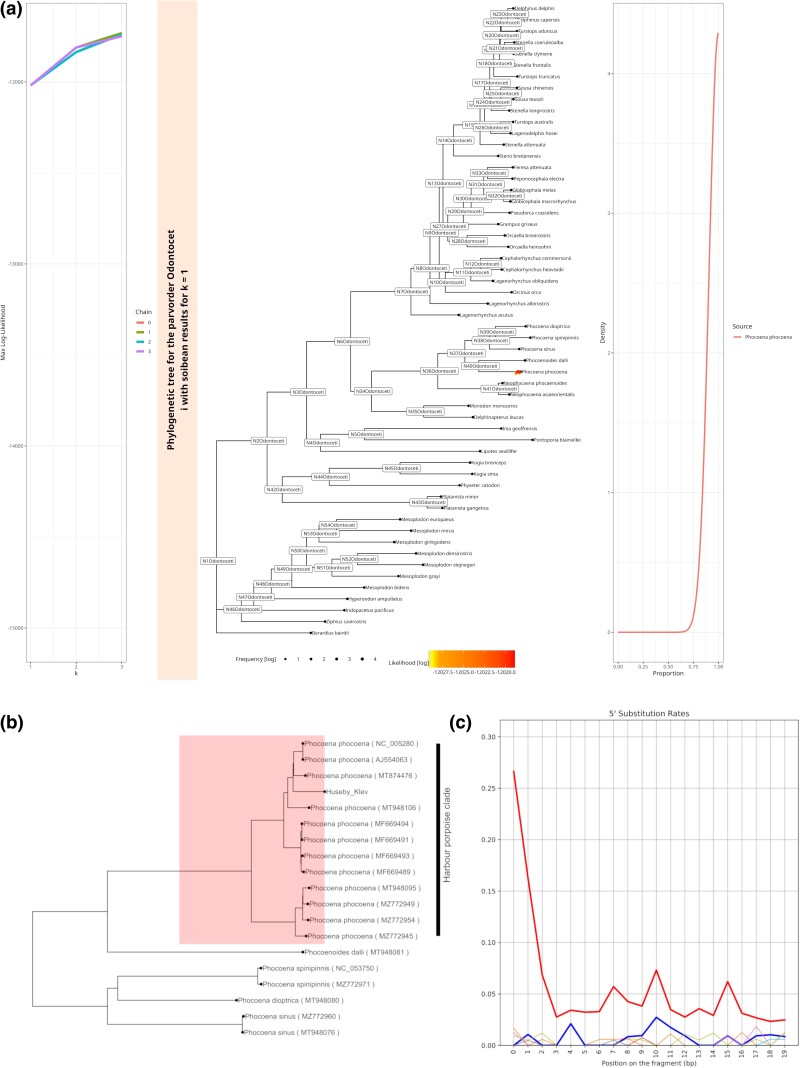
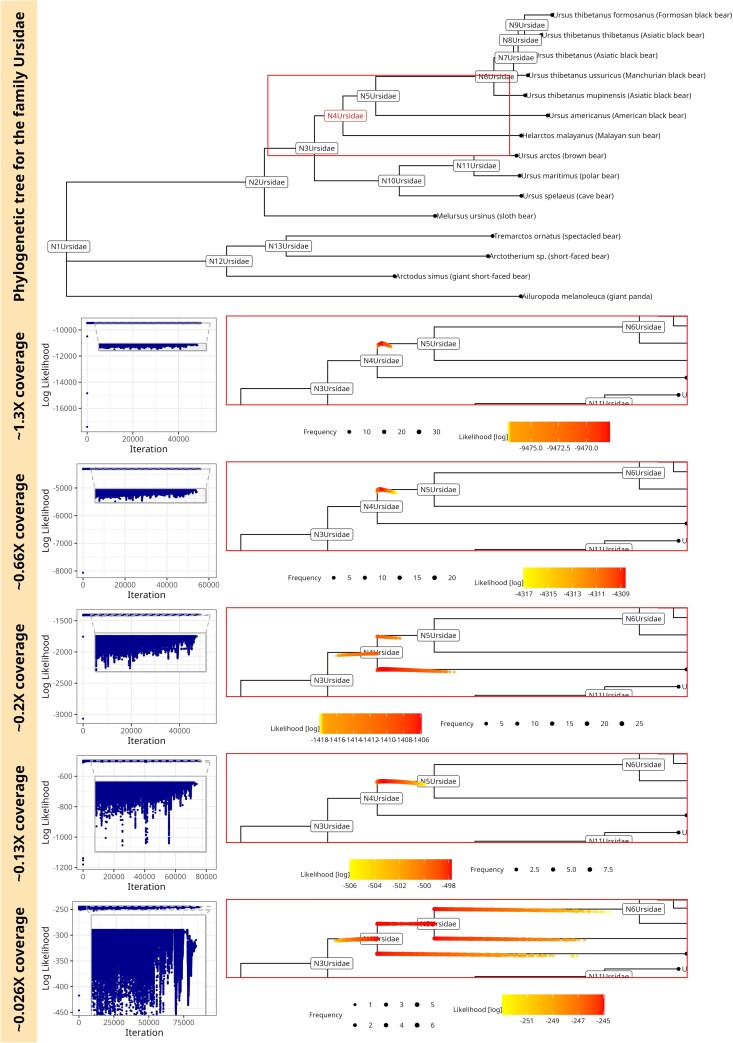
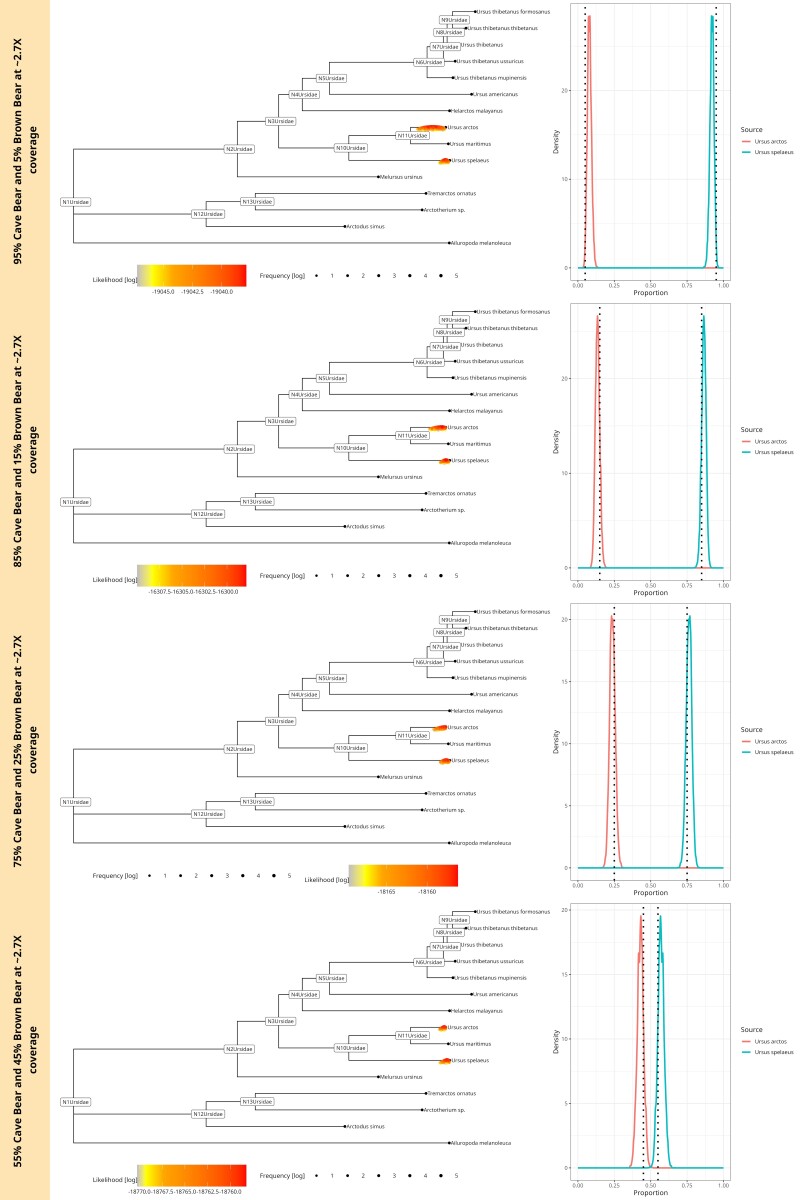
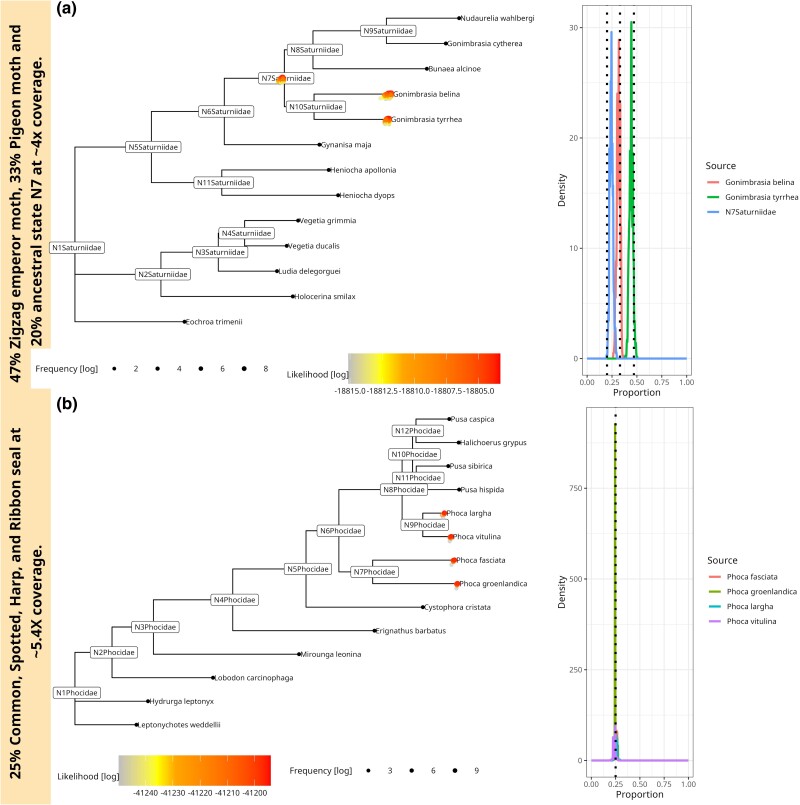
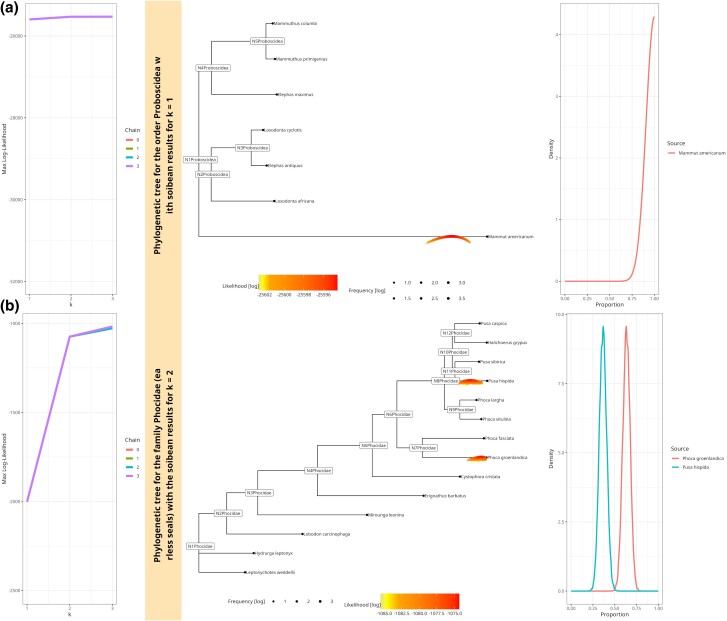
Ancient environmental DNA (aeDNA) is becoming a powerful tool to gain insights about past ecosystems, overcoming the limitations of conventional fossil records. However, several methodological challenges remain, particularly for classifying the DNA to species level and conducting phylogenetic analysis. Current methods, primarily tailored for modern datasets, fail to capture several idiosyncrasies of aeDNA, including species mixtures from closely related species and ancestral divergence. We introduce soibean, a novel tool that utilizes mitochondrial pangenomic graphs for identifying species from aeDNA reads. It outperforms existing methods in accurately identifying species from multiple closely related sources within a sample, enhancing phylogenetic analysis for aeDNA. soibean employs a damage-aware likelihood model for precise identification at low coverage with a high damage rate. Additionally, we reconstructed ancestral sequences for soibean's database to handle aeDNA that is highly diverged from modern references. soibean demonstrates effectiveness through simulated data tests and empirical validation. Notably, our method uncovered new empirical results in published datasets, including using porpoise whales as food in a Mesolithic community in Sweden, demonstrating its potential to reveal previously unrecognized findings in aeDNA studies.
古环境 DNA(aeDNA)正成为一种了解过去生态系统的强大工具,克服了传统化石记录的局限性。然而,仍存在一些方法学上的挑战,特别是在将 DNA 分类到物种水平并进行系统发育分析方面。目前的方法主要针对现代数据集,无法捕捉到 aeDNA 的几个特征,包括来自亲缘关系密切的物种的物种混合和祖先分歧。我们引入了 soibean,这是一种利用线粒体泛基因组图从 aeDNA 读取中识别物种的新工具。它在从样本中多个亲缘关系密切的来源准确识别物种方面表现优于现有方法,增强了 aeDNA 的系统发育分析。soibean 采用了一种带有损伤意识的似然模型,可在高损伤率和低覆盖率下进行精确识别。此外,我们为 soibean 的数据库重建了祖先序列,以处理与现代参考高度分化的 aeDNA。soibean 通过模拟数据测试和实证验证证明了其有效性。值得注意的是,我们的方法在已发表的数据集上揭示了新的实证结果,包括在瑞典的一个中石器时代社区中使用海豚作为食物,这表明它有可能在 aeDNA 研究中揭示以前未被识别的发现。